A pair of home invaders consider their potential character choices just prior to their planned invasion.
Two slackers discover their new found couch lurks with mysterious evil...
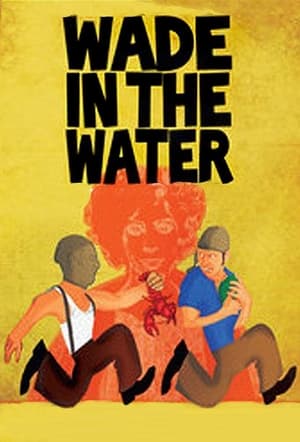
Brothers Asher and Charlie are very different – Asher likes fishing and swearing, Charlie likes tea parties and crafts. In the summer of 1987 – the first since their father walked out of their lives – their relationship undergoes a test of almost mythic proportions when Asher’s confusion and anger boils over into a mindless act of cruelty.
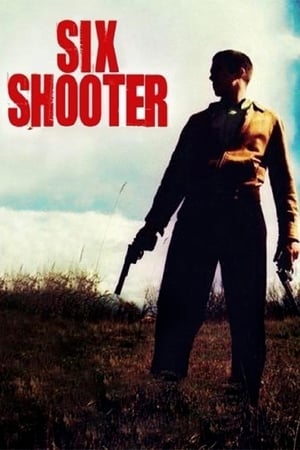
On a ranch somewhere in the Midwest, Renee takes a stand against fear, uncertainty, doubt and evil itself. But does she have the strength to bring back the power of love to a brutal and unforgiving world?
A young mortician learns that not even death can stand in the way of true love. A whimsical, gothic bedtime story filled with love, loss, taxidermy, Kung Fu, and biker werewolves.
As a practical joke, an actor impersonates the screen monster he made famous. A lost film.
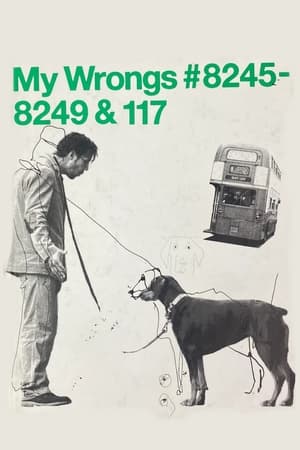
A Pop Art extravaganza by Fred Mogubgub from the late-1960s, innovative in the use of the quick cut, this film is a parade of pop icons of its time. Features a pre-Playboy, pre-N. O. W. Gloria Steinem.
A man wakes up in a blue room. He's stuck and he can't escape. A window is his only connection to the outer world. It filters the reality in a very mysterious way.
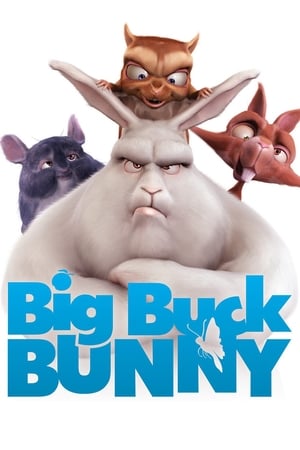
Follow a day of the life of Big Buck Bunny when he meets three bullying rodents: Frank, Rinky, and Gamera. The rodents amuse themselves by harassing helpless creatures by throwing fruits, nuts and rocks at them. After the deaths of two of Bunny's favorite butterflies, and an offensive attack on Bunny himself, Bunny sets aside his gentle nature and orchestrates a complex plan for revenge.
Rigadin and his rival use camera/projector systems to reach their objectives.
A clip-show music video for the album of the same name and vintage. Includes 5 songs from the album ("Mousetrap", "Disco Mickey Mouse", "Watch Out For Goofy", "Macho Duck", "Welcome To Rio").
I turned my gaze to the various events in daily life and made this filmic diary in a manner as if confessing my feelings. Of course, since I was making the film, I wanted to depict these feelings and events with tricky techniques. I used various methods to shoot photographs of a relative's wedding, the landscape I see from window of my house, commemorative travel photographs and the like frame-by-frame.
A tramp tries to earn money by playing the violin, but he’s soon facing off against the jealous competition.
Grandmother Koba has to take care of her grandchild Emma's digital horse farm.
Gobinchu, Marc's imaginary friend, has disappeared. Berta, his younger sister, hires detectives Blue & Malone, a giant cat and a plasticine dog, to investigate what happened. Together, they tour the house living many adventures and knowing and facing numerous fantastic creatures.
Each time Mrs Babylas sees an animal, she just can't help herself bring it back home.
Elephants Dream is the story of two strange characters exploring a capricious and seemingly infinite machine. The elder, Proog, acts as a tour-guide and protector, happily showing off the sights and dangers of the machine to his initially curious but increasingly skeptical protege Emo. As their journey unfolds we discover signs that the machine is not all Proog thinks it is, and his guiding takes on a more desperate aspect. Elephants Dream is a story about communication and fiction, made purposefully open-ended as the world’s first 3D animated “Open movie”. The film itself is released under the Creative Commons license, along with the entirety of the production files used to make it (roughly 7 Gigabytes of data). The software used to make the movie is the free/open source animation suite Blender along with other open source software, thus allowing the movie to be remade, remixed and re-purposed with only a computer and the data on the DVD or download.
At Thanksgiving, a tramp arrives in a homeless-hostile town.
One of the two earliest horror films ever made. This film is presumed lost. In this black comedy scene, the bottom falls out of a coffin, the corpse tumble out, and is jolted back to life. Short sequences like this, as well as street scenes and dancing geisha girls were the main subjects of early Nippon cinema, pioneered by Shiro Asano and Shibata Tsunekichi from 1897 onwards. In creating dramatic, scenes, film-makers naturally chose the most striking or bizarre. Another undocumented film, recalled by cameraman Shiro Asano.
Peixe-de-Espada (literally, sword-fish), a retired Army colonel, his wife and nubile daughter are spending their holidays at the Palace Hotel, in the company of a lady doctor, Doctor Pilulas (literally, pills). He tells tall-tales of his African adventures, and she finds ways to promote the excellency of the pills of her own fabrication. To spend some time with Gabriela, his girlfriend, Rito appears disguised as a woman, pretending to be the new post-office operator. Desguises will come and go, and all ends well after a turmoil of twisted plots.