An opera musical with nuns and a priest trying to do their jobs.
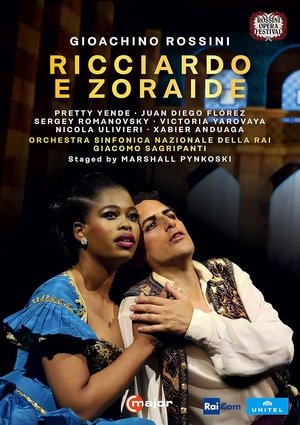
Ricciardo E Zoraide
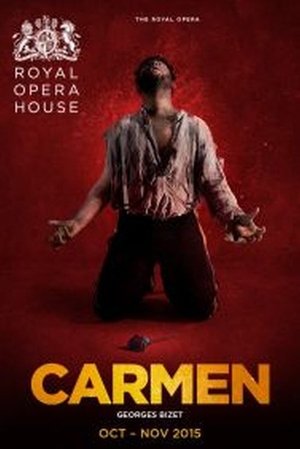
The young soldier Don José intends to marry Micaëla, a girl from his home village. But when he meets the sensual and high-spirited Carmen, he sacrifices everything to be with her. Carmen grows tired of Don José and falls in love with the toreador Escamillo. Unable to bear her leaving him, Don José tracks Carmen down to a bullring where Escamillo is fighting and murders her.
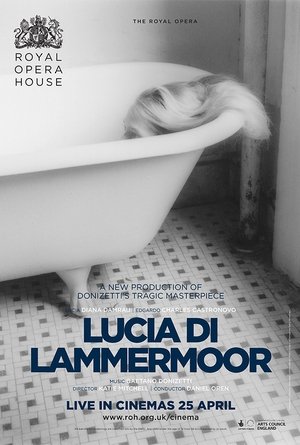
Lucia’s brother Enrico is horrified to learn she has fallen in love with his sworn enemy Edgardo. He hastily arranges her marriage to his associate Arturo. Edgardo and Lucia privately exchange rings before he leaves to fight in France. Enrico tricks Lucia into believing that Edgardo has been unfaithful. Longing for death, she signs the contract with Arturo – moments before Edgardo returns. Lucia murders Arturo in their wedding bed. His death is followed first by Lucia’s, and then by Edgardo’s.
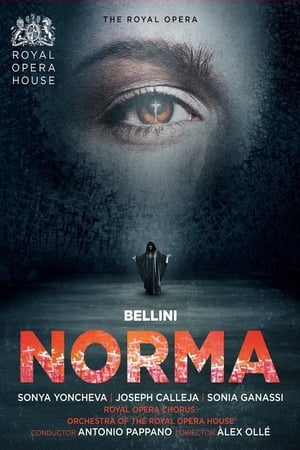
The priestess Norma loves Pollione, leader of the occupying force suppressing her people, and has borne two children by him. But Pollione’s love has withered, and he now loves Norma’s fellow priestess Adalgisa. Meanwhile, the people urgently look to Norma to lead their rebellion. Norma discovers the love between Pollione and Adalgisa. Furiously she gives the signal for war. Pollione is captured, attempting to steal away with Adalgisa. Norma, called upon to announce a sacrificial victim to consecrate the uprising, declares it shall be a guilty priestess: herself.
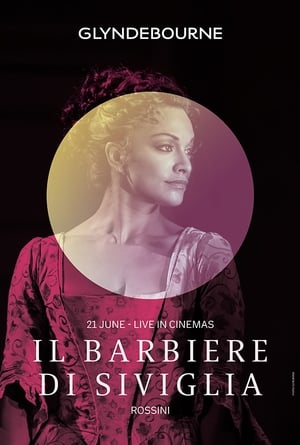
Figaro uses every trick he can muster to outwit Dr Bartolo and ensure his master wins his chosen bride. He meets his match in the would-be-bride Rosina, who has schemes of her own. Glyndebourne favourite Danielle de Niese adds the crafty Rosina to her growing list of bel canto heroines. Directed by Annabel Arden with playful energy springing from Rossini’s joyous music, this new production heralds the welcome return of a masterpiece not seen at Glyndebourne Festival since 1982.
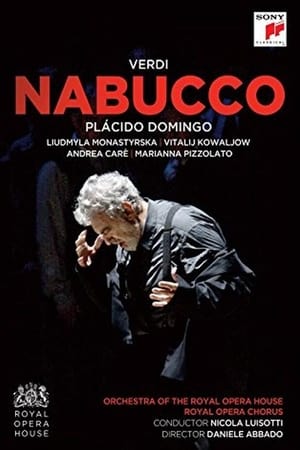
Nabucco, King of Babylon, takes Jerusalem in his war with the Israelites – but his daughter Fenena loves the Israelite Ismaele. She releases their prisoners, leading her vengeful half-sister Abigaille to plot to take power. Nabucco declares himself a god and is struck by a bolt of lightning. Abigaille tricks the now feeble king into signing a death warrant for the Israelites, including Fenena and Ismaele. Nabucco prays to the God of Israel for forgiveness; his sanity is restored and he saves the prisoners from death. He converts himself and his people, while Abigaille commits suicide.
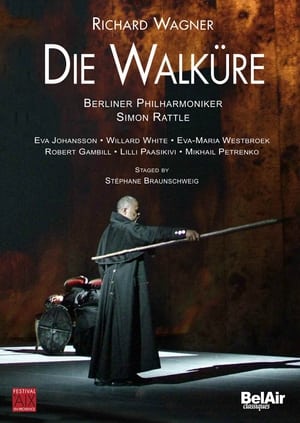
Simon Rattle conducts the Berliner Philharmoniker in Stepháne Braunschweig's production of Richard Wagner's Die Walküre. A Festival d'Aix-en-Provence 2007 production, in coproduction with Osterfestspiele Salzburg. Directed for HDTV and video by Don Kent.
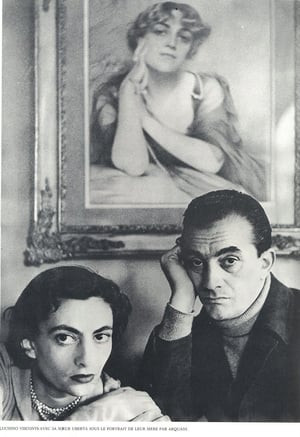
BBC television program exploring Visconti’s mastery of cinema, theater, and opera direction.
"Orango" - prologue to an unfinished opera by Dmitri Shostakovich (1906-1975), conducted by Esa-Pekka Salonen, performed by the Finnish Radio Symphony Orchestra and the Mariinsky Theatre Academy. In the 1920s, Soviet biologist Ilya Ivanovich Ivanov carried out a series of experiments to create a human/nonhuman ape hybrid. Three female chimpanzees were inseminated with human sperm. No pregnancy occurred.. In 1929 he organized a set of experiments involving nonhuman ape sperm and human volunteers, but was delayed by the death of his last orangutan.
Cio-Cio-San, the young Japanese bride of dashing American officer Lieutenant Pinkerton, finds her romantic idyll shattered when he deserts her shortly after their marriage. She lives in hope that one day he will return. Three years later, Cio-Cio-San and her little son see Pinkerton’s ship in the harbour. She excitedly expects his visit – but Pinkerton and his American wife Kate have come only to take the boy away, to raise him in America. Cio-Cio-San bids her son farewell and then takes her own life.
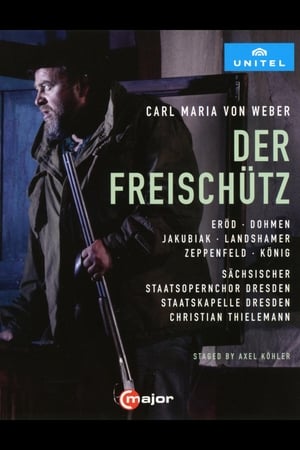
Axel Köhler’s production of Der Freischütz at the Dresden State Opera was described by Die Presse as “a minor miracle in Dresden”. In the words of the Salzburger Nachrichten, Köhler “scored a bulleye” with his sombre and satanic interpretation of Weber’s Romantic opera about love, temptation, souls sold to the Devil, obsession andfaith. According to the Financial Times, Christian Thielemann and the Dresden Staatskapelle conjured up a sense of “mortal terror from the orchestra pit. […] Thielemann is in command of every detail. That makes for utterly gripping listening.”
Premiered in 1787, “Don Giovanni” exposes the timeless theme of a man hovering between vitality and destruction. Neither morality nor the law can stop this serial lover in his quest to conquer all women as he places his own pleasure above all other principles. Today, the rich depth of Mozart’s masterpiece still astonishes audiences with its mix of comedy and seriousness, pleasure and love, entertainment and murder. At the helm of this new Salzburg Festival production, in a near-live broadcast from the Great Festival Hall, director Romeo Castellucci promises to focus on the ambiguity and inner turmoil of this serial lover whose immoral behaviour condemns him to a deadly solitude. The exceptional cast – featuring Italian baritone Davide Luciano (Don Giovanni), Russian soprano Nadezhda Pavlova (Donna Anna) and Finnish bass Mika Kares (the Commendatore) – is accompanied by the chorus and musicians of the musicAeterna ensemble, conducted by Vitaly Polonsky and Teodor Currentzis.
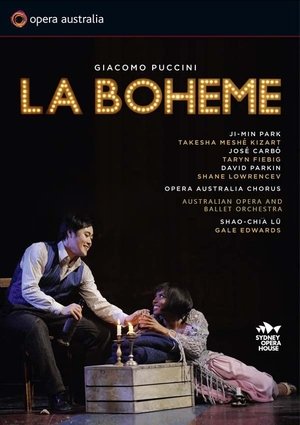
La Bohème (Sydney Opera House)
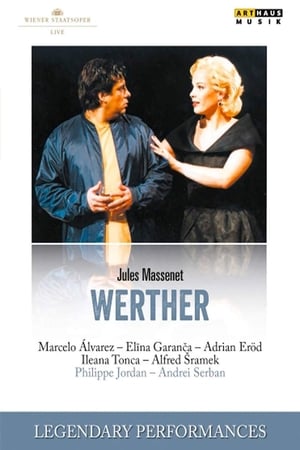
The production was the Vienna State Opera debut for the young Swiss conductor Philippe Jordan – the Argentinian tenor Marcelo Álvarez, took the title role. His Charlotte on this occasion was the young Latvian mezzo-soprano Elīna Garanča. Her performances have been enthusiastically received and she has already been labelled as the new mezzo wonder. Staged by internationally sought-after Rumanian director, Andrei Serban, the apparently sentimental love story – normally presented in 18th century period costumes - reveals a study of personal relationships and a close observation of a woman, who comes of age too late. Serban’s aim was to rid the opera of the unjustified reputation of banality that clings to it despite its underlying tragic mood. By setting the production in the stiff, claustrophobic atmosphere of a small town in the 1950s, he aimed to make the audience more aware of its deeper levels of self-denial.
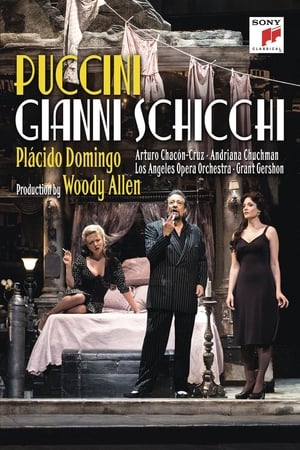
Woody Allen's production of the Puccini comic opera at LA Opera in 2015
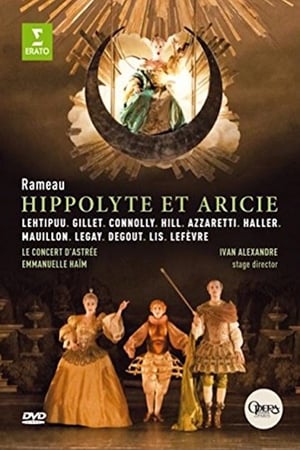
Emmanuelle Haïm has established herself as one of the world’s leading performers, conductors and interpreters of Baroque repertoire, not only with Le Concert d’Astrée, the ensemble she founded in 2000, but with several of the world’s greatest orchestras. Known for her fresh and expressive approach to Baroque music, she has garnered critical acclaim and several international awards with her own ensemble, including Victoires de la Musique Classique, ECHOs, Gramophone Awards, and Grammy nominations.
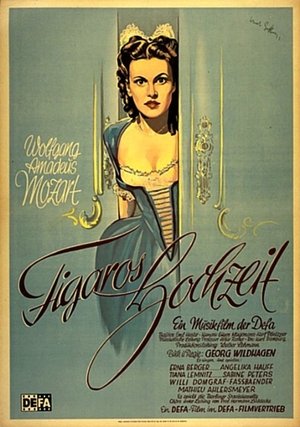
Shortly after WWII, the DEFA Studios produced a series of operas and operettas which belonged to the classical German musical heritage. This enchanting film, the very first opera production of DEFA, stands out because of its lavish decor and costumes, its outstanding actors and their masterful voices of that time.
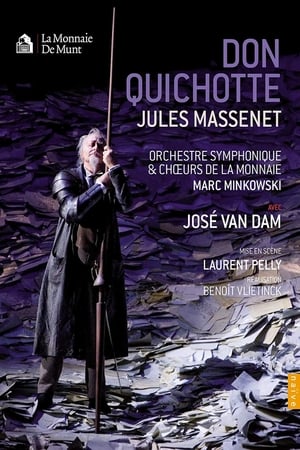
This May 2010 production of Massenet's 1910 opera "Don Quichotte" marked the opera's centenary and also Jose Van Dam's operatic farewell at the Theatre de la Monnaie, Brussels. It is beautiful in every way--vocally, scenically, sonically, and visually--and a worthy record of Van Dam's farewell. Van Dam is just shy of 70 in this production, but you would never guess it from his singing or stage movements--a consummate artist. His is a noble portrayal and deeply moving. The Act V death scene is a model of beautiful singing and acting.
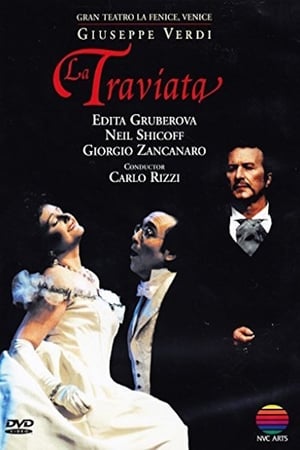
This set has Edita Gruberova singing in top form, all her scooping cast aside, which one finds in abundance in her Lucia under Richard Bonynge. Here, however, she makes ravishing use of those bits of tone that only she can produce: those instances of coloratura and dramatic legato with little asides and small florishes of style that suggest her intelligent approach and her high degree of musical involvement in this role. She does this in her I Puritani and her Anna Bolena, less so in Roberto Deveraux and Maria Stuarda(both sets). Listen to Addio del passato and the Sempre Libra...ravishing, yes, but there are again those nuances learned from Callas that she makes her own. A very singualr perform,ance, and extremely moving with its detail and cry for pity throughout..from the start even. Neil Schicoff is excellent, not an unworthy Alfredo at all! His is a great lyric tenor voice that should have been in the top line.