Montañas en armonía
Filmed in Victoriaville, the film uses images from various sources to paint a cynical portrait of the violent boredom that reigns in rural areas. Quiet sequences of people sharing joints by the river are followed by a lone car speeding along wooded roads, as if seeking speed on the brink of accident. Thuya abandons technical mastery in favor of intimate and spontaneous filming, composing a raw self-documentation of daily stagnation. Filmed mainly in a single day of improvisation, based on chance encounters and found footage.
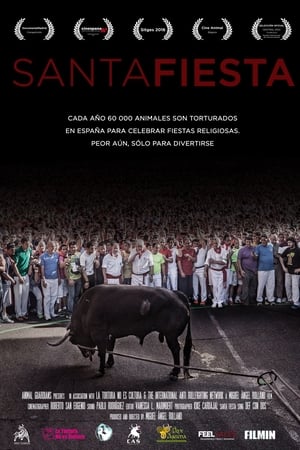
SINOPSIS / SYNOPSIS Every year in Spain, some 16,000 Fiestas are organized, during which animals are used. Honoring the Holy Virgin and the Patron Saints, and with the blessing of religious and political authorities, entire towns -including children- are involved in celebrations of unbelievable cruelty. 60,000 animals are hence abused each year during these “Fiestas of Blood”.
Amateur shots of pilgrims and temples at Haridwar, followed by rural scenes and the Gorrie family at home.
After a spell cast by Grandma Faraway, the oldest son of a small family encounters the ghost of his late Grandma Maria still living in her old house, and they chat as they used to.
During the 2012 season, two Montana High School teams compete in 6-man football, a smaller version of American football with increasing popularity in rural communities. It's pure football, for the sake of football, played by boys of all sizes and abilities, for themselves and for the communities who know them oh so well. No television timeouts. No place to sit. Six Man Football.
Teenager Olivia Oras has 20,000 Instagram followers. The documentary follows a year of her life.
A narrator recounts a story about his missing friend, the downfall of a sheep shearing gang and sightings of a hairy beast in 1980s rural New Zealand.
Jojo, a 17-year-old girl from Bangkok, is about to graduate from high school. After her friend Q reveals a secret to her, the two girls grow close and spend all their time together. Jojo's father wholeheartedly approves of the friendship and is just glad that Jojo is not going on any dates with boys.
A documentary on seniors at a high school in a small Indiana town and their various cliques.
Kids help around the farm on the South Devon coast.
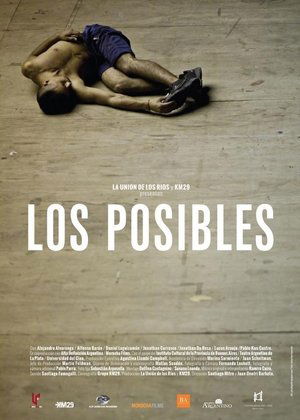
Santiago Mitre co-directs his first movement following The Student together with choreographer Onofri Barbato. Although it would have been more accurate to say “his first film-story-adventure-movie-great movie following The Student”, the word movement fits perfectly in Los posibles, the most overwhelmingly kinetic work Argentine cinema has delivered in many, many years. The film deals with the adaptation of a dance show directed by Onofri together with a group of teenagers who came to Casa La Salle, a center of social integration located in González Catán, trying to find some refuge from hardship. Already entitled Los posibles, the piece opened in the La Plata Tacec and was later staged in the AB Hall of the San Martín Cultural Center. Now, it dazzles audiences out of a film screen, with extraordinary muscles and a huge heart: Los posibles is a rhapsody of roughen bodies and torn emotions. Precise and exciting, it’s our own delayed, necessary, and incandescent West Side Story.
In an unfair country women work day and night far from home while their children learn to survive between loneliness and emptiness. They grow to become teenagers, locked down in one of many low income neighborhoods made up of identical small houses, outlined by overcrowding and scarcity. Their mothers, mostly workers in transnational factories, go in and out in buses that take them to a work place where they carry out twelve hour shifts two hours away from home, while their children muddle through their upbringing in tiny houses of 40 square meters. In spite of everything, they look for a way to move ahead and chase their illusions. This is a story full of youthful aspirations set in a context of difficulties and shortages.
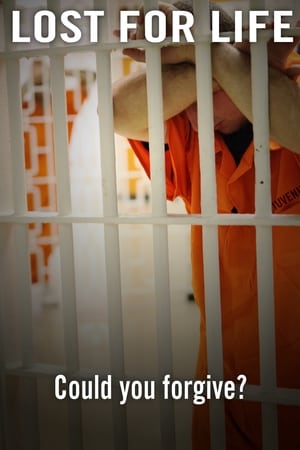
Travelling the length and breadth of Britain, the film explores the impact of teenage killings on families of different religion, race and class.
The story of Nisar Ahmed Khan, told through his children and the people he served, a spiritual guide whose followers still visit his tomb on his birth and death anniversaries. And alongside how his family spends a few days at the village keeping his traditions alive.
A meditation on an Alaskan autumn.
This short film reveals the story behind oatmeal cookies, from the farmer's field to fresh from the oven. Without words.
Rose, a young filmmaker looking for work, embarks on a retraining course to become a farmer. An initiatory tale that questions our relationship with the land, with art, and with the role of the filmmaker as an observer of our world.
Clear-eyed and intimate, Farmsteaders follows Nick Nolan and his young family on a journey to resurrect his late grandfather’s dairy farm as agriculture moves toward large-scale farming. A study of place and persistence, Farmsteaders points an honest and tender lens at everyday life in rural America, offering an unexpected voice for a forsaken people: those who grow the food that sustains us.
Rosa is a Mexican woman who, at the age of 17, migrated illegally to Austin, Texas. Some years later, she was jailed under suspicion of murder and then taken to trial. This film demonstrates how the judicial process, the verdict, the separation from her family, and the helplessness of being imprisoned in a foreign country make Rosa’s story an example of the hard life of Mexican migrants in the United States.