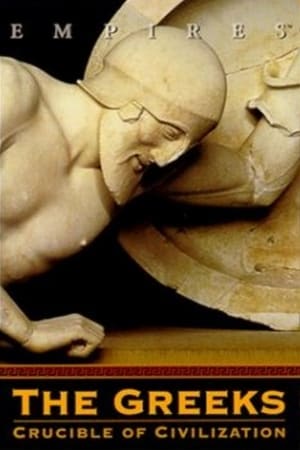
It was perhaps the most spectacular flourishing of imagination and achievement in recorded history. In the Fourth and Fifth Centuries BC, the Greeks built an empire that stretched across the Mediterranean from Asia to Spain. They laid the foundations of modern science, politics, warfare and philosophy, and produced some of the most breathtaking art and architecture the world has ever seen. This series, narrated by Liam Neeson, recounts the rise, glory, demise and legacy of the empire that marked the dawn of Western civilization. The story of this astonishing civilization is told through the lives of heroes of ancient Greece. The latest advances in computer and television technology rebuild the Acropolis, recreate the Battle of Marathon and restore the grandeur of the Academy, where Socrates, Plato and Aristotle forged the foundation of Western thought.
Handbook of Movie Theaters' History is a documentary about the history, the development in the present days and the future of movie theaters in the city of Turin, Italy. It mixes the documentary language with comedy and fiction, and is enriched by interviews to some of the most important voices of Turin cinematography. The film follows the evolution of movie theaters by enlightening its main milestones: the pre-cinema experiences in the late 19th Century, the colossals and the movie cathedrals of the silent era, the arthouse theaters, the National Museum of Cinema, the Torino Film Festival, the movie theaters system today and the main hypothesis about its future. The mission of Handbook of Movie Theaters' History is to explore and give back to the audience a deep reflection about the identity and the value of movie theater, in its social and anthropological role and as a mass media, and to analyze the experience of the viewer.
This is a film with music. Or about the music and texts that accompany, in a poetic way, a decisive battle between Unitarian and Federalists. The vicissitudes of the birth of a nation based on the play written by Mariano Llinás and Gabriel Chwojnik, whose images achieve some hypnotic strength.
Le Diable de la République : 40 ans de Front national
TGV, la réussite française
This is an Original Documentary Short-Film by Arrayanes about a pioneer in Alchemy on Uruguay: 'Francisco Piria'. We share the misteries and wonder about the city of 'Piria' and their simbology.
Thundering across the sky on elegant white wings, the Concorde was an instant legend. But behind the glamour of jet setting at Mach 2 were stunning scientific innovations and political intrigue. Fifteen years after Concorde's final flight, this documentary takes you inside the historic international race to develop the first supersonic airliner. Hear stories from those inside the choreographed effort to design and build Concorde in two countries at once - and the crew members who flew her.
TGV, 30 ans de vitesse
Viva El Vedado presents the history of the Havana neighborhood of El Vedado from the last quarter of the 19th century through the Cuban Revolution and highlights its varied and outstanding architecture. Known as a cultural center of Havana, Vedado is particularly notable for its unique collection of Cuban architecture of the 20th century. The film’s goal is to introduce its audiences to the neighborhood’s remarkable architecture, its vibrant life, and the need for preserving Vedado as part of Havana’s heritage. It is a glimpse beyond tourist fantasies and stereotypes, a rare view of one of Havana’s most important neighborhoods.
Charlie Marx and the Chocolate Factory started as an investigation of the link between politics and chocolate, at the Karl Marx Confectionary Factory in Kiev, Ukraine. Since access to the factory was denied, the project had to be re-considered, re-invented or re-enacted. Mostly made of archival footage and re-enacted performances based on the company's website, the film merges what was left of the initial idea with what has been collected and realized instead. It borrows from the genres of video art, 'Man on the street' interview, direct address, corporate film, essay, and music video, without legitimately belonging to any of them. The film unravels as a reflection on its own failure, and yet keeps on investigating what has always been at stake: the shift from public to private property (and from analog to digital technology), dialectics of permanence and change, language as a mirror of ideology, and post-Soviet oligarchy culture.
The U.S. Bullion Depository, better known as Fort Knox, is home of the United States Army and one of the world's most top secret fortresses. Hidden deep inside the vault is an estimated $73 billion dollars in gold. Almost all information about it is classified. Through interviews with eyewitnesses, rare photos and rarely seen films, we will construct a picture of what the building might look like. Hear testimony of those journalists and congressmen who were among the select few invited inside in 1974. Discover the history and secrets behind the Army's tank warfare and the classified military technologies it will use to fight the wars of the future.
Nieuw Licht - Het Rijksmuseum en de Slavernij
They were more than a million Jews. Between 1946 and 1974, this million is the number of forgotten fugitives, expelled from the Arab world, and whom history would like to forget, while the victims themselves have hidden their fate under a veil of modesty.
Kaiser Karl V. - Wunsch und Wirklichkeit
A family portrait in which the director profiles his grandmother, Odette Robert. Eustache includes in the film the conditions of its production — he is seated at the table with her, pours her some whiskey, speaks with the camera operator, manipulates the clapboard at the head and tail of the reels, and even takes a phone call. Robert, who was seventy-one, speaks rapidly and tells the story of her life, starting from her early childhood in villages in the Bordeaux region of France. A shorter version of the film ("Odette Robert") was edited in 1980 to be broadcast on television on TF1. The complete film only gained exposure in 2002, when it was salvaged by Boris Eustache, Thierry Lounas, João Bénard da Costa, Jean-Marie Straub, and Pedro Costa.
A historical overview of Sisak, the city on three rivers, from the Roman era to the post-WWII industrialization.
Choosing the fate of a rock musician was similar to being a dissident. From the 60s, the Soviet Union tried to discourage and restrict the expansion of rock music by any means. They called it the “rotten fruit of degraded capitalism, demoralizing the minds of Soviet youth”. Despite that, rock music broke the wall – made a hole in the Iron Curtain – and gained the hearts and minds of tens of thousands of young people.Rock musicians were on the frontline of the rebellion against the Soviet regime. Despite censorship, they managed to deliver, in a hidden, roundabout way through lyrics and music, the spirit of nonconformity and freedom of choice to their audience. A film about Latvian and Soviet rock pioneers, their lives and destinies.
A Place of Our Own
This intimate documentary explores the life and career of the stage legend Stephen Sondheim through six of his best-known songs.
1917: La révolution russe