Ashley Smith was a troubled 19-year-old when she choked herself to death at Ontario's Grand Valley Institution for Women. Her death made national headlines and led to a scathing report by Canada’s federal prison ombudsman. Incarceration for Ashley began at a youth detention centre in New Brunswick. Her crime: she had tossed crabapples at a mailman. Her one-month sentence stretched to almost four years, served in five provinces. With the prison videotapes and exclusive access to Smith’s parents, along with a fellow inmate, this documentary exposes a system that fails the many Ashley Smiths still incarcerated in Canadian institutions.
The death of punk icon and X-Ray Spex front-woman Poly Styrene sends her daughter on a journey through her mother's archives in this intimate documentary.
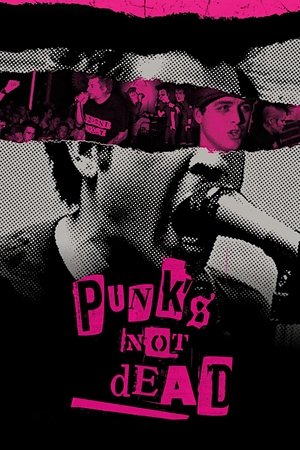
"Green Day: The Early Years" chronicles the rise of the world's most influential punk band, from their origins playing shows at Berkley's notorious Gilman Street venue in the late 80s, through the release of the platinum-selling Dookie in 1994.
One late night in June 1942, Sakuma Seitaro dangles from the frame of a skylight in an isolation cell in Akita Prison. He forces open the glass window and breaks out of jail. This crime even reaches the ears of Urata Susumu, the chief warden of Kosuge Prison in Tokyo. Urata had been in charge of those sentenced to life in the prison until last year. Although Sakuma is a dangerous person who had also broken out of jail in Aomori, he submits to Urata who is the only person who had treated him kindly in the past. However, three months after escaping from jail, Sakuma shows up at Urata’s house. He has come to complain about the inhumane Akita prison officers. But he is locked up again after Urata notifies the police during an unguarded moment. A year later, Sakuma is sent to Abashiri Prison and Urata is also ordered to transfer as the prison’s chief warden.
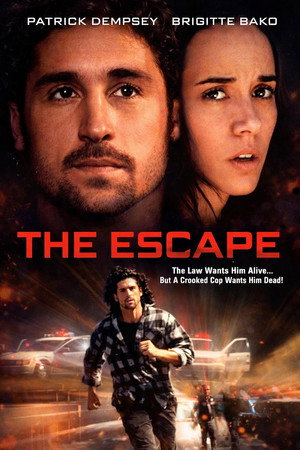
The true story of Dwight Worker, an American who was caught smuggling drugs in Mexico, and sentenced to fortress-like Lecumberri Prison where he endured brutal conditions. With the help of his wife, Barbara, he escaped the prison by disguising himself as a woman. He was the first prisoner to escape Lecumberri since Pancho Villa.
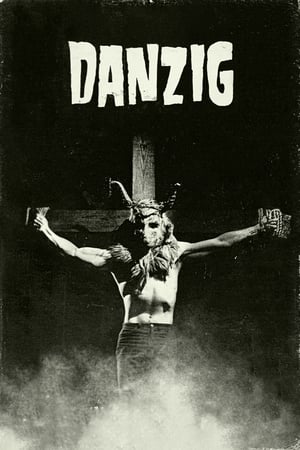
Documentary on the shock rock group "The Mentors".
Live perfomances and interviews from the post-punk era.
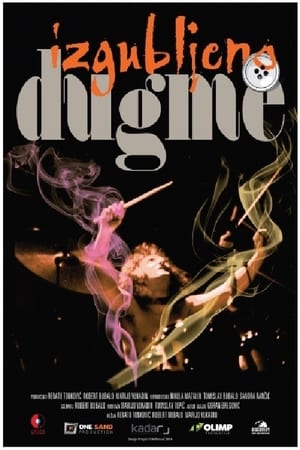
A documentary about punk and subculture scene of Pula, Croatia from 1978 to 1991, the city that gave birth to one of the most vivid punk and alternative rock scenes in former Yugoslavia, despite having population of just over 60,000 residents.
160 meters is the distance between the two banks of the estuary of Bilbao. An economic, social and cultural approach at two ways of looking at life.
Razing the Bar documents the development and eventual demolition of a well-loved fringe punk rock Seattle venue through interviews of employees, friends, and a multitude of local musicians.
The Big One is an investigative documentary from director Michael Moore who goes around the country asking why big American corporations produce their product abroad where labor is cheaper while so many Americans are unemployed, losing their jobs, and would happily be hired by such companies as Nike.
A sonic journey through Basque punk rock and the turbulent past that defined its sound, chronicling the rise of the gaztetxe movement.
Four-time Emmy winner John Kastner was granted unprecedented access to the Brockville facility for 18 months, allowing 46 patients and 75 staff to share their experiences with stunning frankness. The result is two remarkable documentaries: the first, NCR: Not Criminally Responsible, premiered at Hot Docs in the spring of 2013 and follows the story of a violent patient released into the community. The second film, Out of Mind, Out of Sight, returns to the Brockville Mental Health Centre to profile four patients, two men and two women, as they struggle to gain control over their lives so they can return to a society that often fears and demonizes them.
A Dutch documentary about the history of the anarchist punk band Crass. The film features archival footage of the band, and interviews with former members Steve Ignorant, Penny Rimbaud and Gee Vaucher.
Turn It Around: The Story of East Bay Punk spans over 30 years of the California Bay Area’s punk music history with a central focus on the emergence of the inspiring 924 Gilman Street collective. This diverse group of artists, writers, organizers and musicians created a do-it-yourself petri dish that changed the punk scene... and the world at large.
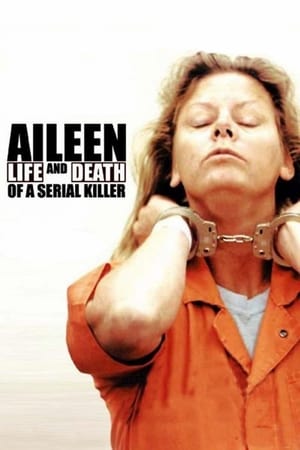
For the third time, HBO cameras go inside Trenton State Maximum Security Prison--and inside the mind of one of the most prolific killers in U.S. history--in this gripping documentary. Mafia hit man Richard Kuklinski freely admits to killing more than 100 people, but in this special, he speaks with top psychiatrist Dr. Park Dietz in an effort to face the truth about his condition. Filled with more never-before-revealed confessions, it's the most chillingly candid Iceman special yet as it combines often-confrontational interview footage between Kuklinski and Dietz with photos, crime reenactments and home movies that add new layers to this evolving and fascinating story.
Despite her parents' misgivings, Brianne marries Clay, and the couple soon have a daughter. It's then that Clay begins to show the first signs that he's unhinged. When he sees Brianne innocently talking to a man, Clay shoots him dead. At first, Brianne believes that her love for her husband can prevail. But when authorities threaten to take away custody of her daughter, she learns a horrible truth about her past.
True story of a couple charged with manslaughter when their rejection of modern medicine in favor of religion to treat their diabetic child resulted in his death.
This driver’s education film from the early 1970s, "Alcohol and Red Flares", warns viewers of the dangers of drunk driving. It recounts the story of a man named “Mike” who drinks heavily at a party, and insists on driving home. The consequences are steep and along the way, viewers learn about Blood Alcohol Level (also known as BAC or Blood Alcohol Content), techniques police use to verify a driver’s inebriation such as the breathalyzer, and the reasons why driving drunk is so dangerous. This film was produced by legendary social guidance filmmaker Sid Davis in cooperation with the Monterey Park Police Department.
Street art, creativity and revolution collide in this beautifully shot film about art’s ability to create change. The story opens on the politically charged Thailand/Burma border at the first school teaching street art as a form of non-violent struggle. The film follows two young girls (Romi & Yi-Yi) who have escaped 50 years of civil war in Burma to pursue an arts education in Thailand. Under the threat of imprisonment and torture, the girls use spray paint and stencils to create images in public spaces to let people know the truth behind Burma's transition toward "artificial democracy." Eighty-two hundred miles away, artist Shepard Fairey is painting a 30’ mural of a Burmese monk for the same reasons and in support of the students' struggle in Burma. As these stories are inter-cut, the film connects these seemingly unrelated characters around the concept of using art as a weapon for change.