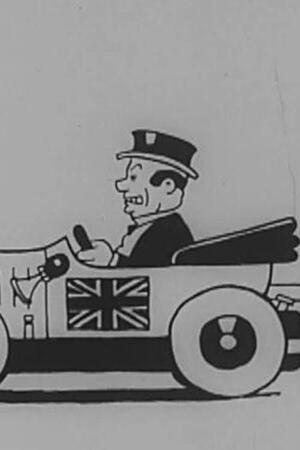
First World War animated propaganda short, extolling Britain's naval history and mocking the German navy.
Animated WWI-era comic highlights from the innovative cartoonist George Studdy, creator of Bonzo the dog.
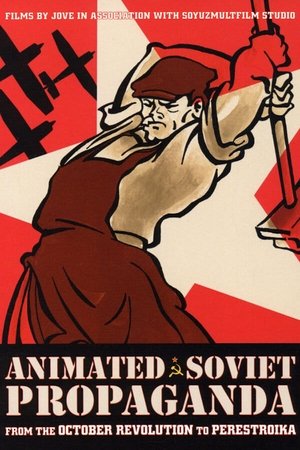
A landmark four disc Box Set - Unearthed from Moscow's legendary Soyuzmultfilm Studios, the 41 films in ANIMATED SOVIET PROPAGANDA span sixty years of Soviet history (1924 - 1984), and have never been available before in the U.S.
Don’t judge a book by its cover but do judge a political party by its garage.
World War II propaganda trailer asking travellers to have patience and make concessions when travelling on trains. Film mostly consists of rostrum animation of still cartooned images with some very short pieces of true animation. (BFI)
This remarkable documentary dedicates itself to an extraordinary chapter of the second World War – the psychological warfare of the USA. America’s trusted cartoon darlings from the studios of Warner Bros., Paramount, and the “big animals” of the Disney family were supposed to give courage to the people at the homefront, to educate them, but also to simultaneously entertain them. Out of this mixture grew a genre of its own kind – political cartoons. Insightful Interviews with the animators and producers from back then elucidate in an amusing and astonishing way under which bizarre circumstances these films partially came into existence.
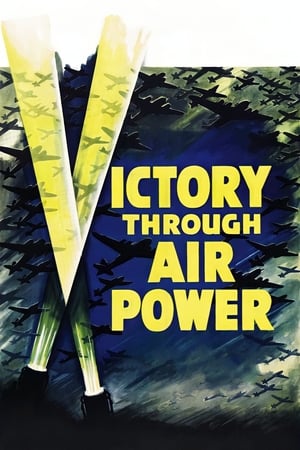
Based on the book by Major Alexander de Seversky's about his theories of the practical uses of long range strategic bombing. Using a combination of animation humorously telling about the development of air warfare, the film shows de Seversky illustrating his ideas of how air power could win World War II for the Allies.
Tugging Diary documents a footbridge over a year between August 2019 to January 2021. Due to social unrest and the uncertainty of various immediate happenings, both the internet and physical spaces act as critical communication platforms of its own during this period. As such, information can be circulated in the community more widely and rapidly outside of the existing mainstream media. As time goes by, these materials are continuously altered, some were renewed, while the others were removed, covered with paint, or overlaid by other information.
The first Greek animated film was shot by the cartoonist Stamatis Polenakis (1908-1997) with the title "The Duce tells...". The seven-minute "Mickey-Mouse-style" film, as its creator mentions in the credits, satirizes the Italian invasion of Greece on October 28, 1940, and especially Mussolini, who recounts his exploits, but reality constantly contradicts him. Stamatis Polenakis, one of the leading Greek cartoonists of the 20th century and a pioneer of animation in our country, began drawing the sketches for the film in 1942 in his hometown, Sifnos, where he had taken refuge during the Occupation. He worked under the boot of the Italian conqueror, risking arrest. The film was lost during the Civil War and it was not until 1980 that a negative was found and restored.
Short cartoon made for US military soldiers during World War Two.
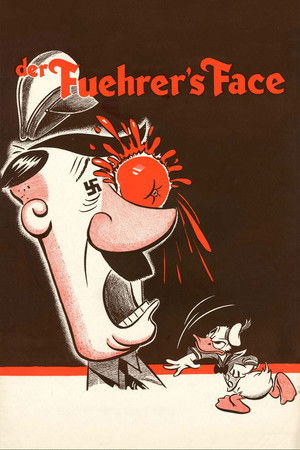
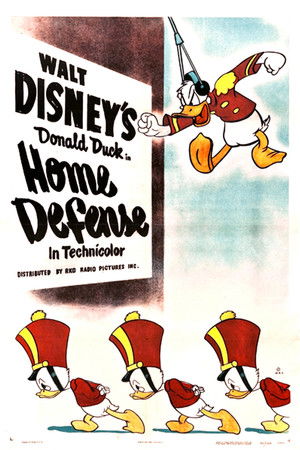
A marching band of Germans, Italians, and Japanese march through the streets of swastika-motif Nutziland, serenading "Der Fuehrer's Face." Donald Duck, not living in the region by choice, struggles to make do with disgusting Nazi food rations and then with his day of toil at a Nazi artillery factory. After a nervous breakdown, Donald awakens to find that his experience was in fact a nightmare.
A propaganda film during World War II about a boy who grows up to become a Nazi soldier.
The Sailor and the Seagull was released by the U.S. Navy in 1949 with a simple goal: encouraging servicemen to re-enlist. In the film, a disgruntled sailor named McGinty complains about the raw deal he believes he is receiving by serving in the Navy. As luck would have it, a seagull comes to release him from service so that he can experience the freedom of civilian life. McGinty soon learns, however, that civilian life means less freedom and less money than he had imagined and quickly jumps at the chance to re-enlist. (cont. http://blogs.archives.gov/unwritten-record/2013/09/26/sailor-and-the-seagull/)
Lu Dahai and his shipbuilding team want the 10,000-ton ocean freighter "The East" to be given a sea trial. But the ship is made with domestic parts, and Chen Zongjie, a leader of the Party Committee of the Bureau of Foreign Transport, believes that the quality is not sufficient, and orders that the parts be replaced with imported ones before the sea trial takes place. In the end, the sea trial not only sets a successful new record, but also rescues a Taiwanese fishing boat in distress.
A psychedelic animated short celebrating America's bicentennial. The film " provides a short, impressionistic history of the U.S. through famous American symbols, including the Statue of Liberty; the Woodstock logo; the Liberty Bell; and Mt. Rushmore. The symbols are layered on top of each other, as can be seen from a bald eagle hatching from a red, white, and blue egg and flying past the American Gothic farmers, the U.S. Capitol building, the Golden Gate Bridge, Abraham Lincoln’s cabin, and an American bison. The film was directed by Vince Collins" (US National Archives).
Short animation from the early 1970s made in attempt to stop movie theater patrons from subscribing to pay TV.
A combination of Lightning Sketches along with stop-motion animation illustrate England's reactions and responses in World War One.
Animated film based on the comic strip "Jerry on the Job" - a man on the station platform tells Jerry Flannigan and Mr. Givney that he knows how to run a train without coal.
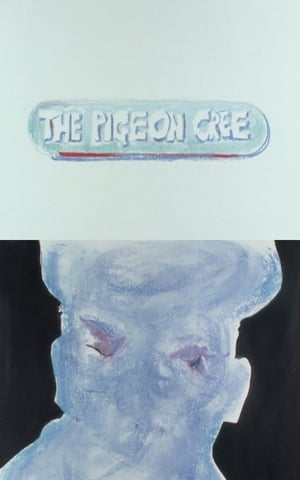
A pastel animation produced by Sheila Graber and based upon the short story by Sid Chaplin. Narrated by north east broadcaster Mike Neville the film tells the story of Geordie, a miner, and his love for his pigeons and the trials and tribulations of his passion which is very popular around the region. The face of Sid Chaplin is used as Geordie.
A doctor persuades a group of boys to be vaccinated by explaining how it will protect them against disease. Animated sequences depict the body metaphorically as a city, defended by the blood cells, which are stimulated by vaccination to amass arms and ammunition, in order to defend the city when it is invaded by germs.