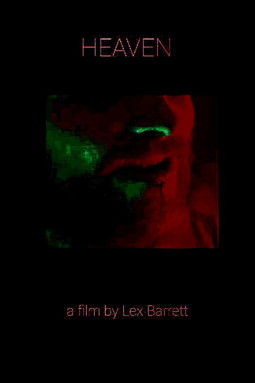
A short film on the obsessive nature of love. How far can we take our attachment and devotion to our loved ones?
A spate of robberies in Southern California schools had an oddly specific target: tubas. In this work of creative nonfiction, d/Deaf first-time feature director Alison O’Daniel presents the impact of these crimes from an unexpected angle. The film unfolds mimicking a game of telephone, where sound’s feeble transmissibility is proven as the story bends and weaves to human interpretation and miscommunication. The result is a stunning contribution to cinematic language. O’Daniel has developed a syntax of deafness that offers a complex, overlaid, surprising new texture, which offers a dimensional experience of deafness and reorients the audience auditorily in an unfamiliar and exhilarating way.
In a leafy forest, a Galician sovereign who longs to attain wisdom meets a sorcerer, who tells him: “Go back to your country and study the Earth and the Stars in the sky; anywhere in the world reflects an image of it. You will ride on this arrow, which you must keep for a hundred years and a day. After this time, stick it in the widest valley of all those you possess, with the tip facing the sky. Then the Moon will come and, just as it exerts its action on the waters of the sea, it will act on the arrow, turning it into a holy mountain." - Legend about the Pico Sacro Inspired by Hokusai's views of Mount Fuji and Cézanne's paintings of Mont Sainte-Victoire, "Pico Sacro [The Holy Mountain]" aims to reveal the mystery and the magic that underlie reality.
A lone passenger is reflected in the windows of a train crawling through layers of textures towards Minsk. During his absence, the city has not changed: all the streets are frozen, long-gone voices can be heard in the empty rooms and around the corner you can find yourself in a video game from your childhood.
Suppressed memories reach a boiling point. An animated tale of longing. “The Experimental section saw Non Films’ Dull Hope scoop the premier place as category winner. Half animation and half movie footage, this hybrid resonated very much with the judging panel who deemed it to be a sad dirge on personal memories and heartbreak.” – The Guardian Directed & Animated by Brian Ratigan Music & Sound Design by Nick Punch (R.I.P.) Produced by Non Films
This experimental short traces the lifespan of the graffiti and murals present at the occupation of NYC’s City Hall in June and July of 2020. The encampment formed to demand the abolishment of the NYPD and the reallocation of its resources to housing, education, and other social programs.
A musical horror story about two young women who are stalked through a shopping mall by a cannibal. He follows them home, and here the victims become the aggressors.
Arktis is a poetic approach to the bizarre landscape of ice, rock, and water; a journey to the arctic ocean and surroundings, with images and sounds. Seventy one-second scenes of the arctic serve as the original material, which is then transformed in its texture, time lapse, color and light qualities to create a material reminiscent of landscape painting. The sound collage uses fragments from sounds of nature and samples from a piece of music for violin and song, which are also transformed in a manner similar to that of the visual pictures. (Jürgen Reble)
Inside a block of flats, a young woman decides to act about something concerning her for a long time.
An experimental short film.
A short artist film that explores femininity and sexuality. SHE journeys through her life and mind in order to be reborn, and reclaim all that men have taken from her.
Brakhage's frame-by-frame hand carvings and etchings directly into the film emulsion, sometimes photographically combined with paint, are illuminated by Solomon's optical printing; this footage was then edited by Solomon into a four part 'seasonal cycle'. This film can be considered to be part of a larger, 'umbrella' work by Brakhage entitled «...» . Seasons... is inspired by the colors and textures found in the woodcuts of Hokusai and Hiroshige, and the playful sense of forms dancing in space from the film works of Robert Breer and Len Lye.
A man and woman are drawn together, entangled in the lifecycle of an ageless organism. Identity becomes an illusion as they struggle to assemble the loose fragments of wrecked lives.
Trade Tattoo went even further than Rainbow Dance in its manipulation of the Gasparcolor process. The original black and white footage consisted of outtakes from GPO Film Unit documentaries such as Night Mail. Lye transformed this footage in what has been described as the most intricate job of film printing and color grading ever attempted. Animated words and patterns combine with the live-action footage to create images as complex and multi-layered as a Cubist painting. Music was provided by the Cuban Lecuona Band. With its dynamic rhythms, the film seeks (in Lye’s words) to convey “a romanticism about the work of the everyday in all walks of life."
A film essay that intertwines the director's gaze with that of her late mother. Beyond exploring mourning and absence as exclusively painful experiences, the film pays tribute to her mother through memories embodied by places and objects that evidence the traces of her existence. The filmmaker asks herself: What does she owe her mother for who she is and how she films? To what extent does her film belong to her?
To forget about the end of a relationship, a woman fantasizes about an ideal one. Fantasy and reality begin to melt into one another, but the past finds a way to rear its head again. Films used: Notorious (1946) Gaslight (1944)
In the 1970s, Director Kim is obsessed by the desire to re-shoot the ending of his completed film Cobweb, but chaos and turmoil grip the set with interference from the censorship authorities, and the complaints of actors and producers who can't understand the re-written ending. Will Kim be able to find a way through this chaos to fulfill his artistic ambitions and complete his masterpiece?
A live action footage of a smiling, bespectacled (presumably) Western tourist set against the familiar cadence of an accelerating train revving up as it leaves the station sets the mesmerizing tone for the film's abstract panoramic survey of an Ozu-esque Japanese landscape of electrical power lines, passing trains, railroad tracks, and the gentle slope of obliquely peaked, uniform rooflines as Breer distills the essential geometry of Mount Fuji into a collage of acute angles and converging (and bifurcating) lines .
Drawing from archives, through the collective force of invention and resistance, and evoking the creative power of Black people, the film summons sonic and visual memories to construct an insurgent remix.
Michelle