It's 1974. Muhammad Ali is 32 and thought by many to be past his prime. George Foreman is ten years younger and the heavyweight champion of the world. Promoter Don King wants to make a name for himself and offers both fighters five million dollars apiece to fight one another, and when they accept, King has only to come up with the money. He finds a willing backer in Mobutu Sese Suko, the dictator of Zaire, and the "Rumble in the Jungle" is set, including a musical festival featuring some of America's top black performers, like James Brown and B.B. King.
A look at the Brazilian black movement between 1977 and 1988, going by the relationship between Brazil and Africa.
Documentary about the Egyptian club Al-Ahly achieving the title of the African Champions League for the ninth time (2020) after failing to achieve the title since 2013, and the film revolves in several chapters between failure and fear until we reach the title.
An epic journey along Africa's Great Green Wall — an ambitious vision to grow a wall of trees stretching across the entire continent to fight against increasing drought, desertification and climate change.
The destiny of women is irrevocably linked to blood. Between tradition and modernity, the female body has been marketed, honored, and mutilated.
This in-depth look into the powerhouse industries of big-game hunting, breeding and wildlife conservation in the U.S. and Africa unravels the complex consequences of treating animals as commodities.
Bokassa Ier, empereur de Françafrique
How African artists have spread African culture all over the world, especially music, since the harsh years of decolonization, trying to offer a nicer portrait of this amazing continent, historically known for tragic subjects, such as slavery, famine, war and political chaos.
A journey back through Dacia Maraini's and her trips around the world with her close friends cinema director Pier Paolo Pasolini and opera singer Maria Callas. An in-depth story of this fascinating woman's life. Maraini's memories come alive through personal photographs taken on the road as well as her own Super 8 films shot almost thirty years ago.
Edeltraut Hertel - a midwife caught between two worlds. She has been working as a midwife in a small village near Chemnitz for almost 20 years, supporting expectant mothers before, during and after the birth of their offspring. However, working as a midwife brings with it social problems such as a decline in birth rates and migration from the provinces. Competition for babies between birthing centers has become fierce, particularly in financial terms. Obstetrics in Tanzania, Africa, Edeltraud's second place of work, is completely different. Here, the midwife not only delivers babies, she also trains successors, carries out educational and development work and struggles with the country's cultural and social problems.
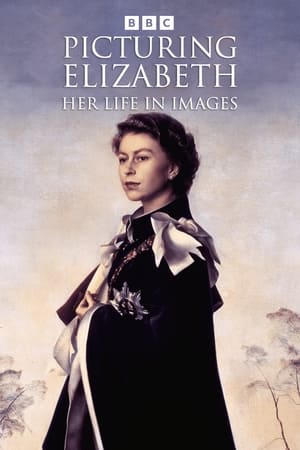
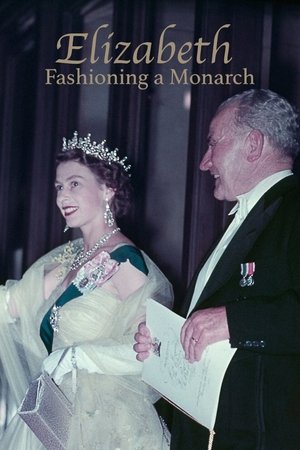
Elizabeth Windsor tells the story of the girl who was never supposed to be Queen. Born the first daughter of 'the spare', the Duke of York, Princess Elizabeth's life was destined to be nothing more than a bit part in the privileged shadows of the British Royal family.
The story of Queen Elizabeth II in her own words, featuring never-before-seen home movies.
In Uganda, AIDS-infected mothers have begun writing what they call Memory Books for their children. Aware of the illness, it is a way for the family to come to terms with the inevitable death that it faces. Hopelessness and desperation are confronted through the collaborative effort of remembering and recording, a process that inspires unexpected strength and even solace in the face of death.
An Austrian director followed five successful African music and dance artists with his camera and followed their lives for a year. The artists, from villages in Ghana, Gambia and Congo, were the subjects of Africa! Africa! touring across Europe, but they have unbreakable roots to their homeland and their families. Schmiderer lovingly portrays his heroes, who tell their stories about themselves, their art and what it means to them to be African with captivating honesty. The interviews are interwoven with dance scenes and colourful vignettes set to authentic music.
Shot with stunning elegance and clarity, NAKED SPACES explores the rhythm and ritual of life in the rural environments of six West African countries (Mauritania, Mali, Burkino Faso, Togo, Benin and Senegal). The nonlinear structure of NAKED SPACES challenges the traditions of ethnographic filmmaking, while sensuous sights and sounds lead the viewer on a poetic journey to the most inaccessible parts of the African continent: the private interaction of people in their living spaces.
"Africa Light" - as white local citizens call Namibia. The name suggests romance, the beauty of nature and promises a life without any problems in a country where the difference between rich and poor could hardly be greater. Namibia does not give that impression of it. If you look at its surface it seems like Africa in its most innocent and civilized form. It is a country that is so inviting to dream by its spectacular landscape, stunning scenery and fascinating wildlife. It has a very strong tourism structure and the government gets a lot of money with its magical attraction. But despite its grandiose splendor it is an endless gray zone as well. It oscillates between tradition and modernity, between the cattle in the country and the slums in the city. It shuttles from colonial times, land property reform to minimum wage for everyone. It fluctuates between socialism and cold calculated market economy.
This film speaks of archaic peoples, their customs and mores, in an attempt to make the last snapshots of their traditional lifestyles before they are gone for good.
Watch the chilling tale of African women whose fertility was tragically stripped away through an experimental tetanus vaccination program. Are women from other continents next?
This film is the result of more than two years of work tracking down archive material and witnesses close to Mobutu in Africa, Europe and the U.S. More than 950 hours of footage have been seen by the world. Among the 104 hours selected as the basis for this film, are 30 hours of archives recently discovered in Kinshasa and never before released. Completing these exceptional documents, are more than 50 hours of interviews with those close to the former president and the events surrounding his reign, conducted by the director in Kinshasa, Brussels, Paris and Washington. Like a vast historical puzzle, this film pieces together the tragic history of a country, and its self-styled leader - the dictator, Mobutu Sese Seko, "King of Zaïre".
An ethnographic documentary following four Ju/’hoansi (!Kung) men during a multi-day giraffe hunt in the Kalahari Desert, filmed during the Smithsonian–Harvard Peabody expedition of 1952–53.