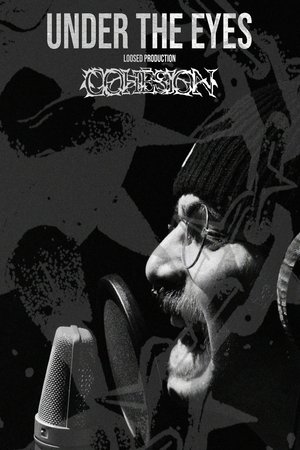
A documentary exploring the sporadic connections between baseball and punk rock.
When a punk band scores their first tour, life on the road proves tough when they are joined by a man-eating demon as a roadie.
A real time journey witnessing the rise, fall, and ultimate redemption of the fierce feminist pioneers of American grunge punk: L7.
In 2007, 11 years after one of the most influential American punk bands, Jawbreaker, called it quits, the three members, Blake Schwarzenbach, Chris Bauermeister, and Adam Pfahler reconnect in a San Francisco recording studio to listen back to their albums, reminisce and even perform together one last time. Follow the band as they retell their "rags to riches to rags" story writhe with inner band turmoil, health issues, and the aftermath of signing to a major label. Featuring interviews with Billy Joe Armstrong, Steve Albini, Jessica Hopper, Graham Elliot, Chris Shifflet, Josh Caterer and more.
Two former geeks become 1980s punks, then party and go to concerts while deciding what to do with their lives.
Bill Bartell was a multifaceted individual who traversed the punk rock scene, law enforcement, rodeo riding, and country music. Known for his unique contribution to punk rock through his label Gasatanka Records and band White Flag, Bartell's life defies conventional boundaries, blending hyper-masculinity with subcultural rebellion. His story, filled with mysterious and seemingly contradictory roles, offers a compelling narrative about identity, transformation, and the unexpected paths life can take.
As the first all-female band to play their instruments, write their songs and have a No. 1 album, The Go-Go’s made history. Underpinned by candid testimonies, this film chronicles the meteoric rise to fame of a band born in the LA punk scene who became a pop phenomenon.
Street art, creativity and revolution collide in this beautifully shot film about art’s ability to create change. The story opens on the politically charged Thailand/Burma border at the first school teaching street art as a form of non-violent struggle. The film follows two young girls (Romi & Yi-Yi) who have escaped 50 years of civil war in Burma to pursue an arts education in Thailand. Under the threat of imprisonment and torture, the girls use spray paint and stencils to create images in public spaces to let people know the truth behind Burma's transition toward "artificial democracy." Eighty-two hundred miles away, artist Shepard Fairey is painting a 30’ mural of a Burmese monk for the same reasons and in support of the students' struggle in Burma. As these stories are inter-cut, the film connects these seemingly unrelated characters around the concept of using art as a weapon for change.
Que Esse Grito Não Seja em Vão!
La Polla Records, one of the most legendary punk bands, returns to bid its farewell. To celebrate the group's last tour, its singer, Evaristo Páramos, revives 40 years of history from his town in the Basque Country. This is the extraordinary tale of villagers who revolutionised incensed music with songs turned into hymns by their thousands of followers.
Inspired by Steven Blush's book "American Hardcore: A tribal history" Paul Rachman's feature documentary debut is a chronicle of the underground hardcore punk years from 1979 to 1986. Interviews and rare live footage from artists such as Black Flag, Bad Brains, Minor Threat, SS Decontrol and the Dead Kennedys.
A rather incoherent post-breakup Sex Pistols "documentary", told from the point of view of Pistols manager Malcolm McLaren, whose (arguable) position is that the Sex Pistols in particular and punk rock in general were an elaborate scam perpetrated by him in order to make "a million pounds."
Crash 'n' Burn is an experimental film shot in and named after Toronto, Ontario's first punk rock club. (Not to be confused with Peter Vronsky's similarly titled 1977 documentary on the Toronto punk scene made for the CBC television network.) The film, shot on 16mm black-and-white stock, features performances by Dead Boys, Teenage Head, The Boyfriends, and The Diodes".
The great alt-country band Uncle Tupelo played its last concert on May 1, 1994, at Mississippi Nights in St. Louis, Missouri. By the time of this show, Jeff Tweedy and Jay Farrar were already not getting along well. Soon after the performance, they would both go on to create other bands, with Farrar founding Son Volt and Tweedy forming Wilco, but on that night in May 1994, there was one last grasp at combined harmony and greatness. In the video below, Tweedy and Farrar trade off on the lead vocals, with drummer Mike Heidorn joining the band on the final song of the set, “Looking for a Way Out,” and also singing on the encore with Brian Henneman and the Bottle Rockets on Lynyrd Skynyrd’s “Gimme Three Steps.”
The true-life story of Darby Crash, who became an L.A. punk icon with his band The Germs. Along with Lorna Doom, Pat Smear, and Don Bolles, Darby Crash completely transformed the L.A. punk scene, while sacrificing everyone he loved, his career, and ultimately his life.
In 1978 the Undertones released Teenage Kicks, one of the most perfect and enduring pop records of all time - an adolescent anthem that spoke to teenagers all over the globe. It was the first in a string of hits that created a timeless soundtrack to growing up, making the Undertones one of punk rock's most prolific and popular bands.
The Los Angeles punk music scene circa 1980 is the focus of this film. With Alice Bag Band, Black Flag, Catholic Discipline, Circle Jerks, Fear, Germs, and X.
Bruce Macdonald follows punk bank Hard Core Logo on a harrowing last-gasp reunion tour throughout Western Canada. As magnetic lead-singer Joe Dick holds the whole magilla together through sheer force of will, all the tensions and pitfalls of life on the road come bubbling to the surface.
Documentary following Roger Miret and Vinnie Stigma of the band, Agnostic Front who played a key role in defining, shaping and establishing the sound and cultural code of conduct for the still-thriving movement. Unlike the dozens of bands that have come and gone, Agnostic Front is still going strong.
Anne Bean, John McKeon, Stuart Brisley, Rita Donagh, Jamie Reid and Jimmy Boyle are interviewed about their artistic practice and the legacy of Surrealism on their work.