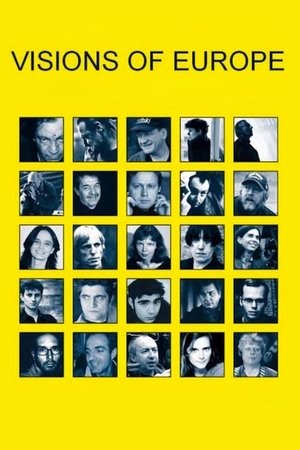
Twenty-five films from twenty-five European countries by twenty-five European directors.
Made for screening at the U.S. Pavilion at the 1974 World's Fair in Spokane Washington, USA, which had a Native-American environmental theme, MAN BELONGS TO THE EARTH depicts the history of air, water, and earth pollution, and how environmentalists are trying to solve these problems using various technologies.
A mysterious rumble splits the sky and reverberates in the middle of the forest. A man delves into its depths to discover its origin and answer the questions presented by the universe.
The story of the evolution of tropical rain forests, their recent and rapid destruction, and the intense efforts of scientists to understand them even as they disappear. This film gives viewers a better appreciation of the importance of tropical rain forests on a global scale.
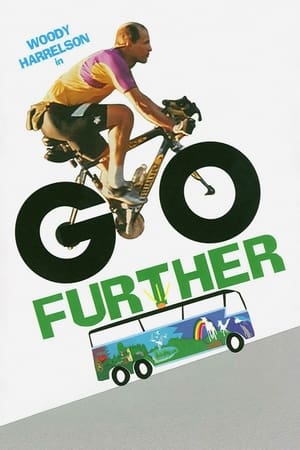
"Go Further" explores the idea that the single individual is the key to large-scale transformational change. The film follows actor Woody Harrelson as he takes a small group of friends on a bio-fueled bus-ride down the Pacific Coast Highway. Their goal? To show the people they encounter that there are viable alternatives.
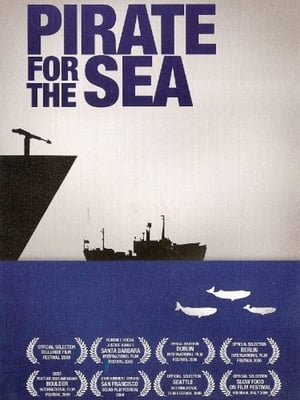
From space, our planet appears as a tiny blue dot in the vastness of space. Blue, because 99% of all living space on Earth occurs in the Ocean. But the seas are under threat. The industrialization that has occurred in the oceans over the last century mirrors the events that triggered mass extinctions on land. As we learn of the ecological crimes occurring worldwide, we also uncover the shocking truths happening on our own shorelines.
Within the heart of New Jersey, a scorched wilderness stands in defiance of the encroaching megalopolis that surrounds it. Once deemed inhospitable; north and south, rural and suburban, harmony and disruption, truth and folklore, all merge and contradict around the stories that unite individuals living among the land. Spanning six years, the film paints a portrait of nature and identity that aims to capture the surreal wonder of the Pinelands during a time when corruption threatens to undermine its few protections.
Indigenous chief Juma Xipaia fights to protect tribal lands despite assassination attempts. Her struggle intensifies after learning she's pregnant, while her husband, Special Forces ranger Hugo Loss, stands by her side.
A short documentary on the River Ouse, following it downstream from Lewes to Newhaven, meditating on the surrounding area.
From the UFC Octagon in Las Vegas and the anthropology lab at Dartmouth, to a strongman gym in Berlin and the bushlands of Zimbabwe, the world is introduced to elite athletes, special ops soldiers, visionary scientists, cultural icons, and everyday heroes—each on a mission to create a seismic shift in the way we eat and live.
This documentary explores a variety of projects undertaken by scientists at Environment Canada's Freshwater Institute in Winnipeg to study the processes that pollute or disrupt clean and balanced freshwater environments.
Olla a pressió: Aiguamolls en perill
Off-grid is not a state of mind. It is not about being out of touch, living in a remote place, or turning off your mobile phone. Off-grid simply means living without a connection to the electric and natural gas infrastructure. From 2011 to 2013 Jonathan Taggart (Director) and Phillip Vannini (Producer) spent two years travelling across Canada to find 200 off-gridders and visit them in their homes. -
Filmed at Masonboro Island, an undeveloped barrier island in southeastern North Carolina, “Tides” contemplates the liminal space between the modern technological world and that more ecological dimension we label as “nature” or “the environment.”
Before the creation of the secret cities of Los Alamos, Oak Ridge and Hanford, the Manhattan Project hired the Mallinckrodt Chemical Works of St. Louis to refine the first uranium used in the atomic bomb dropped on Hiroshima. For the next two decades, Mallinckrodt continued its classified work for the Atomic Energy Commission during the Cold War. The resulting radioactive waste contaminated numerous locations in the St. Louis area some of which have not been cleaned up 70 years after the end of World War II. Told through the eyes of an overexposed worker, the story expands through a series of interviews that careen down a toxic pathway leading to a fiery terminus at a smoldering, radioactively-contaminated landfill. The First Secret City reveals a forgotten history and its continuing impact on the community in the 21st Century, uncovering past wrongdoing and documenting the renewed struggles to confront the issue.
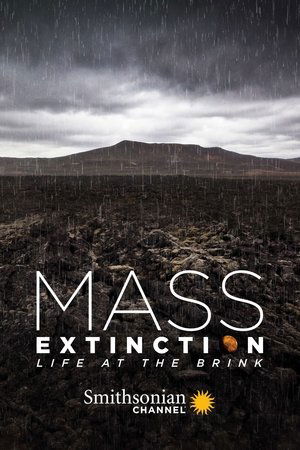
It's death on an unimaginable scale, when a majority of Earth's species quickly die out. It's called "mass extinction," and it's happened at least five times before. Cataclysms, such as supervolcanoes or asteroids, are thought to cause these events, but some experts believe a manmade mass extinction could be next. Is our planet in trouble? And if so, is there anything we can do to stop the next catastrophic annihilation? Experts are traveling the world, performing groundbreaking scientific detective work to answer these very questions.
This documentary film follows farmers and activists fighting together to stop the Indiana Enterprise Center, a mega-sized industrial park planned west of South Bend, Indiana
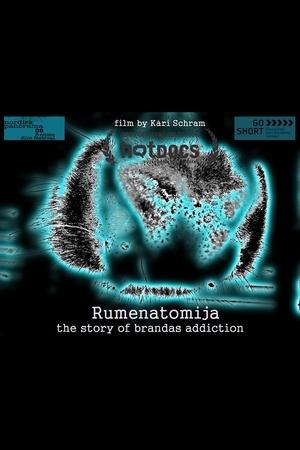
Branda has hit rock bottom. Her addiction has spiralled so far out of control that medical intervention is the only option left. She's forced to confront her darkest demons in order to lick her deadly appetite, and must apply all 12 steps to her four stomachs - Branda is a cow addicted to eating plastic bags. It's easy to find humour and irony in Branda's toxic lifestyle, harder to admit that we're the ones being ridiculed.
Humanity’s ascent is often measured by the speed of progress. But what if progress is actually spiraling us downwards, towards collapse? Ronald Wright, whose best-seller, “A Short History Of Progress” inspired “Surviving Progress”, shows how past civilizations were destroyed by “progress traps”—alluring technologies and belief systems that serve immediate needs, but ransom the future. As pressure on the world’s resources accelerates and financial elites bankrupt nations, can our globally-entwined civilization escape a final, catastrophic progress trap? With potent images and illuminating insights from thinkers who have probed our genes, our brains, and our social behaviour, this requiem to progress-as-usual also poses a challenge: to prove that making apes smarter isn’t an evolutionary dead-end.
A guy named Peter learns several facts about plastic's impact on the environment.