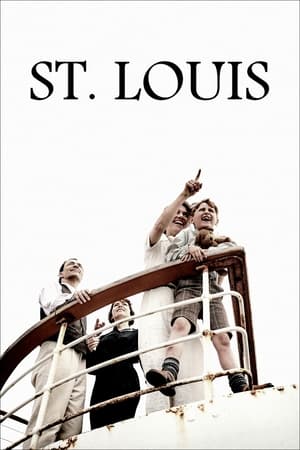
Hamburg, Germany, 1939. Getting a passage aboard the passenger liner St. Louis seems to be the last hope of salvation for more than nine hundred German Jews who, desperate to escape the atrocious persecution to which they are subjected by the Nazi regime, intend to emigrate to Cuba.
Hamburg, summer 1945: The young English control officer Captain Hannes Hacker arrives in the Hanseatic city to initiate the establishment of a new, liberal German radio station - in the Funkhaus on Rothenbaumchaussee. But Hacker also has private ties to Hamburg. He was born here and lived here until he had to leave his hometown on a Jewish Kindertransport.
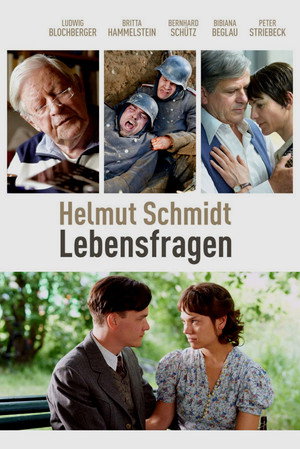
On December 23, 2013, former Federal Chancellor Helmut Schmidt will be 95 years old. As the second Social Democratic head of government in the Federal Republic of Germany, he shaped the country like few other chancellors. Even 30 years after the end of his time in government, he is still a highly esteemed expert whose advice and opinions are in demand. He is one of the most popular chancellors among the population and is held in the highest esteem by his party; even his political opponents at the time pay him the greatest respect.
Short documentary about a Hamburg tenants' initiative that is fighting for its neighborhood.
Short-documentary about the squat at Amandastraße 73 in Hamburg.
Music as a counter-project to a bourgeois existence: Musicians, club and label operators, record store owners and other music lovers talk about how, despite social and economic constraints, they realize their very different, bohemian and sometimes precarious life projects on the sidelines - and always go on. Detailed essays, experience reports, portraits and interviews are dedicated to the alternative music and club scene in Berlin and Hamburg.
The Hanseatic City of Hamburg is documented without narration.
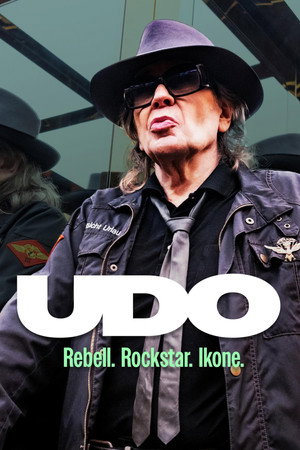
Celebrating Udo Lindenberg’s 80th birthday, exploring his extraordinary career as one of Germany’s most influential rock musicians. The film traces his rise from a rebellious young artist to a national icon, highlighting his music, political activism, and unique personality. Through interviews, archival footage, and behind-the-scenes insights, the documentary showcases Lindenberg’s cultural impact and enduring legacy in the German music scene.
A study of the alienated people who frequent the Ballhaus Barmbek dance hall, including an obese El groupie, an old man reciting poetry, two young women and a regular dance employee.
Ayşe Polat grows up in Hafenstraße in Hamburg in the 1980s. The 15-year-old is surrounded by crime and is quickly pigeonholed by outsiders because of her living situation. However, the criminal environment doesn't say much about the person.
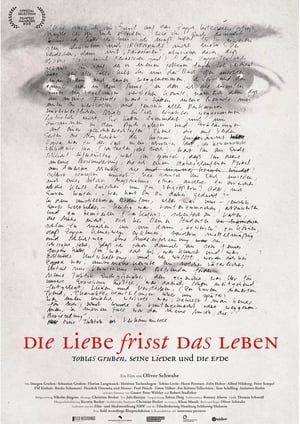
A documentary about the underground singer-songwriter Tobias Gruben, his upbringing and his musical career, featuring past live perfomances by himself and cover versions of his songs by contemporary artists.
[ÒDIO] is a polyphonic work that resonates as a choral dramaturgy: a fabric of gazes and contrasting testimonies on the spread of violence, emerging from encounters with dozens of young people of various nationalities and backgrounds. A three-chapter documentary film that we shot by placing a lightweight blue photographic backdrop in schools, cultural spaces, and reception centers, starting from Rimini, then Rome (the Quarticciolo district) and Hamburg. [ÒDIO] is the final destination of our long theatrical research into the novel Frankenstein (or the Modern Prometheus).
Jean des Bossons is a documentary-fiction which recounts the activities of a high mountain guide in 1947. Around Chamonix Mont-Blanc, the guide Jean des Bossons, interpreter by the mountaineer Armand Charlet, accompanies on mountain hikes, Jean-Pierre, an apprentice guide. The novice, skis on the shoulder, is already clumsy. The professional taught him how to travel on skis uphill and downhill, then mountaineering in ice and rock parishes. By dint of training, Jean-Pierre has made it his job. Guides are also lifeguards. A group went to a glacier to rescue a man who had fallen into a crevasse. During this rescue, Jean des Bossons is the victim of an accident. A drama that prevents him from practicing the profession, but not climbing. The man sinks into the fog and Jean-Pierre cannot find him.
Two men, the hint of a sofa corner and a pile of letters. Using minimalist means, the film tells the story of two brothers caught between exile in a foreign country and resistance in the underground. It takes us back to the time when the revolution seized power in Iran and tells of life between the fronts. Daniel Asadi Faezi sketches the story of his father and his brothers - based on correspondence that has lain in the cellar for 30 years.
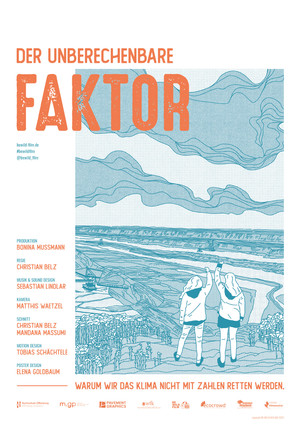
In today's climate debate, there is only one factor that cannot be calculated in climate models - humans. How can we nevertheless understand our role in the climate system and manage the crisis? Climate change is a complex global problem. Increasingly extreme weather events, rising sea levels, and more difficult living conditions - including for us humans - are already the order of the day. Global society has never faced such a complex challenge. For young people in particular, the frightening climate scenarios will be a reality in the future. For the global south, it is already today. To overcome this crisis, different perspectives are needed. "THE UNPREDICTABLE FACTOR" goes back to the origins of the German environmental movement, accompanies today's activists in the Rhineland in their fight against the coal industry and gives a voice to scientists from climate research, ethnology and psychology.
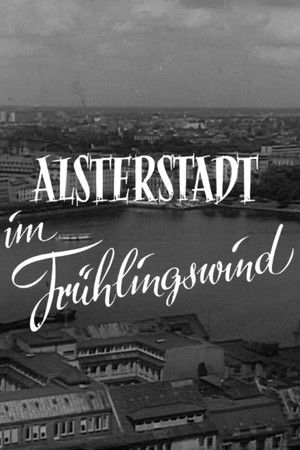
The film shows the course of the Alster from its source to Jungfernstieg in Hamburg.
An insight into the economic life and beauty of the city of Hamburg.
Short film about Hamburg, the industrial city and major transshipment hub.
A portrait of Hamburg and its people.
This James A. FitzPatrick Traveltalks short visits the West German cities of Hamburg, Bremen, Munich, and Heidelberg. Included are scenes of World War II destruction that lingered at the time.