Hamburg, summer 1945: The young English control officer Captain Hannes Hacker arrives in the Hanseatic city to initiate the establishment of a new, liberal German radio station - in the Funkhaus on Rothenbaumchaussee. But Hacker also has private ties to Hamburg. He was born here and lived here until he had to leave his hometown on a Jewish Kindertransport.
In today's climate debate, there is only one factor that cannot be calculated in climate models - humans. How can we nevertheless understand our role in the climate system and manage the crisis? Climate change is a complex global problem. Increasingly extreme weather events, rising sea levels, and more difficult living conditions - including for us humans - are already the order of the day. Global society has never faced such a complex challenge. For young people in particular, the frightening climate scenarios will be a reality in the future. For the global south, it is already today. To overcome this crisis, different perspectives are needed. "THE UNPREDICTABLE FACTOR" goes back to the origins of the German environmental movement, accompanies today's activists in the Rhineland in their fight against the coal industry and gives a voice to scientists from climate research, ethnology and psychology.
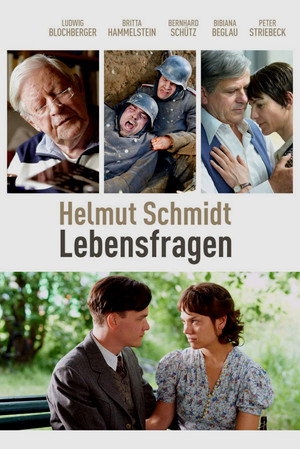
On December 23, 2013, former Federal Chancellor Helmut Schmidt will be 95 years old. As the second Social Democratic head of government in the Federal Republic of Germany, he shaped the country like few other chancellors. Even 30 years after the end of his time in government, he is still a highly esteemed expert whose advice and opinions are in demand. He is one of the most popular chancellors among the population and is held in the highest esteem by his party; even his political opponents at the time pay him the greatest respect.
Yu Xiuhua was raised to hope for little from her life in the rural Chinese province of Hubei. At 19, Xiuhua’s mother encouraged her to marry a man nearly twice her age, fearful no one else would accept a wife with Xiuhua’s condition — cerebral palsy. But as her 20th anniversary approaches, Xiuhua’s poetry goes viral, and she becomes the voice of a rising feminist movement throughout China.
Hamburg, Germany, 1939. Getting a passage aboard the passenger liner St. Louis seems to be the last hope of salvation for more than nine hundred German Jews who, desperate to escape the atrocious persecution to which they are subjected by the Nazi regime, intend to emigrate to Cuba.
Citoyennes !
Two men, the hint of a sofa corner and a pile of letters. Using minimalist means, the film tells the story of two brothers caught between exile in a foreign country and resistance in the underground. It takes us back to the time when the revolution seized power in Iran and tells of life between the fronts. Daniel Asadi Faezi sketches the story of his father and his brothers - based on correspondence that has lain in the cellar for 30 years.
A group of punks is observed and interviewed on a square in Hamburg-Ottensen. In close-ups, characteristic details of the outward appearance of punks and their provocative behavior are presented. The reactions of passengers and the owners of surrounding stores are recorded; some act emphatically tolerant and understanding, others reject them...
Amanda Montejo is a trans woman, make up artist, Guadalupana and a witch. This documentary portrait explores different facets of her spirituality and fragments of her past, revealing the duality of her being.
What was cinema in the past? What is cinema today? Hamburg filmmaker Dennis Albrecht asked himself these questions as he sifted through material he had been collecting since a project idea in 2008. Since then, he has repeatedly taken cameras into cinemas that no longer exist. He shot commercials, short films or events at the Grindel-Kino, Streit's, Rialto and Savoy and many other Hamburg movie theaters. In these personal perspectives, we see many cultural places that have disappeared.
Po boku mužů
"TDS, derrière l'écran des travailleuses du sexe" is a deep dive into the lives of Betty, Anaïs, Noochka, Manon, and Barty. They have all ventured into the world of selling sexual content online. What pushes someone to take the step of signing up on these platforms? What are their motivations? What are the consequences on their personal lives? Why do some choose to stick with it for years, while others decide to stop for good?
Olympe de Gouges : Liberté, égalité, féminité
A study of the alienated people who frequent the Ballhaus Barmbek dance hall, including an obese El groupie, an old man reciting poetry, two young women and a regular dance employee.
The viewpoints of women from a country that no longer exists preserved on low-band U-matic tape. GDR-FRG. Courageous, self-confident and emancipated: female industry workers talk about gaining autonomy.
The story of women's struggle against sexual discrimination and for inclusion in the democratic process in (West) Germany after WW II.
Milana, Sephora, and Mario are between seventeen and twenty-six years old. They grew up in modest, stigmatized rural Manouche families. Unlike their parents, they have degrees and work as employees. They have dreams to fulfill.
A documentary about the history of Hamburg-Ottensen.
This James A. FitzPatrick Traveltalks short visits the West German cities of Hamburg, Bremen, Munich, and Heidelberg. Included are scenes of World War II destruction that lingered at the time.
Three filmmakers dive deep into the storied and complex legacy of Ms. magazine through the lens of some of its most iconic covers, featuring never-before-seen archival footage and engaging interviews with the powerful women who shaped the magazine at its inception over fifty years ago