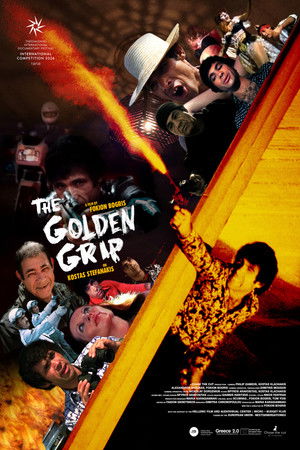
Cousins Menahem Golan and Yoram Globus relive the creation, rise and fall of their independent film company, Cannon Films. This documentary recounts their many successes and discusses their eventual downfall.
This documentary explores an unknown civilization of the Brazilian Amazon, who risk their lives to protect their forest. In order to save the exploitation of the environment by big corporations, they have to create legal institutions.
American resort developers bear down on the wild west coast of Nicaragua, hoping to build the next tourist paradise. With lax labour and environmental regulations, some of the developers take full advantage of the situation, and the local fishermen start accusing them of exploitation and land thievery. Unexpectedly, in the midst of this conflict, firebrand Daniel Ortega and the Sandinistas sweep back into government, boldly empowering the local fishermen. The tables turn viciously on the American developers, who get much more than they bargained for. But when the local fishermen, corrupted by new found power, begin acting in the same manner as the American developers, questions are posed about human nature, morality, and ethics on a much larger scale.
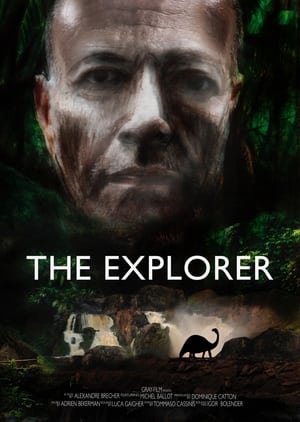
A former lawyer leaves everything behind to embark on the quest for a dinosaur-like animal supposedly living in Africa's unexplored forests.
Exposing the dark underbelly of modern animal agriculture through drones, hidden & handheld cameras, the feature-length film explores the morality and validity of our dominion over the animal kingdom.
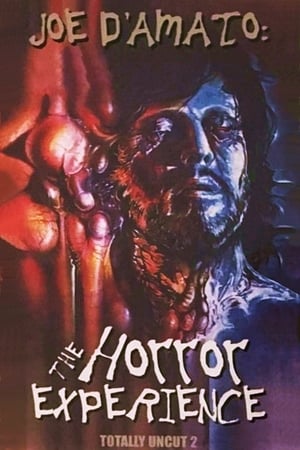
Documentary on various horror movies that Joe D'Amato directed and/or produced in the 1970's, 1980's, and early 1990's.
The SS chief Heinrich Himmler wanted to exchange Jews against so-called German Reich abroad, against arms sales or for cash - with the express approval of Hitler.
The Battle of New Orleans: A Meaningful Victory explores how the British misjudged their opponent and miscalculated the complexities of the battle ground. It also describes why the multi-cultural population of New Orleans proved the naysayers wrong about their loyalties to a young nation. WYES Community Projects Producer Marcia Kavanaugh and Tom Gregory hosted and produced this documentary.
Mondo Cane and the Schoolgirl Report series stand as obvious influences on this occasionally amusing but generally rather tedious exploitation film that alternates between documentary, fake documentary and docudrama. The theme is Satanism and the linking thread is a recreation of what is supposedly the real-life case of a murder and attempted murder of two Munich teenage men by a quartet of girls who had been dabbling in devil worship. During the ensuing trial, the lawyer resorts to dilatory tactics while the hearing is frequently interrupted by the girls breaking into incantation, temper tantrums or shivery fits ostensibly bearing on demonic possession. When the subject of the Manson killings is brought up, the most obnoxious of the defendants breaks in indignantly, claiming that Sharon Tate’s “execution” was justified as she posed dangers to the Satanic community.
'The Devil's Miner' tells the story of 14-year-old Basilio who worships the devil for protection while working in a Bolivian silver mine to support his family.
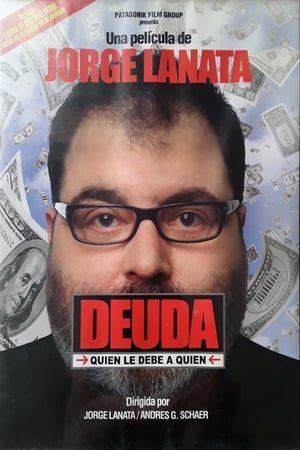
The End of Poverty? asks if the true causes of poverty today stem from a deliberate orchestration since colonial times which has evolved into our modern system whereby wealthy nations exploit the poor. People living and fighting against poverty answer condemning colonialism and its consequences; land grab, exploitation of natural resources, debt, free markets, demand for corporate profits and the evolution of an economic system in in which 25% of the world's population consumes 85% of its wealth. Featuring Nobel Prize winner Amartya Sen and Joseph Stiglitz, authors/activist Susan George, Eric Toussaint, Bolivian Vice President Alvaro Garcia Linera and more.
"Why Do They Do It ?" preached that it was decent to be a sexual creature. A panel discussion in the Student Association as a kind of frame, you watch various so-called live shows and you met actors like Effie Schou, Søren Strømberg, Dale Robinson and Keld Rex Holm. A lot of attention was given to Bodil Joensen, a very pet-friendly young lady, who would like to enjoy a bull named Sofus.
A documentary that reveals the underbelly of the global aid and investment industry. It's a complex web of interests that span the earth from powerful nations and multinational corporations to tribal and village leaders. This documentary offers unique insights into a multi-billion dollar world by investigating how aid dollars are spent.
Shrouded in secrecy and notoriously cash-strapped the North Korean regime has resorted to running one of the world's largest slaving operations - exploiting the profits to fulfil their own agenda. These bonded labourers can be found in Russia, China and dozens of other countries around the world including EU member states. Featuring undercover footage and powerful testimonials, we reveal the scale and brutality of the operation and ask what, if anything, is being done to stop it.
Jamie Johnson takes the exploration of wealth that he began in Born Rich one step further. The One Percent, refers to the tiny percentage of Americans who control nearly half the wealth of the U.S. Johnson's thesis is that this wealth in the hands of so few people is a danger to our very way of life.
Douglas Fairbanks Jr. and Peter Fonda host an examination of the history of decency standards for movies from the early 1920s onwards.
A collection of numerous burlesque acts from the 1950s, including strippers, and cult character Betty Page introducing the acts.
One day, the tree is considered mature. In any case, it is exploitable for the industry. So, we mark it and then cut it down. With the chainsaw or the harvester, it depends. And then it becomes biomass, pallets, panels, pellets, crates, paper pulp for printing promotions. But what profit does man get from the pains he takes under the sun?
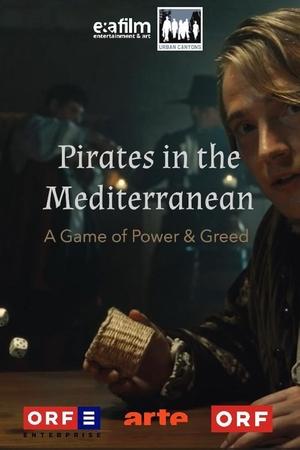
Drama documentary based on the latest discovery of a 16th Century sailing shipwreck found close to Malta by an underwater research team led by maritime archaeologist Timmy Gambin.
In the final decades of the 20th century, the Philippines was a country where low-budget exploitation-film producers were free to make nearly any kind of movie they wanted, any way they pleased. It was a country with extremely lax labor regulations and a very permissive attitude towards cultural expression. As a result, it became a hotbed for the production of cheapie movies. Their history and the genre itself are detailed in this breezy, nostalgic documentary.