Documents the cultural and ecological impacts of coal stripmining, uranium mining, and oil shale development in Utah, Colorado, New Mexico, and Arizona – homeland of the Hopi and Navajo.
A documentary account by award-winning filmmaker John Ferry of the events that led up to the 1969 Native American occupation of Alcatraz Island as told by principal organizer, Adam Fortunate Eagle. The story unfolds through Fortunate Eagle's remembrances, archival newsreel footage and photographs.
Two friends, both Indigenous fishermen, are driven to desperation by a dying sea. Their friendship begins to fracture as they take very different paths to provide for their struggling families.
“Nuuhkuum uumichiwaapim” (« My Grandmother’s Tipi ») is an exploration of the sensorial and textural experience of a grandmother’s tipi. It is based on memories of being in a tipi, observing in the bliss of cooking and the time in-between.
50 years on, the Aboriginal Tent Embassy is the oldest continuing protest occupation site in the world. Taking a fresh lens this is a bold dive into a year of protest and revolutionary change for First Nations people.
From the remote Australian desert to the opulence of Buckingham Palace - Namatjira Project is the iconic story of the Namatjira family, tracing their quest for justice.
Mosha Michael made an assured directorial debut with this seven-minute short, a relaxed, narration-free depiction of an Inuk seal hunt. Having participated in a 1974 Super 8 workshop in Frobisher Bay, Michael shot and edited the film himself. His voice can be heard on the appealing guitar-based soundtrack…. Natsik Hunting is believed to be Canada’s first Inuk-directed film. – NFB
Using the camera as a weapon to defend their ancestral land in Brazil, three women of the Daje Kapap Eypi audiovisual collective lovingly record their Munduruku traditions and their mythology of humans transforming into forest plants and animals.
For the Suruí, an indigenous people in western Brazil, there was a lot at stake in the 2022 presidential elections. Under incumbent President Bolsonaro, logging and mining companies were given free rein in their territory. His opponent Lula, on the other hand, pledged to protect the Amazon and uphold Indigenous rights. Tribal leader Almir and his daughter, the young activist Txai Suruí, are each followed during their campaign in the final month before the elections. While Txai travels abroad to raise awareness about the destruction of the rainforest, Almir campaigns across the state of Rondônia, seeking support for his congressional bid.
An experimental look at the origin of the death myth of the Chinookan people in the Pacific Northwest, following two people as they navigate their own relationships to the spirit world and a place in between life and death.
Rematriation explores scientific, cultural, economic and sociopolitical perspectives, as citizens fight to protect the last big trees in British Columbia from being felled. The lessons we take away permeate the fabric of Canadian identity.
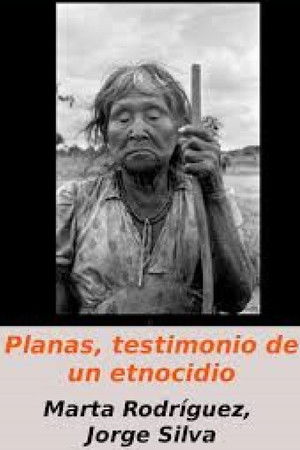
A documentary on the massacre of Planas in the Colombian east plains in 1970. An Indigenous community formed a cooperative to defend their rights from settlers and colonists, but the government organized a military operation to protect the latter and foreign companies.
Examines the violence and civil disobedience leading up to the hallmark decision in U.S. v. Washington, with particular reference to the Nisqually Indians of Frank's Landing in Washington.
Indigenous chief Juma Xipaia fights to protect tribal lands despite assassination attempts. Her struggle intensifies after learning she's pregnant, while her husband, Special Forces ranger Hugo Loss, stands by her side.
In the central Peruvian Amazon, a young indigenous man from the Nomatsigenga Community of Boca Kiatari, shares his urgent message with the world. In a moving short film, the community comes together to preserve their natural environment, aware of the growing challenges of climate change and global warming.
The sound of metal creaking as if something is about to break. An old pickup truck adapted to carry passengers crosses the La Guajira desert in Colombia. With the wind come voices that merge among the passengers who travel there. A Wayuu woman returns to her territory, accompanied by her family, after years of exile due to a paramilitary massacre. A cyclical journey where the time layers of the territory touch and the border between the living and the dead is diluted.
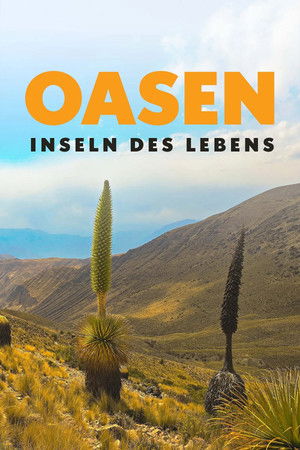
Peru is a country steeped in cultural traditions that stretch back more than 1,000 years. But it's also a land of surprising natural riches.
This short documentary examines an innovative educational program developed by John and Gerti Murdoch to teach Cree children their language via Cree folklore, photographs, artifacts, and books that were written and printed in the community. Made as part of the NFB’s groundbreaking Challenge for Change series, Cree Way shows that local control of the education curriculum has a place in Indigenous communities.
An African narrator tells the story of earth history, the birth of the universe and evolution of life. Beautiful imagery makes this movie documentary complete.
CREE CODE TALKER reveals the role of Canadian Cree code talker Charles 'Checker' Tomkins during the Second World War. Digging deep into the US archives it depicts the true story of Charles' involvement with the US Air Force and the development of the code talkers communication system, which was used to transmit crucial military communications, using the Cree language as a vital secret weapon in combat.