Young teen girl Xiu Xiu is sent away to a remote corner of the Sichuan steppes for manual labor in 1975 (sending young people to there was a part of Cultural Revolution in China). A year later, she agrees to go to even more remote spot with a Tibetan saddle tramp Lao Jin to learn horse herding.
This excellent and breathtaking documentary is the result of a long study on the Gulag to try to understand why more than 60 million Soviet citizens were sent to the camps from 1918 to 1956, how such a massive confinement could take place during two generations. From the Solovki in the north-west to the Kolima in Siberia, from Lenine to Kroutchev, a polar geography is erected into the Gulag system. One does not escape from camps. After ten years of imprisonment, one dies. Some survived, some left traces; they witness: organisation, work and discipline, but also resistance, repression and revolt.
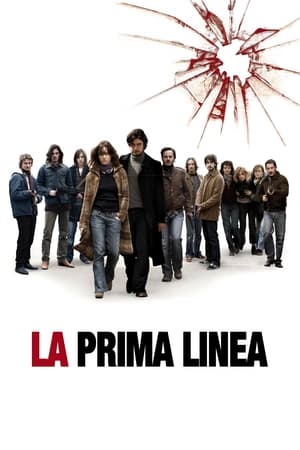
United by an uncompromising struggle as members of the infamous 1970s far-left terrorist group Prima Linea, fugitive couple Sergio and Susanna have become increasingly alienated from the real world. Their luck runs out when Susanna is captured and thrown in jail. Putting his life on the line, Sergio embarks on a radical plan... Loosely based on the memoir by Prima Linea's 'commander' Sergio Segio.
The trial of Alfred Plock differed from previous trials in that it did not have an explicitly political background. A group of engineers from the Ministry of Post, Industry, and Standard Electric were charged solely because they wanted to implement a revolutionary technological innovation and turn Prague into the headquarters of a new pan-European telecommunications system. Among other things, they wanted to enhance their country's prestige on the international stage. However, it was precisely this intention that aroused the suspicion of the security authorities and Soviet advisers. They therefore decided to take decisive action.
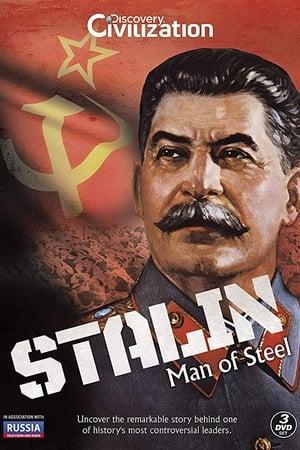
Emmy Awards nominee for "Outstanding Individual Achievement in a Craft: Research: Multi-faceted portrait of the man who succeeded Lenin as the head of the Soviet Union. With a captivating blend of period documents, newly-released information, newsreel and archival footage and interviews with experts, the program examines his rise to power, deconstructs the cult of personality that helped him maintain an iron grip over his vast empire, and analyzes the policies he introduced, including the deadly expansion of the notorious gulags where he banished so many of his countrymen to certain death.
The story of what daily life was like in Poland under communism: private conversations, cruel interrogations, recruitment attempts, recorded and filmed with hidden devices; of how the secret services spied on every activity of ordinary citizens: nothing escaped the brutal system of control developed by the Soviets in the name of freedom.
A woman prisoner is harshly incarcerated and suddenly released.
Nesmíš plakat
Věž smrti
The forest in Bykovnia near Kyiv hides the remains of more than 30,000 NKVD victims, including several thousand Poles. In 2006, a team of Polish archeologists, with the cooperation of the Ukrainian side, conducted exhumation work there, which confirmed that Poles were buried in the cemetery. At the time, two people whose fathers are believed to be buried there also came to the Bykovsky forest. The film tells the story of the history of the place, the local residents' perception of it, and the search for the fathers' graves.
Communism: History of an Illusion
A documentary about the modern controversy between Poland and Russia over Russian prisoners of war from the time when Poland regained its independence, after the First World War.
Mrtvolu sprovoďte ze světa
Three family cope with having lost their only child in 2008 deadly Chinese earthquake.
The story of a British POW who converts to communism.
In 1972 16-year-old Marie-Claire became pregnant after a rape. With help from her mother Michelle and three other women, she underwent a clandestine abortion. Under a 1920 law, the five women were arrested and charged. Supported by a procession of well-known French (eg Simone de Beauvoir), the five were released and the law was adapted.
Robin is 16 and has had enough: permanent trouble at school and at home. On the run from his dull everyday life, he joins a group of skinheads. The clique strengthens their sense of belonging by beating up foreign youths. This is how the "apolitical" boy slips into the right-wing scene, and it's not easy to get out of it. When they injure a Turkish girl during a robbery, Robin, of all people, is questioned by the police.
Danish melodrama about a housemaid struggling to find normalcy and love in the midst of war.
Throughout the Islamic world, each year hundreds of women are shot, stabbed, strangled or burned to death by male relatives because they are thought to have “dishonoured” their families. They may have lost their virginity, refused an arranged marriage or left an abusive husband. Even if a woman is raped or merely the victim of gossip, she must pay the price. Crimes of Honour documents the terrible reality of femicide – the belief that a girl’s body is the property of the family, and any suggestion of sexual impropriety must be cleansed with her blood. We meet women in hiding from their families, a brother who describes his reasons for killing the sister he loved, and a handful of women who have committed themselves to the protection of young women in danger of losing their lives.
1930's: Adam and Leroy tries to rob a cafe, but finds out that two girls are already trying to do the same. Instead of arguing with them they join them in a robbery-spree.