Short film preserved by the Academy Film Archive in 2000.
One of Oskar Fischinger's earliest films, Seelische Konstruktionen (as it is known in German), clearly points the way to the masterpieces of musically-blended experimental animation he would conceive in the decades to come. The sense of masterful timing and rhythm, the easy and natural -- though patently Fischinger-esque -- character traits of the subjects, and the smooth precision of both line and movement are all present already. Unique is the black-silhouetted, semi-cartoon characters (not nearly as rigidly self-contained as Lotte Reiniger's cut-out forms) which seem to adhere to no physical limitations whatsoever. Morphing into shapes, structures, objects, patterns, and even one another, as though they were made of pure mercury and set to music. As for the "story", it's rather non-sensical, and certainly silly, but also has a slightly dark and devious tinge to it as well; men becoming monsters, uncontrollable shape-shifting and the constant, almost desperate movement.
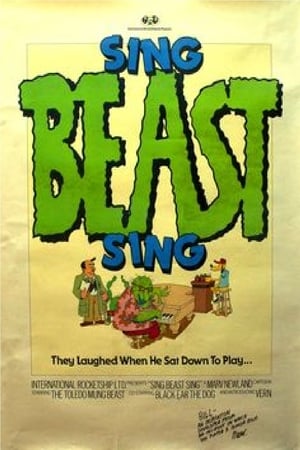
A tenor, in suit and tie, with a receding hairline, sings a ballad to his love, “Your Face Is Like a Song,” to simple piano accompaniment. Preserved by the Academy Film Archive in 2015.
A comically ridiculously altered version of the classic tale, in which Don Quixote is victorious over his imaginary enemies and emits Tarzan-like yells of triumph. Preserved by the Academy Film Archive in partnership with The Film Foundation in 1998.
Everyone in Philip’s science class has a great idea for a report - everyone, that is, except Philip. That evening, he listens to a song playing on his boombox, and it provides him with inspiration: DINOSAURS! The next day at the museum, Philip discovers that the search for the truth about these magnificent animals and their astonishing 160-million-years success on the Earth is the most fascinating mystery tale he’s ever heard. What follows is an exciting collection of established theories and fascinating speculation. Philip’s report captivate viewers of all ages, just as it captivates Philip’s classmates. The Kingdom of the Dinosaurs comes to life through animation, live action, and a special Claymation feature by Will Vinton Productions. A short educational Claymation film about dinosaurs. Preserved by the Academy Film Archive in 2013.
A dirge-like hula song illustrates humanity's woes. Preserved by the Academy Film Archive in 2010.
Interviews with five former American soldiers who were present at the March 16, 1968 attack on the village of My Lai during the Vietnam War; they discuss the orders that were issued leading up to the attack, their expectations of what they would find there, and the subsequent massacre of the inhabitants and destruction of the village, as well as possible motivations for the killings and rapes which took place. Preserved by the Academy Film Archive in 2002.
In 'Spirals' Oskar Fischinger designed visual patterns of extreme complexity which often develop in overlapping cycles, yet he interrupts these patterns with radical editing of single frames of contrasting imagery. 'Spirals' exists as a fragmentary unfinished experimental film. Preserved by the Academy Film Archive in 2001.
An abstract film in which every motion of coloured shapes is in strict synchronization with music. Preserved by the Academy Film Archive in 2000.
Mother Earth and Father Time converse about the choices humans make. Preserved by the Academy Film Archive in 2010.
Opening with a classic image of Chairman Mao spewing red star tears, this animation is a masterful example of Beckett’s distinctive technique as he continuously develops a cycle of six drawings, culminating in their transmutation via the optical printer. Preserved by the Academy Film Archive in partnership with iotaCenter and National Film Preservation Foundation in 2007.
Extraordinarily detailed and beautifully drawn animation of a bizarre and surreal world; the domestic life of a fat man, his wife, a sort of oversized obese chicken, and their child/pet, a slug-like creature with a human head. This expressionistic and interior vision of Soviet animator Kovalyov is like an animated Eraserhead.
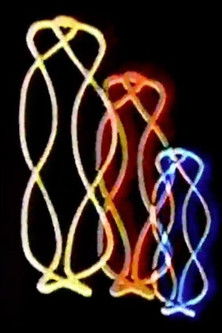
An abstract animated film in which colored, richly textured light moves in a black, three-dimensional space. The pictures and the electronic score are unified in a strict structure made of three main sections which progressively develop three subsections. The film may look like it was made using computers or video to the unaware, but it is purely the result of animation and much optical printing. Preserved by the Academy Film Archive in partnership with iotaCenter and National Film Preservation Foundation in 2007.
Rip Van Winkle, a lazy American man, wanders off one day with his dog Wolf into the Kaatskill mountains where he runs into an odd group of men drinking and playing bowls. He drinks some of their mysterious brew and passes out. When he wakes up under a tree he is astonished to find that 20 years have passed and things are a lot different. Preserved by the Academy Film Archive in 2013.
The animation referred to as Early Animations or Quacked Jokes is an anomaly among Beckett's films. It was probably not intended to be shown outside of his sphere of friends, being a collection of early experiments and directions. While lacking the sophistication and artistry that is found in his six finished works, this film provides invaluable insight into his first attempts at animation and clues to some of his later work. Preserved by the Academy Film Archive in partnership with iotaCenter and National Film Preservation Foundation in 2007.
Sausage City illustrates Beckett's additive cycle process. Constantly evolving rectangular shapes provide a foundation for an environment inhabited by mutating blobs (or sausages). Sounds and shapes create a moving space that teeters on the edge between control and chaos. The ending is somewhat mystifying, pulling us out of the surreal environment and revealing its origins. Preserved by the Academy Film Archive in 2007.
Life in the Atom was never completed, but the existing version was digitally restored in 2009. The film depicts an ever-changing world inhabited by a man and woman engaged in surreal, erotic contortions. Their bodies are in a constant state of metamorphosis, as if to indicate psychological states or inner reflection as they contemplate their connection; they are being transported, transcending, merging and melting. Preserved by the Academy Film Archive, in partnership with iotaCenter, in 2009.
This claymation short film uses a real interview for dialogue. Bill Perry relates stories about his youth, his tilted house, and adventures during WWII in Bristol, England during the blitz. Preserved by the Academy Film Archive.
A walking figure emerges from a changing, circular cycle; his inner self emerges and precipitats a series of violent struggles with himself, adapting various animal forms along the way. Preserved by the Academy Film Archive.
"Marlborough" and "The Arab", lounging on the pool terrace, are alienated characters in some future time, living in a world where art work comes to life, phones continuously ring, televisions hum all night, and smog seeps into their brains. Preserved by the Academy Film Archive.