Fantaisie érotique
A Marxist-Leninist-Maoist revision of the Allegory of the Cave, filled with talking animals who shall be late and bourgeois queens who would like to see you without a head, exactly as Plato intended.
Filmmakers use archival footage and animation to explore the culture surrounding nuclear weapons, the fascination they inspire and the perverse appeal they still exert.
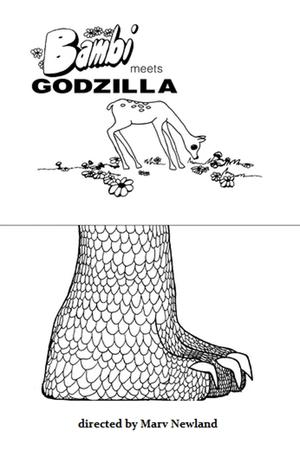
A deer, disillusioned by the consumerism that defines his life. A lizard, ostracized from society, forever wandering. A chance meeting in the middle of a field. Who will survive? And who will transcend existence? Preserved by the Academy Film Archive in 2009.
The first Studies were synchronized with records (Fischinger made a total of 13 Studies all without sound). It was only with the introduction of sound, beginning with Study No 6 that the films did full justice to this musical principle. The play of the white lines, the arcs, and the upside-down U’s running hither and thither like ballet dancers was brought into perfect synchronization with the music, and thus the films offered an abstract illustration of the melodies. Study No 6 is certainly the best of his films in terms of forms. - Hans Scheugl and Ernst Schmidt, Jr. Preserved by the Academy Film Archive in 2001.
Life drums the playfulness out of a boy as he grows up.
Sistiaga painted directly on 70mm film a circular (planetary?) form, around which dance shifting colours in a psychedelic acceleration matched by the soundtrack’s deep-space roar and howl. - Cinema Scope
An animated film drawn in india ink directly on 65 mm film. It was reduced optically to 35mm film with colour added. The story of the film concerns a rivalry between two simple stick figures characters for the championship in a unicycle race. Preserved by the Academy Film Archive in 2011.
This is a story of love seen from a square, in which a couple gets united, separated and rearranged again. A special kind of puzzle.
Begins as a whimsical piece with 'sheets' of lines running down the screen, progressing into more and more complex geometic patterns but without deviating from the basic precepts of 'dot and line' animation. Jazz piano on a lazy Sunday afternoon, and a spring color palette. -- Stephanie Sapienza. Preserved by the Academy Film Archive in 2001.
Gore's second solo film, DREAM OF THE SPHINX is highly representative of his fluid, expressive line work and characteristic traversals through space. Preserved by the Academy Film Archive in partnership with CalArts and iotaCenter in 2009.
A collaborative piece by Gore and Beckett, the film begins with one of Gore's characters composing a letter, to eventual mail it. Beckett's animation takes over at this point, transforming the envelope into a looping, cascading form that seems to be perpetually turning itself inside out. A brief Gore finale bookends the piece, which is one of only two extant examples of Gore's unique animation work. This film is usually appended to Gore's own Dream of the Sphinx. [Source: Mark Toscano] Preserved by the Academy Film Archive in partnership with CalArts in 2009.
The project explores urban edges as they correspond with the marginality of social groups who inhabit them. Distance, the anonymity of the architectural setup, decay, but also movement and interaction are subjects of a raw sketch that seeks to integrate a discussion about space and segregation into the discourse of the Common Good. The audio-visual language of the film uses a transparency and starkness of approach to reflect its subject matter. The fusion of architectural lines with sound through unexpected correspondences and synchronizations aims to generate a new kind of intermedial proposition.
7362 is concerned with dividing and joining together. It begins with two black circles against a white background, knocking together and gradually moving further apart. The circles fade out, and return as white circles against black inside a square. Images similar to Rorschach blots appear. Gradually the viewer realizes that the images were not originally abstract, but were human forms (dancers, gymnasts, etc.), bridges, and others that have been split down the center of the frame, with their mirror images printed on either side of the split. Red, green, and white tints further abstract the images from their original foundations in the natural world, making dancers appear to be amoebas or dividing cells. The accompanying sound track is a mixture of electronic music and musique concrète ("real" recorded sounds manipulated to sound abstract).
Angeli
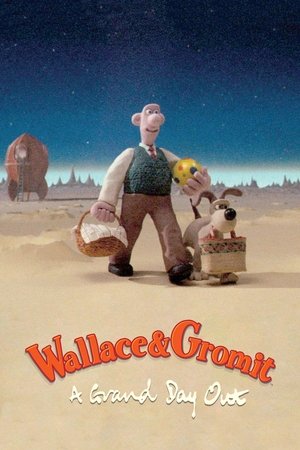
Wallace and Gromit have run out of cheese, and this provides an excellent excuse for the duo to take their holiday to the moon, where, as everyone knows, there is ample cheese.
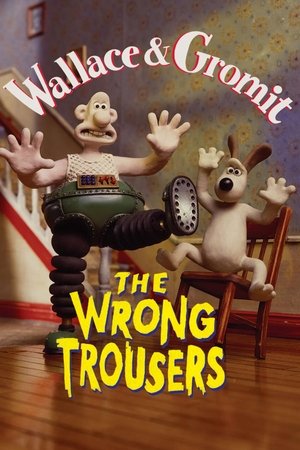
Wallace rents out Gromit's former bedroom to a penguin, who takes up an interest in the techno trousers created by Wallace. However, Gromit later learns that the penguin is a wanted criminal.
Wallace's whirlwind romance with the proprietor of the local wool shop puts his head in a spin, and Gromit is framed for sheep-rustling in a fiendish criminal plot.
Mountain Music illustrates what happens when technology gets too advanced too soon. Preserved by the Academy Film Archive in 2012.
D'art moderne