Chamonix - Mont Blanc, Une histoire de conquêtes
Life By The Fingertips is a documentary film by Jean-Paul Janssen released in 1982, directing Patrick Edlinger totally living his passion, climbing, which he practices here solo ("with bare hands"), it that is, without a rope or any kind of insurance. The film begins with a session of solo sea crossings on the Piade site near Toulon. In the second part, Patrick Edlinger trains in Buoux before carving a solo route in this now famous climbing site. This mythical film in more than one way is considered the first climbing film, that is to say where climbing is an activity in itself and not a means of preparing for mountaineering. His media success was such that he propelled Patrick Edlinger to the rank of world star, and above all he made climbing known to the general public, and was even nominated for the César for best documentary short film.
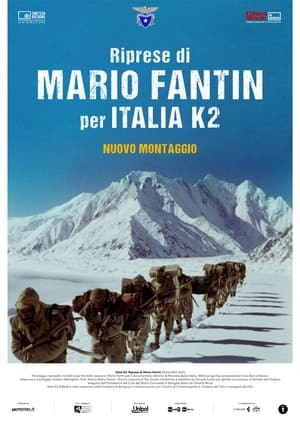
K2 - The Most Dangerous Mountain in the World
The (N)ice Line
Feel the rush of the breathtakingly beautiful National Parks of California with one deep breath of the summer air.
The World of Gaston Rébuffat is a documentary on mountaineering which takes place at Gendarme Du Pic Du Roc and Grande Candelle. Directed by Gilles Chappaz in 2009 and produced by Seven Doc, we find Christophe Profit, Françoise Rébuffat, Thierry Renault, Jean-Olivier Majastre, René Vernadet, Sam Beaugey and many others. Friendship of his rope companions, friendship of the mountain, friendship of all of nature, he spoke of the mountain with simplicity and happiness. A precursor, a visionary, Gaston Rébuffat was a resolutely committed person, without ever having spoken of an exploit, let alone a fight (among other achievements, he was the first to climb the six north faces of the Alps in a lifetime as a mountaineer).
A documentary about the first Czech climber Klára Kolouchová, who reached the top of K2. A film about the human need to overcome obstacles, the limits of one's own comfort, the need for higher goals that most people do not understand, about trying to discover what is behind the passion to overcome oneself, but mainly about how difficult it is to balance the position of woman - mother - climber , who is often forced to explain and defend before others her need to flee to the solitude of the mountains, much more than if she were a man. Can a woman today really freely try to achieve something great, while not behaving selfishly towards her surroundings and family?
In February 1966, Pierre Mazeaud and Lucien Berardini traveled to the Atakor massif, in the Hoggar mountain range of the Sahara in southern Algeria. There, they attempted a challenging first ascent: the Takouba spur, one of the peaks adjacent to Garet El Djenoun, a legendary mountain in the Hoggar massif, first climbed by Roger Frison-Roche and Raymond Coche in 1935. The documentary, superbly filmed by Jacques Ertaud, won the Grand Prize at the Trento International Mountain Film Festival in 1966.
Lucien Berardini and Edmond Denis are two mountaineers who took part in the French expedition to Aconcagua (Andes Mountains) in 1954. Both suffered severe frostbite to their fingers and toes, and three years later, they set out to climb the Aiguille du Géant, a legendary route in the Mont Blanc massif. The camera closely follows the efforts of the roped party, an example of strength and self-sacrifice, until their victorious arrival at the summit.
La Grande Cordée
Meru is the electrifying story of three elite American climbers—Conrad Anker, Jimmy Chin, and Renan Ozturk—bent on achieving the impossible.
The ocean contains the history of all humanity. The sea holds all the voices of the earth and those that come from outer space. Water receives impetus from the stars and transmits it to living creatures. Water, the longest border in Chile, also holds the secret of two mysterious buttons which were found on its ocean floor. Chile, with its 2,670 miles of coastline and the largest archipelago in the world, presents a supernatural landscape. In it are volcanoes, mountains and glaciers. In it are the voices of the Patagonian Indigenous people, the first English sailors and also those of its political prisoners. Some say that water has memory. This film shows that it also has a voice.
Nikolai and Vegard were childhood friends who spent their free time on the ski slopes. Now, Nikolai has become a professional skier, while Vegard lives in caves and trains obsessively to complete a perilous and physically demanding ski tour. This is a story about friendship and setting ambitious goals.
“Shellmound” is the story of how one location was transformed from a sacred center of pre-historic cultures to a commercial mecca for modern people. What began as a Native American burial ground three thousand years ago, was transformed first into an amusement park, and later an industrial age paint factory. Now, the tainted ancient soil sits beneath the glittering lights of Banana Republic, Victoria’s Secret, and the AMC movie theaters. “Shellmound” examines the decisions made during the recent toxic cleanup, excavation, and construction of the Bay Street mall through the eyes of the city of Emeryville, the developer, the archaeologists, and the native Californians who worked on the site.
Finnish filmmaker and artist Sami van Ingen is a great-grandson of documentary pioneer Robert Flaherty, and seemingly the sole member of the family with a hands-on interest in continuing the directing legacy. Among the materials he found in the estate of Robert and Frances Flaherty’s daughter Monica were the film reels and video tapes detailing several years of work on realising her lifelong dream project: a sound version of her parents’ 1926 docu-fiction axiom, Moana: A Romance of the Golden Age.
50 years on, the Aboriginal Tent Embassy is the oldest continuing protest occupation site in the world. Taking a fresh lens this is a bold dive into a year of protest and revolutionary change for First Nations people.
Piano to Zanskar is a British documentary film which tells the story of the highest piano delivery attempt in history. It follows Desmond Gentle, a piano tuner from Camden Town in London, and his two apprentices: Anna Ray and Harald Hagegard, as well as a 100-year old Broadwood & Sons upright piano, on their way from London to Zanskar in the Indian Himalayas.
The extraordinary, complex, nuanced, restless, and rebellious personality of Walter Bonatti is recounted in a docufiction that traces the life of the greatest mountaineer of all time, without neglecting his overwhelming love story with movie star Rossana Podestà.
Through the figure of Lakota activist and community organizer Madonna Thunder Hawk, this inspiring film traces the untold story of countless Native American women struggling for their people's civil rights. Spanning several decades, Christina D. King and Elizabeth A. Castle's documentary charts Thunder Hawk's lifelong commitment, from her early involvement in the American Indian Movement (AIM), to her pivotal role in the founding of Women of All Red Nations, to her heartening presence at Standing Rock alongside thousands protesting the Dakota Access Pipeline. She passed her dedication and hunger for change to her daughter Marcy, even if that often meant feeling like comrades-in-arms more than mother and child. Through rare archival material—including amazing footage of AIM's occupation of Wounded Knee—and an Indigenous style of circular storytelling, Warrior Women rekindles the memories and legacy of the Red Power movement's matriarchs.
1967: Two of the world's best climbers, Yvon Chouinard and Royal Robbins, tackle the west face of Sentinel Rock, an iconic 2,100-meter granite peak located in Yosemite National Park, considered one of the most difficult in the world. The film's atmosphere is immersive, driven by a sober narrative that highlights the intimate relationship between man and the wall. The technical difficulty of the route, the prolonged physical effort, and the isolation reinforce the heroic dimension of this ascent. The documentary also reveals the essential solidarity between the climbers: each progression requires rigor, inventiveness, and total trust in both the equipment and the partner. This film is considered a benchmark in the history of mountain cinema. It testifies to the pioneering spirit of the era and the evolution of climbing techniques, perfectly illustrating the transition to a more athletic and thoughtful approach to large rock faces.