On Zambia's Liuwa Plain two star-crossed spotted hyena cubs are born to warring rival clans: Twaambo, a male cub and Nasanta, a female, are destined to lead converging lives as their extreme environment forces them together
As little as 15 years ago, no one had captured the unforgettable image of a leopard in its ghostly nocturnal stalk. Viewers had never seen intimate portrayals of the sleek and elusive serval, or witnessed the nighttime romps of the beautiful black-eared caracal. The team of Owen Newman and Amanda Barrett filled those gaps with a series of spectacular breakthrough films in the 1990s. Among the first to apply infrared light and night vision goggles to wildlife studies, they combined technology with intrepid determination and a strong dose of luck, illuminating the cats we hardly knew, and giving us fresh insights into those we only thought we knew, such as lions and cheetahs
Ocean Oasis is a fascinating journey into the bountiful seas and pristine deserts of two remarkably different, but inextricably linked worlds — Mexico's Sea of Cortés and the Baja California desert.
Roam the Wild West frontier land of the Rio Grande’s Big Bend alongside its iconic animals, including black bears, rattlesnakes and scorpions.
Every night around Australia, native possums scamper across city rooftops in an endless quest for food and shelter. Forced out of their bush habitats by encroaching development, these mischievous marsupials swarm into cities where their raucous noise and destructive appetites bring them few friends. They live in our roofs, pillage our fruit trees, plunder our flowers and pee on our paths. And when possums and people fight for real estate it’s war!
Ashes and Snow, a film by Gregory Colbert, uses both still and movie cameras to explore extraordinary interactions between humans and animals. The 60-minute feature is a poetic narrative rather than a documentary. It aims to lift the natural and artificial barriers between humans and other species, dissolving the distance that exists between them.
A journey to seven of the most geographically dynamic locations on earth. The film features spectacular land forms, diverse wildlife and the people and cultures indigenous to these places. Distinct geographic places include the great island of Madagascar, home to unique limestone pinnacles and the playful lemur; and the greatest desert—the Namib—home of the largest sand dunes in the world that tower majestically over its western border, the Atlantic Ocean. Other locations featured are the great icecap of Greenland, Iguazu Falls in Brazil, the Okavango Delta in Botswana, the Chang Tang Plateau in Tibet, and the Amazon River in South America.
An underwater exploration beneath kelp forests in the Pacific Ocean off the coast of Southern California. The film captures the birth of a shark, squids mating, a lobster molting, a fish protecting its nest from an octopus and a sea urchin, and the sea bed covered with brittle stars.
A breathtaking adventure across five continents and through time to reveal nature's most vital secret. Watch a flying fox gorge itself on a midnight snack of figs. Climb into the prickly jaws of insect-eating plants. Witness a mantis disguised as a flower petal lure its prey to doom.
An epic story of adventure, starring some of the most magnificent and courageous creatures alive, awaits you in EARTH. Disneynature brings you a remarkable story of three animal families on a journey across our planet – polar bears, elephants and humpback whales.
Disneynature’s Elephant follows African elephant Shani and her spirited son Jomo as their herd make an epic journey hundreds of miles across the vast Kalahari Desert. Led by their great matriarch, Gaia, the family faces brutal heat, dwindling resources and persistent predators, as they follow in their ancestors’ footsteps on a quest to reach a lush, green paradise.
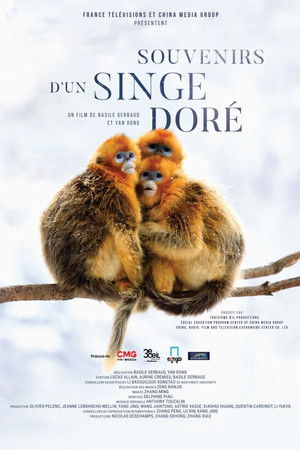
The remarkable true story of three animal species rescued from the brink of extinction: California’s enchanting Channel Island Fox, China’s fabled Golden Monkey, and the wondrous migrating crabs of Christmas Island. Discover successful, heartfelt, and ingenious human efforts to rescue endangered species around the world.
A stop-motion adaptation of the 1981 novel by geologist Dougal Dixon of the same name, which explores the speculative paths of evolution of modern animals into the far future.
Premiers pas dans les Rocheuses
The film follows journeys of observational tours solicited by the Palestinian Museum and conducted by two professors from Birzeit University to collect photos of and information on the Palestinian Flora. The title is adapted from a collection of 123 images (circa 1900 to 1920) of wild flowers in Palestine found in the Matson Collection in the Library of Congress. Despite the tendency to trace the wild plants, the text in general aims at questioning the territorial extension of what is meant by the term “Palestinian”, while standing on insignificant topographical features of the (postcolonial) landscape in West Bank. Furthermore, it addresses photography as a practice and a tool of distributing and restricting information at once.
Film about a family of lions living in the swamps of the Okavango delta, seen through the eyes of a cub born just before the annual flood
This documentary follows the harsh and competitive life of Addo, a male lion born into a successful pride.
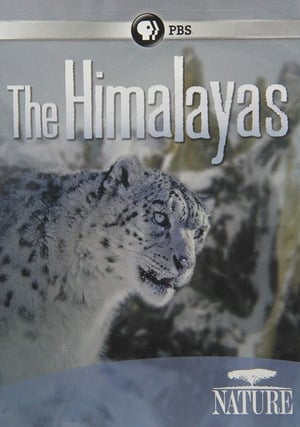
India - unique in its diversity and breathtakingly beautiful. The subcontinent is characterized by scenic, cultural and ethnic diversity. After China, India is the second most populous country in the world. Despite growing space needs, there are efforts to preserve the wilderness through nature reserves and protected areas. So India still provides habitat for rare species such as the Bengal tiger or the Indian elephant. The 5-part series "India's wild beauty" leads to the most spectacular and beautiful regions and their inhabitants. The complete series in five parts: 1 The Thar Desert 2 In the jungle, the Ghats 3 Life on the holy river 4 The Himalayas 5 In the land of Naga
This short film focuses on how conservationists endeavor to protect wildlife.
70 years after the last wolves roamed the national park, a total of 41 wolves were reintroduced between 1995 and 1997. A globally unique experiment that had many supporters, but also resolute opponents, then as now.