Introduces the world of painter René Magritte through an assemblage of the painter's images. Includes statements by Magritte about his intentions and anecdotes from his friends Mesens and Scutenaire.
Gauguin’s vivid artworks sell for millions. He was an inspired and committed multi-media artist who worked with the Impressionists and had a tempestuous relationship with Vincent van Gogh. But he was also a competitive and rapacious man who left his wife to bring up five children and used his colonial privilege to travel to Polynesia, where in his 40s he took ‘wives’ between 13 and 15 years old, creating images of them and their world that promoted a fantasy paradise of an unspoilt Eden in the Pacific. Later, he challenged the colonial authorities and the Catholic Church in defence of the indigenous people, dying in the Marquesas Islands in 1903, sick, impoverished and alone.
Nan Goldin's slide show “The Ballad of Sexual Dependency” converted, mixed and screened as a film by the artist, portraying the American underground culture, the no wave scene, post-Stonewall gay subculture, among others.
Borowczyk’s portrait of the painter Bona Tibertelli de Pisis and her erotic fusions of men, women and molluscs.
Light is a fascinating phenomenon. Without light, there would be no cinema, no film – and no life. So light is at the origin of everything, and yet it remains invisible to the eye until it hits matter. This moment is – quite literally – the starting point of Thomas Riedelsheimer’s latest work, for the springtime spectacle of rainbow shreds in the cinematographer and documentary filmmaker’s flat became the starting point of a search for the origin of the images we form of this world. For this quest he dived deep into two spheres that seem to follow different laws but always strive to fathom the magical: physics and art.
Portrait of the Italian sculptor Donatello (1386-1466), a precursor of the High Renaissance who considerably influenced sculptural art with his innovative way of conceiving space. Donatello is already a legend in his own lifetime. The sculptor is the forefather of the High Renaissance and pioneer for artists such as Raphael or Michelangelo. His bronze sculpture of the "David" or the "Pazzi Madonna" in marble are icons of art history and testify to his sculptural power of renewal.
Biography of the American Painter and Illustrator, Norman Rockwell.
Filmed on location in Montana and Washington State, this 1976 biography of poet and teacher Richard Hugo features readings of some of his most famous poems as well as interviews with his family and friends.
An exploration of the link between science and beauty through the work of scientists at CERN, in Geneva.
Painter, poet and playwright, teacher and freethinker, lover and traveler, Austrian artist Oskar Kokoschka (1886-1980) was a rare individual who remained lucid and passionate throughout his long life.
In this documentary Kerkhof takes the viewer into a bizarre underworld, the sub-culture of blood art and body piercing performance art. Kerkhof's camera registered a performance by the American blood artist Ron Athey which took place during the FREAK ZONE festival in Lille, France in May 1997. The camerawork is so freaky one would almost suspect it is under the influence of heroin. The film includes interviews with Athey as well as shocking live fragments wherein Athey works his face over with injection needles. The crazy, maniacal clamour of the HIV positive priest/performer gives us insights into the motives and goals of this group of masochistic performance artists. Somebody who entertains his audience by cutting and stabbing himself; is this art? Who can say? What is beyond question is that Kerkhof's masterful use of the camera and editing not only obscures the images but also the boundary between art and unbearable filth.
Hours and historical meetings, Pierre Assouline has composed an anthology of the best extracts presented in the form of a primer, which he had commented on by a surprised Bernard Pivot.
British surrealist Leonora Carrington was a key part of the surrealist movement during its heyday in Paris and yet, until recently, remained a virtual unknown in the country of her birth. This film explores her dramatic evolution from British debutante to artist in exile, living out her days in Mexico City, and takes us on a journey into her darkly strange and cinematic world.
Lucy Jarvis -- the plucky camerawoman known for becoming the first Westerner to film inside communist China -- breaks barriers once again with this exclusive look at the world-famous Musée du Louvre, a place that previously barred access to all filmmakers. Charles Boyer is your host on this personalized tour of the museum's most prized possessions, including works by da Vinci, Michelangelo, Vermeer and Van Eyck.
This cinematic journey into the waters off East Africa chronicles the story behind artist Damien Hirst's massive exhibition of oceanic treasures.
Fernando Lemo's world is fiercely stripped of any external logic, as Jorge de Sena once said. His artistic gesture blends with his own existence, where the poetic principle comes first. And with the light that insists to come through the half-closed door, the fear of life is vanquished in the battle fought with death. Thus, each word is born within another word and each image within another image. Out of how many knives is love made, the poet wonders?
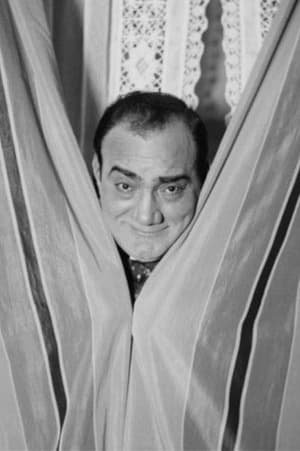
Born in 1873 in a poor neighbourhood in Naples, Enrico Caruso conquered the world with his singing voice. At the age of 27 he got a contract at the Scala in Milan, and his already considerable popularity skyrocketed thanks to the invention of the gramophone. He sold millions of records, and garnered international acclaim. In 1903 he moved to New York to perform at the prestigious Metropolitan Opera, in the role of Radames. But his riches and fame attracted the attention of the Mafia, who started blackmailing him. He felt trapped by his fame and died at just 48 years old. Biographer Francesco Canessa, the music critic Jürgen Kesting and the composer Micha Hamel explain the ups and downs of the man behind the timeless Italian voice.
How did the Impressionists view the world? What relationship did they have with technique, with color, with light and with the universe of shapes that made up reality before their eyes? How were their works received? How did they go from being rejected by critics and the public to becoming among the most loved in the world in a few years? Secret Impressionists is an immersive journey into the intimacy of the Impressionists and their paintings which aims to offer a "privileged" visit that stimulates the spectators' curiosity and gives them a perspective on the works complementary to the live experience, allowing spectators in the hall to immerse themselves in the work of painters and grasp unpublished details.
Interviews with the junior designers swept into the 24-7 world of "The Eamery" are the heart of this complex picture of a husband-and-wife creative team that define the era of Mid-Century Modernism. Narrated by James Franco, the film draws from a trove of archival material, primarily the stunning films and photographs produced in mind-boggling volume by Charles, Ray, and their staff during the hyper-creative forty years of the Eames Office.
Rotterdam 2040 is a film about the city’s future, departing from the principle of Gyz La Rivière that you can’t look ahead without considering your past (something that hasn’t always been Rotterdam’s strongest feature). At high speed, La Rivière reconstructs the history of Rotterdam from the time before the bombings until now, and expands the developments to the year 2040 (100 years after the bombing and the 700th anniversary of the city). La Rivière made a specific choice to expose his personal vision, which is sometimes radical or a little absurd. So no experts and no talking heads, but an assault of old and new imagery, held together by La Rivière as the narrator of the film. Although Rotterdam 2040 deals with architecture and urban renewal, it is actually a film about people. The subjective experience of the city by its (future) occupants mainly determines the parade of architectural blunders and suggestions for the future. All tongue-in-cheek of course.