Šestá žena Modrovousova
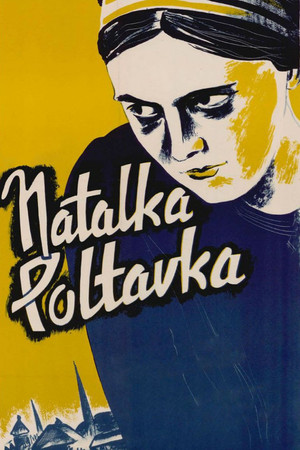
An iconic Ukrainian play of the same name meets TV.
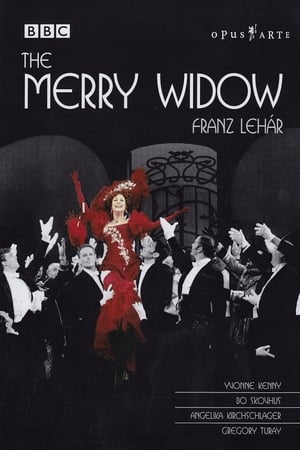
Lotfi Mansouri's spectacular last production as General Director of The San Francisco Opera with Yvonne Kenny making her debut in the title role, new dialogue specially commissioned from Pulitzer Prize-winning playwright, Wendy Wasserstein and an original ballet to set the scene ‘Chez Maxime’ bringing fresh insight into Lehár's classic operetta. This production also features another world premiere, Njegus's song, ‘Quite Parisian’.
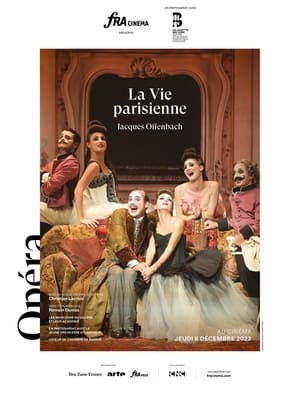
When Barbe-bleue loses his fifth wife, the turbulent Boulotte is selected at random to be the next one. But Barbe-Bleue falls in love with Hermia – who loves the shepherd Saphir – and soon wearies of Boulotte. So, he asks his alchemist to concoct for him an “anti-wife” philtre. But, as on the previous occasions, it is merely a sleeping potion and Boulotte wakes up the other five “dead” wives. They reappear, dressed up as gypsies and bring the truth to light.
Country girl Margit sits for the artist Sándor, from Budapest. She is fascinated and charmed by him, and agrees to accompany him to the capital, so he can complete the painting there. Disillusionment sets in, however, when Sándor wins a prize with the finished portrait and loses interest in her. Margit recognizes that her true happiness lies at home, with Pista, her faithful lover.
French General Birabeau has been sent to Morocco to root out and destroy the Riffs, a band of Arab rebels, who threaten the safety of the French outpost in the Moroccan desert. Their dashing, daredevil leader is the mysterious "Red Shadow". Margot Bonvalet, a lovely, sassy French girl, is soon to be married at the fort to Birabeau's right-hand man, Captain Fontaine. Birabeau's son Pierre, in reality the Red Shadow, loves Margot, but pretends to be a milksop to preserve his secret identity. Margot tells Pierre that she secretly yearns to be swept into the arms of some bold, dashing sheik, perhaps even the Red Shadow himself. Pierre, as the Red Shadow, kidnaps Margot and declares his love for her.
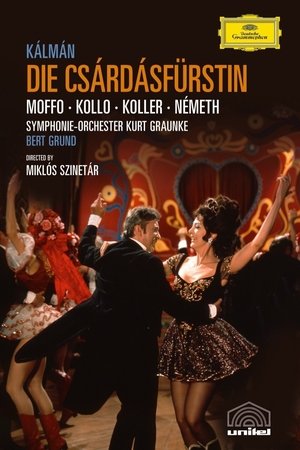
A Hungarian countess, wanting to dissuade unwanted suitors, announces her engagement to a fictional count Zsupán. Things go awry when a count Zsupán shows up, having heard of his engagement in the papers.
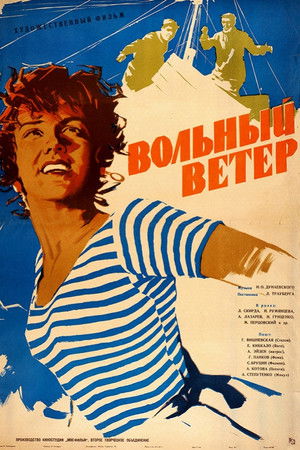
Based on the operetta of the same name by Isaak Dunayevsky. The port town of one of the small southern countries. After the Nazi occupiers left, the port's berths were empty, the steamers did not smoke, cargo cranes stood. Fearing retaliation for collaborating with enemies, port owner Georg Stan fled the city. After waiting a while and securing the support of local authorities, Stan nonetheless returns - and loading operations begin in the port. While loading oranges, the sailor Yango and the beautiful Stella are preparing for the wedding. Suddenly, Stan makes a proposal to the girl and tricks her into agreeing. Upon learning of the deception, the girl runs away to Yango. Having discovered weapons intended to support fascism in the drawer of the hold, the heroes do everything possible to make the boxes fall to the bottom of the sea.
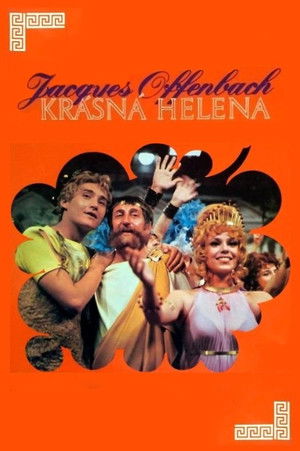
This musical comedy based on an opera by Jacques Offenbach incorporates a twist on the classic Greek myth: Orpheus, a music teacher at a girls’ school in the ancient Greek city of Thebes, actually does not miss his wife Eurydice that much – until the gods and Offenbach himself pressure him to retrieve her from Hades.
This outdoor performance of Carl Zeller's celebrated operetta was staged at the Seefestspiele Mörbisch in 1998. Seefestspiele Mörbisch is an operetta festival held annually at Mörbisch am See in Austria. In the story, Adam, a handsome bird-seller from the County of Tyrol, finds himself in the Rhineland, where he and a village postmistress become entangled in various romantic intrigues and misunderstanding at the prince's court.
In this three-act operetta by Hungarian composer Emmerich Kálmán, a dashing and mysterious circus performer is hired by a disappointed suitor of Princess Fedora Palinska to pose as a nobleman and marry her. This 1969 performance was produced for West German television.
A musical drawing room farce set in Paris in October, 1925. Gilberte, in middle-age, flirts with men but loves her husband Georges, wishing he were more demonstrative. He's negotiating a deal with an American, Eric Thomson, who turns out to be Gilberte's first husband from an annulled and secret stateside marriage. Along with her sister Arlette, Gilberte begs Eric not to tell Georges about the marriage. Meanwhile, a young artist, Charly, pursues Gilberte while Arlette tries to match him with the young Huguette, who loves him. Will Eric play along or try to re-win Gilberte's affection? Can Gilberte play one off against another? And who will manage to kiss whom on the lips?
Modrá ruža
Kálmán Imre's beloved operetta comes to the screen in this comedy of music, marriage and class set in Budapest and Vienna before the outbreak of the First World War, recorded at the Budapest Opera in 1963.
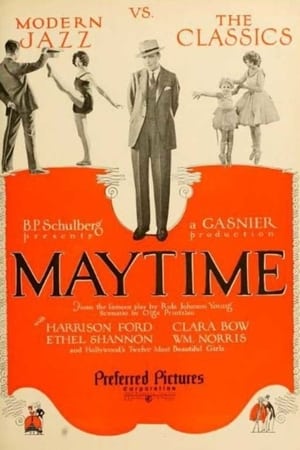
Ottilie Van Zandt is forced to wed her cousin, despite her love for Richard Wayne, the gardener's son. Richard leaves, vowing to return a wealthy man and eligible suitor for her. He returns to find she has already married and, in turn, marries another girl on impulse. Two generations later, the grandchildren of Ottilie and Richard, who both have inherited their names as well, meet and develop a close friendship that culminates in the romance that their grandparents began but could not consummate years before.
Mam’zelle Nitouche
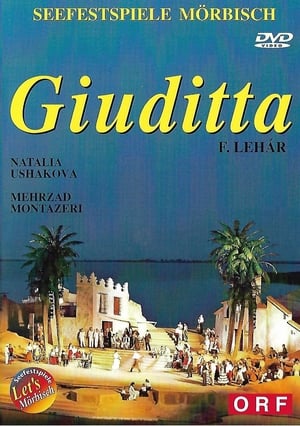
Austrian composer Franz Léhar's opera Giuditta receives a unique interpretation by the Seefestspiele Mörbisch in this stage production, which stars Natalia Ushakova and Mehrzad Montazeri as the principal leads. The Morbisch Festival Orchestra accompanies the production, while the Chorus and Ballet of the Seefestpiele Mörbisch lend added support.
In a small Japanese town, Ko-Ko is appointed to the unenviable position of executioner. Knowing he must successfully perform before the appearance of the Mikado in a month's time, Ko-Ko finds a suitable victim in Nanki-Poo, who is distraught over his unrequited love for the maiden Yum-Yum. Nanki-Poo agrees to sacrifice his life if he is allowed to spend his remaining days with Yum-Yum, who is betrothed to Ko-Ko. Filmed live from the 1982 Stratford Festival in Ontario.
Lehar romantic operetta set in Russia about a beautiful dancer who is set up to attract a tsar's son, and they fall in love. Beautiful settings and wonderful music.
Lehar's The Land of Smiles touches the heart as it provides unforgetable melodies from start to finish. There are no weak links in the cast. Too often, we think of operetta as musical fluff, tired cliches, and obligatory dance scenes when things start slowing down. Not so in this classic operetta. We feel the pain of loss suffered by the two main characters, who make their roles natural and believable. There is more to this work than "Yours Is My Heart Alone." There is dramatic consistency and people you find yourself caring about as much as the music, the costumes, and the colorful sets.