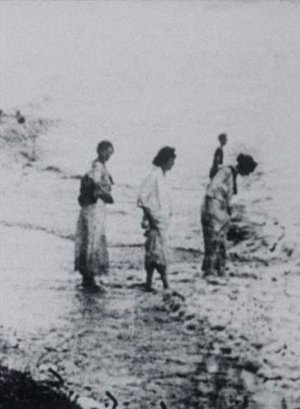
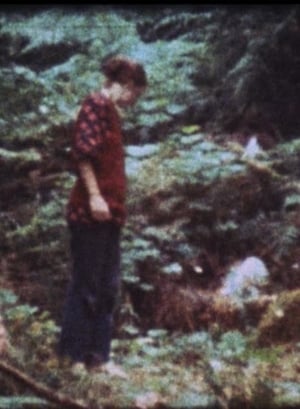
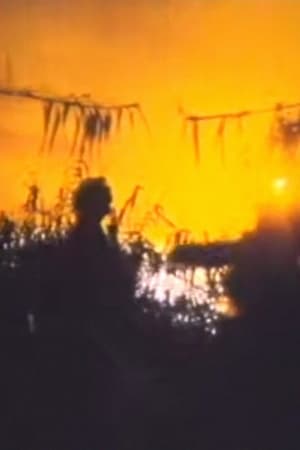
In ECLIPSE a child survivor wanders barefoot across a stunningly evocative landscape. Director Jason Ruscio expresses the profound loneliness of a decimated world through richly textured images that bring to mind the films of Andrei Tarkovsky – burned out interiors, hands grasping to hold each other, time-worn photographs and faceless soldiers in the snow. ECLIPSE is a remarkable meditation on the effects of war. Preserved by the Academy Film Archive in partnership with New York University Tisch School of the Arts Graduate Film & Television in 2016.
Short film about the Manzanar Japanese American internment camp. Preserved by the Academy Film Archive in 2011.

Short film produced by Visual Communications, the United States first Asian American film production company. Preserved by the Academy Film Archive in 2012.
Agitprop short made in West Germany. Preserved by the Academy Film Archive in 2005.
The animation, music, and optical printing of Kitsch in Synch was produced by Beckett and the students in two classes he was teaching at CalArts. Although a group project, it is clear that Beckett was the director. The playful, catchy soundtrack is used to create a cycle of building tension and release. The brightly colored shapes create approximate symmetrical formations and become more densely layered, with glimpses of iconographic objects and even live footage near the end. Preserved by the Academy Film Archive, in partnership with the iotaCenter, in 2007.
Every school day, African-American teenagers William Gates and Arthur Agee travel 90 minutes each way from inner-city Chicago to St. Joseph High School in Westchester, Illinois, a predominately white suburban school well-known for the excellence of its basketball program. Gates and Agee dream of NBA stardom, and with the support of their close-knit families, they battle the social and physical obstacles that stand in their way. This acclaimed documentary was shot over the course of five years.
Satyajit Ray's poetic documentary was commissioned by the Chogyal (King) of Sikkim at a time when he felt the sovereignty of Sikkim was under threat from both China and India. Ray's documentary is about the sovereignty of Sikkim. The film was banned by the government of India when Sikkim merged with India in 1975. The ban was finally lifted by the Ministry of External Affairs in September 2010. Preserved by the Academy Film Archive in 2007.
Using clips from several unidentified films of the preceding decade, featuring many well-known stars of the day, this short demonstrates that an endless variety of music to entertain all tastes can be heard when you go to the movies. Preserved by the Academy Film Archive in 2012.
A surrealist translation of Catholic devotional postcard imagery set into unsettling motion. Preserved by the Academy Film Archive in 2008.
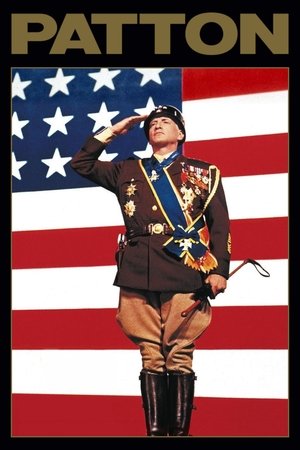
"Patton" tells the tale of General George S. Patton, famous tank commander of World War II. The film begins with Patton's career in North Africa and progresses through the invasion of Germany and the fall of the Third Reich. Side plots also speak of Patton's numerous faults such his temper and habit towards insubordination.
Protective Coloration shows Fisher seated at a mottled table. He wears short-sleeved hospital garb, surgical green ‘scrubs’. Nose-clips block his nostrils while a mouth-guard that looks like fake lips covers his mouth. Over the course of 11 minutes he masks his face and covers his hands with bright gear in colours that accumulate to resemble those of the standard reference chart: he puts on orange eye-caps, then a yellow bathing cap; covering his nose and mouth and the gear already there, he dons a black gas mask; a silky black sleeping mask voids his already covered eyes, a cyan blue bathing cap caps the yellow; yellow rubber gloves snap on his hands and forearms; puts on cyan eye goggles, then struggles with yet another bathing cap, hazmat orange, over the other two. A silvery transparent shower cap tops the caps, itself topped by a plastic green helmet. Finally heavy-duty magenta gloves hide most of the yellow rubber. Preserved by the Academy Film Archive in 2008.
Albert and David Maysles (Gimme Shelter) directed this 53-minute documentary about movie tycoon Joseph E. Levine (1963).
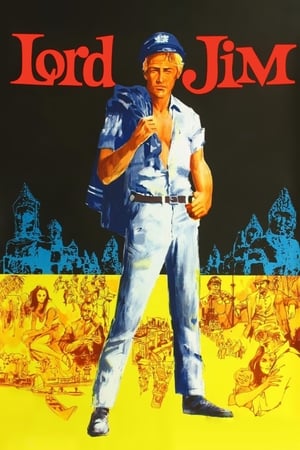
After being discredited as a coward, a 19th century seaman lives for only one purpose: to redeem himself. Preserved by the Academy Film Archive in partnership with Sony Pictures Entertainment in 2000.
While filing for a divorce, beautiful ex-stripper Roslyn Taber ends up meeting aging cowboy-turned-gambler Gay Langland and former World War II aviator Guido Racanelli. The two men instantly become infatuated with Roslyn and, on a whim, the three decide to move into Guido's half-finished desert home together. When grizzled ex-rodeo rider Perce Howland arrives, the unlikely foursome strike up a business capturing wild horses.
Jerry Martin quits his dull job as a bank clerk and falls in with a band of hobos. He takes on the guise of Bachelor, the "king of the market," and finds himself pursued by dangerous men who are after the real Bachelor. *Only fragments are known to exist. Preserved by the Academy Film Archive in 2010.
A deer, disillusioned by the consumerism that defines his life. A lizard, ostracized from society, forever wandering. A chance meeting in the middle of a field. Who will survive? And who will transcend existence? Preserved by the Academy Film Archive in 2009.
Shot while LaPore was on a Fulbright Scholar Fellowship to Sri Lanka in 1993-1994. “I have made a film about travelling and living in a distant place which looks at aspects of daily life and where the war shadows the quotidian with a dark and rumbling step.”--LaPore. Preserved by the Academy Film Archive in 2014.
A film by Hy Hirsh. Preserved by the Academy Film Archive in partnership with iotaCenter and National Film Preservation Foundation in 2000.
Documentary short film depicting the disastrous result of runaway prices following the First World War and warning Americans against repeating the crisis as the Second World War nears an end. Preserved by the Academy Film Archive in 2012.
"The insinuation of camera movements and the familiarity of the same forms recurring in black and then luminous white shapes, makes X an intriguing visual play on positive/negative space. Scale, depth and angle of view are indecipherable. Is it the object or the cameras which moves across the frame? This Rubic's cube for seeing simultaneously demonstrates the illusionism of cinematic space and the camera's ability to isolate and transform. Grenier's use of silence in X is perfectly à propos to its concerns. -Raphael Bendahan, Vanguard, Summer 1985. Preserved by the Academy Film Archive in 2014.