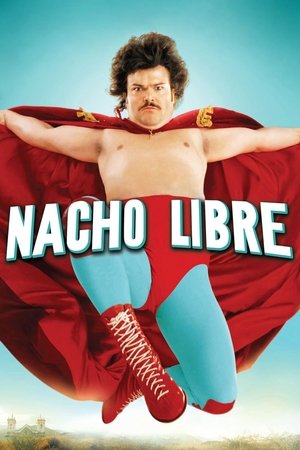
Ignacio, a disrespected cook at a Mexican monastery, can barely afford to feed the orphans who live there. Inspired by a local wrestling hero, he decides to moonlight as the not-so-famous Luchador "Nacho Libre" to earn money for the monastery -- not to mention the admiration of beautiful nun Sister Encarnación.
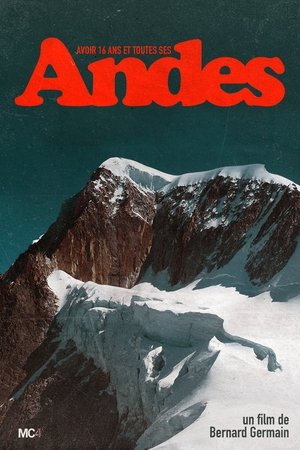
Avoir 16 ans et toutes ses Andes
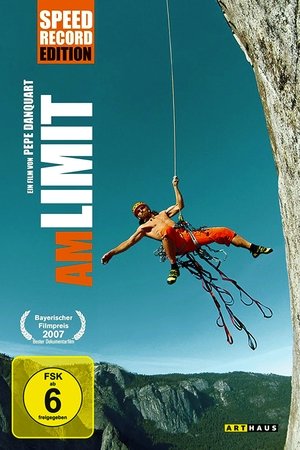
At the Limit is a documentary about extreme climbing. In this sports documentary, Pepe Danquart shows brothers Thomas and Alexander Huber climbing in Patagonia and on the granite rock "El Capitan" in Yosemite Valley (USA). A key part of the film is their attempt at a speed ascent of the 1,000-meter-high route "The Nose," in which the two athletes aim to break the then speed record of 2:48:30 hours, set by Hans Florine and Yuji Hirayama in September 2002.
An analysis of the impact on the United States Latino community of immigration policies promoted by President Donald Trump.
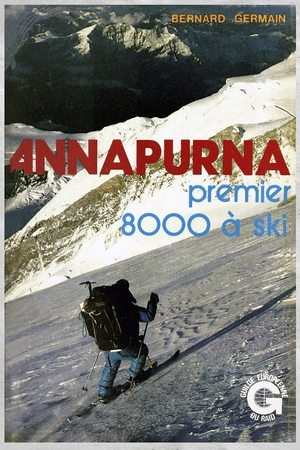
Annapurna, premier 8000 à ski
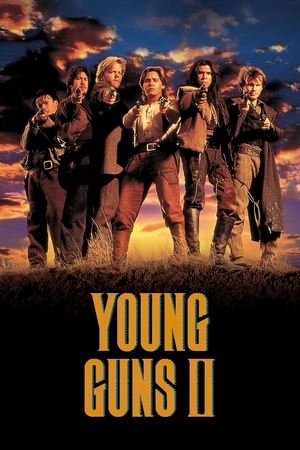
Three of the original five "young guns" — Billy the Kid, Jose Chavez y Chavez, and Doc Scurlock — return in Young Guns, Part 2, which is the story of Billy the Kid and his race to safety in Old Mexico while being trailed by a group of government agents led by Pat Garrett.
Short documentary about a transexual sex worker.
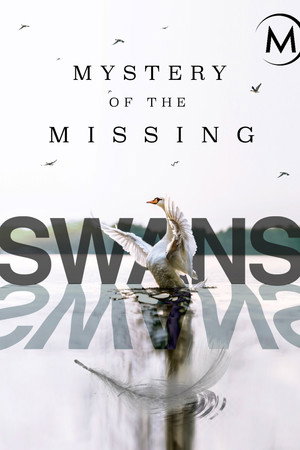
With narration from Paul McGann, this ground-breaking film sets out to solve one of nature's mysterious phenomena: the Bewick swan's dramatic decline. A pioneering group of scientists and conservationists sets out to discover why we have lost nearly half the Bewick population in the last twenty years. Every year, these majestic birds make one of the world's toughest migrations, across perilous land, sea and skies. Somewhere between the harsh Tundra landscape and the south of England lies the key to their disappearance. We join extreme sportswoman Sacha Dench and award-winning wildlife cameraman Benjamin Sadd, as they follow the swans over 7,000 km, on a journey that pushes both humans and swans to the limits of their endurance. Cutting-edge tracking techonology and innovative filming techniques give privileged insight into the birds' hidden world, providing stunning aerial views and the personal stories of swans, Charlotte, Daisy-Clarke and Leho.
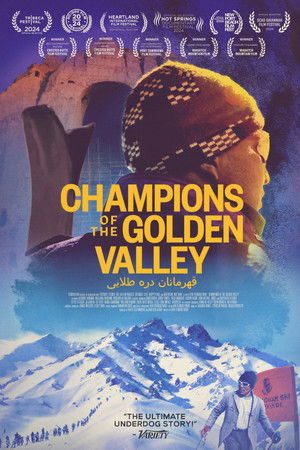
In the high peaks of Afghanistan, young athletes from rival villages build makeshift wooden skis and convene for a mountain race that unites the community in a moment of peace and triumph just before their country’s collapse. Champions of the Golden Valley merges the triumphant spirit of a classic underdog sports story with the heartfelt portrait of a community finding hope amid disrupted dreams. Revealing a stunning unseen side of Afghanistan, it is an uplifting exploration of what it means to be a champion – in all its forms.
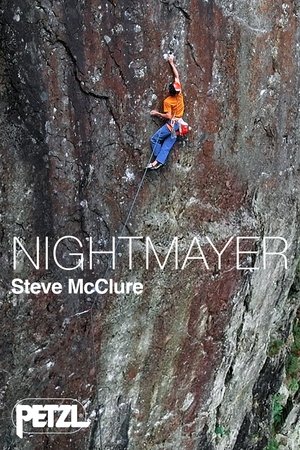
One of Great Britain’s most distinguished climbers, Steve McClure has spent the last few decades scaling cliffs and crags all over the world. In spite of his globetrotting status, he likes nothing more than to tackle challenges on the rock walls of his home country. This is how, after sending Rainman in Malham in 2017, he became one of only a handful of people to climb 9b. In 2019, he finally settled a long overdue score by onsighting Nightmayer, a hard, complex, and committing route!
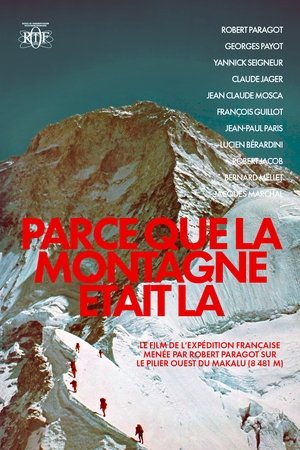
The French Alpine Club's film about the French expedition to conquer Makalu (8481m) via the west pillar in Nepal, which began on February 24, 1971. Composed of 11 mountaineers, Robert Paragot (expedition leader), Georges Payot, Lucien Berardini, Yannick Seigneur, Claude Jager, Jean-Paul Paris, Jean-Claude Mosca, François Guillot, Bernard Mellet, Robert Jacob and Jacques Marchal (surgeon), it took twenty-five days of walking on the Himalayan trails with 460 porters and 18 Sherpas to transport 14 tons of equipment to reach the base camp. Finally, it was Mellet and Seigneur who managed to reach the summit on May 23, 1971: 8481 m, temperature - 30°, oxygen 30%, no wind.
On May 23, 1971, a French expedition led by Robert Paragot successfully climbed Makalu via its west pillar. Makalu is one of the five highest peaks in the world, located in the Himalayas on the Nepalese-Tibetan border. Jean-Pierre Janssen and Lucien Bérardini filmed this expedition, where Robert Paragot spoke about the expedition conditions, life at altitude, and his state of mind as expedition leader. On the return to base camp, Jean-Pierre Janssen interviewed Lucien Berardini, Georges Payot, Jean-Claude Mosca, François Guillot, and Jean-Paul Paris, all of whom played a key role in bringing Bernard Mellet and Yannick Seigneur to the summit. Expedition members: Robert Paragot (expedition leader), Georges Payot, Yannick Seigneur, Claude Jager, Jean-Claude Mosca, François Guillot, Bernard Mellet, Lucien Bérardini, Jean-Paul Paris, Robert Jacob, Jacques Marchal (surgeon).
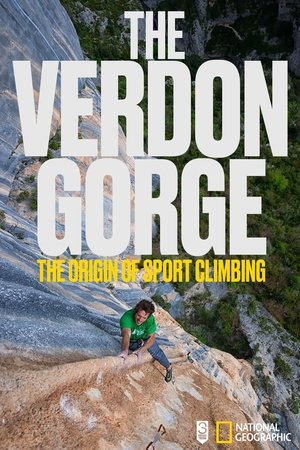
Released in 2016, the short film by Keith Ladzinski, Josh Povec and Andy Mann traces the origins of sport climbing in the legendary Verdon Gorges, which Americans inevitably compare to the US Grand Canyon. The Verdon is where climbing flourished in the 1970s. Through the eyes and experiences of Bruno Clément, Alan Carne, Emily Harrington, François Guillot, Matt Segal and Jonathan Siegrist, we take a look back in (very beautiful) images at the different routes of the Verdon Gorges.
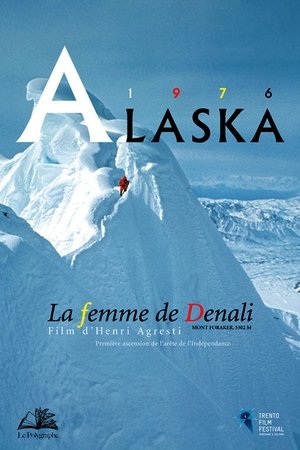
The film of the first ascent of Mont Foraker (5,304 m) in the Denali chain in Alaska, by the southeast ridge of independence in 1976, which remains years after an unequaled sporting and human adventure. The 7 members of the expedition, Henri Agresti, Jean-Paul Bouquier, Jean-Marie Galmiche, Werner Landry, Gérard Creton, Isabelle Agresti, Hervé Thivierge, all came to the top after thirty days of climbing in conditions still limits. Breathtaking images where the grandiose views of the icy desert and the scenes of daily life alternate on a most rough mountains on the planet. The film received the Gentiane d'Or Festival prizes from Thirty 1977, Public Prize Festival des Diablerets 1977, SFP Festival de la Plagne in 1977.
Mike, a Hemingway-esque adventure novelist, is spending his days in a self-imposed exile somewhere in Central America. A reporter for Sight Magazine, Katie, has tracked him down in the hope of getting the biggest scoop of her career. Mike falls for Katie. On a flight to Mexico City, their plane crashes near a remote hideaway of Nazi war criminals in hiding. The Nazis want to stay hidden and plan to dispose of their new guests
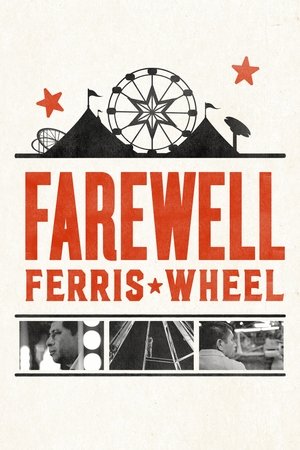
Farewell Ferris Wheel explores how the U.S. Carnival industry fights to keep itself alive by legally employing Mexican migrant workers with the controversial H-2B guestworker visa.
A legendary film in the history of rock climbing in the Verdon Gorges, shot in 16mm between the autumn of 1978 and the spring of 1979 by Henri Agresti, a high mountain guide. For the first time, acrobatic shots were taken on the walls of the Verdon. We rediscover a whole generation of pioneers on routes like Dingomaniaque, Triomphe d'Eros, Péril rouge, Luna Bong, Pichenibule or Necronomicon, routes which, like Dingomanique or Triomphe d'Eros, had just been opened. We witnessed a major turning point in the style and possibilities of rock climbing at the end of the 1970s: anchors sealed by drilling used as belaying and no longer as aids, new equipment: climbing shoes and chalk, harnesses and figure eights. Henri Agresti's unfinished and silent film, lasting around fifty minutes, was presented in the form of a nine-minute fragment at the Trento Film Festival in 1981.
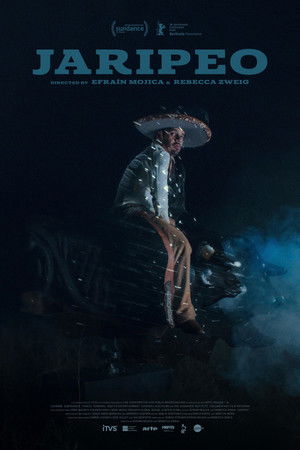
Set against the vibrant spectacle of the jaripeo, a symbol of Mexican cowboy tradition and machismo, this story unveils a hidden world of queer desire and quiet rebellion. As glances and gestures disrupt the rigid norms of masculinity, the rodeo becomes a stage for our protagonists to navigate identity, community, and the search for belonging in an oppressively traditional space.
An Italian documentary about Mexico and the UFO phenomenon.
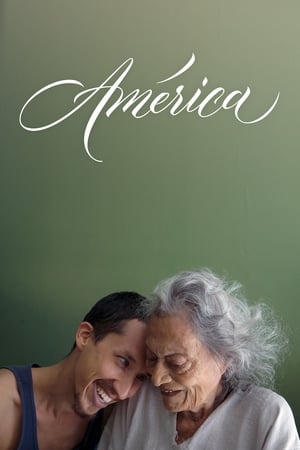
This sparkling, irreverent, and deeply emotional piece of creative nonfiction announces the arrival of a standout filmmaking partnership. When their father is hauled away, a colorful trio of brothers — a sibling team to rival Moe, Larry, and Curly — step up to take care of América, their grandmother, in Colima, Mexico. Rodrigo, Diego, and Bruno are stilt-walkers and acrobats and Elvis impersonators and unicycle riders — when not running the family's agriculture warehouse. With a loose, offhanded charm, Stoll and Whiteside capture the family’s natural performative streak in a way that makes even the most explosive, dramatic moments feel organic. The endearing, genuine scenes between Diego and his grandmother celebrate the possibility of multigenerational connection.