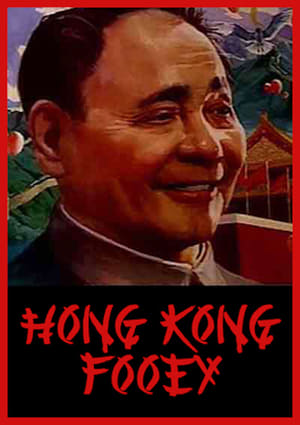
I made June when I didn’t have any inspiration to create a feature film. The documentary is about the rarely known stories in the social movement in June. At first the clips of videos were kept for sorting out my feelings, but after being edited, they were made into a documentary and became a record of history. Six scenes and voices were used to tell what happened during that month.
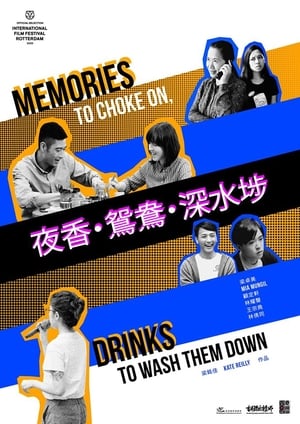
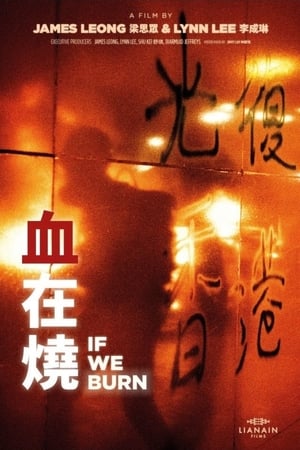
This anthology film, whose Chinese title begins with a romantic name for human excrement, premiered internationally at Rotterdam and won Best Screenplay from the Hong Kong Film Critics Society. A variety of Hong Kong people wrestle with nostalgia when facing an uncertain future. Their stories give way to a documentary featuring a young barista turned political candidate.
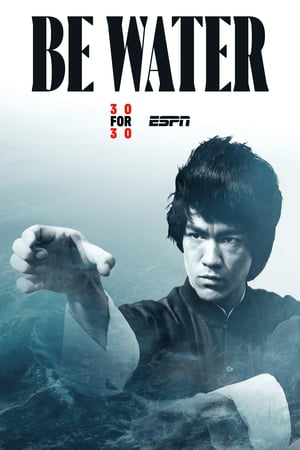
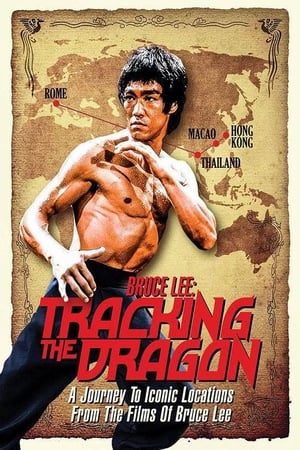
In 1971, after being rejected by Hollywood, Bruce Lee returned to his parents’ homeland of Hong Kong to complete four iconic films. Charting his struggles between two worlds, this portrait explores questions of identity and representation through the use of rare archival footage, interviews with loved ones and Bruce’s own writings.
Documentary about two boys and a girl who travel to surfing spots around the world.
The first feature-length documentary to explore the career of Stephen Chow; featuring collaborators, critics, and academics. Produced for the Shout Factory release of his classic work on Blu-ray, "The Stephen Chow Collection" released in 2024. Fans will learn how Chow went from Hong Kong's TVB to feature film riches, with his peculiar brand of localized comedy, to becoming one of the most successful brand names in Mainland China, including the blockbuster reception for his comedy "The Mermaid" in 2016.
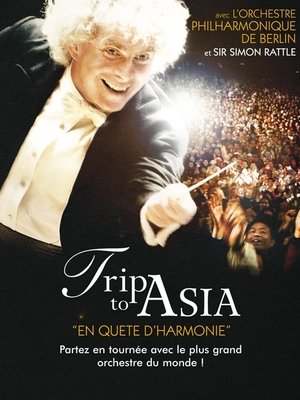
Journey with the musicians of the Berlin Philharmonic and their conductor Sir Simon Rattle on a breakneck concert tour of six metropolises across Asia: Beijing, Seoul, Shanghai, Hong Kong, Taipei and Tokyo. Their artistic triumph onstage belies a dynamic and dramatic life backstage. The orchestra is a closed society that observes its own laws and traditions, and in the words of one of its musicians is, “an island, a democratic microcosm – almost without precedent in the music world - whose social structure and cohesion is not only founded on a common love for music but also informed by competition, compulsion and the pressure to perform to a high pitch of excellence... .” Never before has the Berlin Philharmonic allowed such intimate and exclusive access into its private world.
The film Made in Hong Kong allows glimpses on a Hong Kong shortly before the 1997 handover to China. But rather than focusing on the expected hysteria Luc Schaedler’s documentary debut works towards complexity by allowing six diverse residents to talk about their relationship to the colonial city. Their life stories beautifully mix with the images of the author. Made in Hong Kong is a very personal portrait of a city in transition and we learn about Hong Kong’s ambiguities and its political and social problems, as well as the uncertainties regarding the time after 1997.
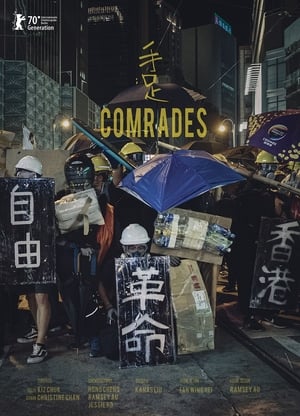
The story of the 2019 Hong Kong protests, told through a series of demonstrations by local protestors that escalate into conflict when highly armed police appear on the scene.
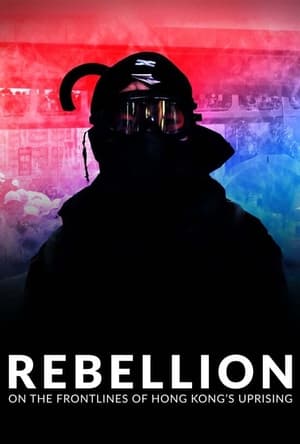
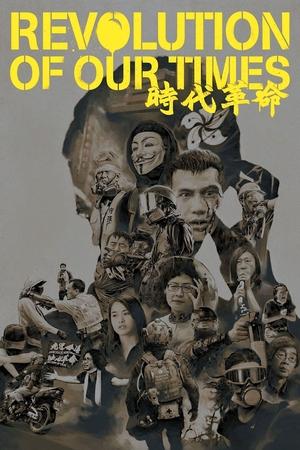
Throughout Hong Kong’s history, Hongkongers have fought for freedom and democracy but have yet to succeed. In 2019, a controversial extradition bill was introduced that would allow Hongkongers to be tried in mainland China. This decision spurred massive protests, riots, and resistance against heavy-handed Chinese rule over the City-State. Award-winning director Kiwi Chow documents the events to tell the story of the movement, with both a macro view of its historical context and footage and interviews from protestors on the front lines.
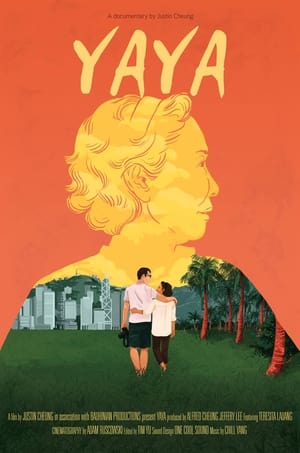
YAYA is a story about a filmmaker who explores the complex relationship between his family and the domestic worker who spent decades away from her family in the Philippines to raise his. This documentary is a tribute to all the domestic workers in Hong Kong, who has served as the backbone of Hong Kong's economy by unleashing a substantial female workforce into the economy and taken care of so many lives with love and care. You are all heroes in the hearts of the Hong Kong people. - Justin Cheung, the director
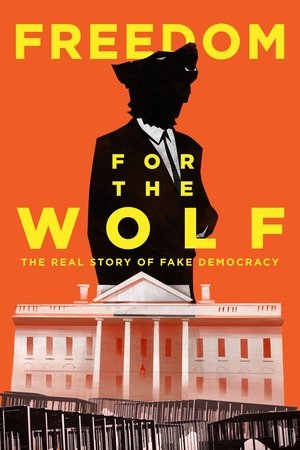
Tells the story of how Edward Snowden managed to evade capture by the US. For the first time Snowden tells the story of how he managed to escape so that not to have to spend the rest of his life in an American prison.
The Umbrella Movement of 2014, also known as the Occupy Movement, paved the way for Hong Kong’s current upheavals, but unfolded in significantly different ways. This creative documentary focuses on the intellectual, political, and discursive underpinnings of the social and political actions of 2014, before fast-forwarding to 2019. A range of thoughtful and engaged intellectuals, students, scholars, activists, and artists including Benny Tai, Chan Kin-man, Ray Wong, and Agnes Chow (many of whom are facing imprisonment for their democratic activism) articulate a range of philosophies, viewpoints and emotions, set against Hong Kong’s spectacular urban background of skyscrapers, night lights, and street-occupying mass movements.
At the forefront of most of Hong Kong's demonstrations, 'frontliners' (aka 'the valiant', yung mo in Cantonese) are the black-clad, masked, often armed youth willing to use violence against the HK government and its heavily-armed police force. Willis Ho's remarkably revealing doc approaches from the inside, giving them voices and offering understanding, not judgment.
The camera floats quietly to capture the beauty that emerges from the mundane. Accompanied by Ryuichi Sakamoto's composition, Arseny Tarkovsky's poem celebrates life.
Choi Yuen Village faced demolition by the express rail project. In 2009, villagers protested and petitioned, sparking the anti-express rail movement. Despite their efforts, the railway plan was approved in early 2010. Forced to choose between leaving or rebuilding, they opted for the government’s land rehabilitation scheme to create a new village together. With volunteers, they searched for land in Pat Heung and fought to prove their status as farmers. Many outsiders misunderstood, believing the villagers received generous compensation and government help. Yet, it was the villagers’ shared determination and love for their land and way of life that carried them through, even as the once-barren longan trees bloomed again in 2010.
Franco Mella is a devoted figure whose life bridges Catholicism and Communism. He has journeyed through Asia, lived simply, and fought for social justice, notably within Hong Kong's protest history as depicted in "Ordinary Heroes" (1999). Mella's path weaves through religious and revolutionary movements, from church beginnings to Communist activism and the Handover, always driven by his missionary spirit and communist ideals. For four decades, he has steadfastly championed the oppressed, undeterred by shifting politics, expressing solidarity through music and protest, and remaining a symbol of wisdom and resilience for the people of Hong Kong.
The 2005 World Trade Conference in Hong Kong was the starting point of the "direct action" that emerged from the Hong Kong protest movement. It was also the first time the Hong Kong police used a large number of tear-gas and beanbag rounds on the street after the 1967 riots. Outside the conference, there were many Hong Kong protestors. Why and how did they get involved in this movement centered on Korean farmers?
Rising beyond K-pop to become Asia's ultimate diva, TAEYEON explores the World of Frozen at Hong Kong Disneyland. Step into the enchanting world and engage in the stories with TAEYEON, who has drawn endless inspiration from Disney since childhood and now captivates audiences as a dream-weaving singer. From lovable characters to scenic winter landscapes, every aspect feels like a fairy tale come to life. Get immersed in the captivating World of Frozen and hear TAEYEON's behind-the-scenes tales of this beloved story.
In the life of Mr. Lai Man-wai, he had seen the most turbulent times of recent Chinese history. From the fall of the Qing Dynasty to the founding of the Republic, from the Sino-Japanese War to the founding of the People’s Republic. With a patriotic spirit, he joined the revolution and used the theatre to promote the revolutionary course. For a ‘stronger China’, and ‘education for all’, he chose film as his life long goal and career. Lai was more than the father of Hong Kong cinema was; he was also one of the pioneers of the Chinese cinema. He made Hong Kong’s first short fiction film ‘Zhuangzi Tests His Wife’. He opened the first Chinese owned cinema, the New World Cinema, in Hong Kong…. In the several decades, Lai had devoted his life and fortune in writing this glorious inaugural chapter in early Chinese film history. The technical enhancement, the introduction of foreign techniques and equipment were all part of his contribution to the Chinese cinema.
Hong Kong's high-speed rail link, the demolition of Choi Yuen Village, the impending budget and the influence of the global Occupy movement are at the centre of independent filmmaker Lo's timely measure of the city's pulse. Ostensibly the third entry in a trilogy that began with 21 years after. (2010) and to be continued (2010), which also captured public reaction to watershed moments in Hong Kong's political life since 2009. The documentary was built upon the material used in its previous installment (to be continued, 46 minutes). It disproves the notion of a passive Hong Kong in a chronicle of a generation poised for massive social change.