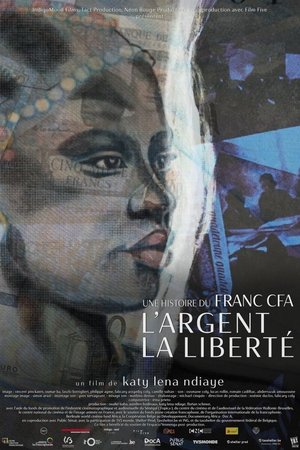
The former French colonies in Central and West Africa have been independent since 1960, but most of these countries still use the currency of the former oppressor: the CFA franc. It was linked to the French franc when it was introduced, so the national bank in Paris controlled monetary policy. Now the currency has a fixed exchange rate with the euro. The link with the European currency strongly influences the monetary policy of CFA countries. And that means the value of the CFA franc is defined by political decisions taken elsewhere, rather than by the domestic economy.
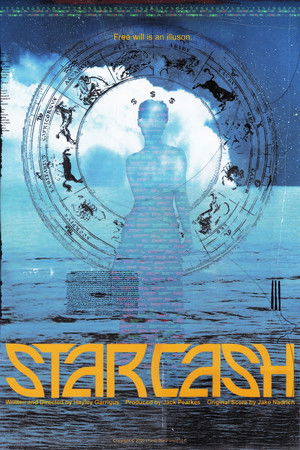
Following a personal search for meaning through astrology, filmmaker Hayley Garrigus discovers an unexpected intersection between astrology and financial markets. As she explores this world of financial astrology, where traders use planetary movements to predict market trends, a deeper truth emerges. Through interviews with astrologers, financial analysts, and those bridging both worlds, the film reveals how our obsession with controlling the future disconnects us from ancient wisdom about cycles and our place in the cosmos. In seeking certainty, have we lost something more profound about what it means to be part of the universe?
This is a documentary about an honest search for the truth about the Federal Reserve Bank and the legality of the Internal Revenue System. Through extensive interviews with recognised experts and authority, the director shows an astonishing revelation of how the Federal Government and the Bankers have fooled the American public by taking thier wages and putting it in the pockets of the super-rich.
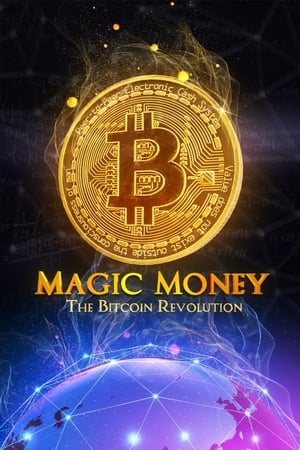
What is Bitcoin? With the advent of Bitcoin, the world's first digital currency, for the first time in history money is no longer controlled by banks or governments, but by the people who use it. But where did this currency come from? How does it work? And is it truly the way forward, or just a flash in the pan? Magic Money answers these questions and more as it explores the mysterious origins of Bitcoin, its role in society, and how it could shape the future.
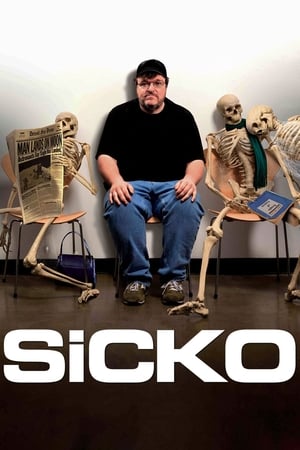
A documentary about the corrupt health care system in The United States whose main goal is to make profit even if it means losing people’s lives. "The more people you deny health insurance, the more money we make" is the business model for health care providers in America.
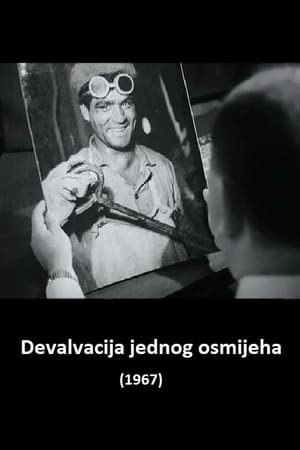
The film tells the story of a Roma worker in the Zenica iron-works Arif Heralić, whose figure was on the ten thousand dinar bill. Heralić was seeking a monetary compensation for using his character on a banknote he did not receive. He died in 1971 as a disability work in extreme poverty.
Michael Moore comes home to the issue he's been examining throughout his career: the disastrous impact of corporate dominance on the everyday lives of Americans (and by default, the rest of the world).
Paul Grignon's 47-minute animated presentation of "Money as Debt" tells in very simple and effective graphic terms what money is and how it is being created
Three men follow the life of one ten dollar bill.
Bill Baggs first met JNT as a fan at the BBC Dr Who Production Office in the 80's. He later worked with JNT on various projects. Bill conducted this interview as part of the BBV dvd '30 Years of Time Travel & Beyond' produced in 1995. In the recording sequence of filming, Bill conducted this interview last in order to give John the opportunity to respond to criticisms from other contributors. The cafe where it was filmed was local to JNT in Saltdean, near Brighton where he was a regular visitor. When Bill first approached Jon about the documentary, John was initially resistant to take part, asking why he'd been left until last. However, once Bill explained the logic of 'save the best 'til last' John agreed.
Bailouts, stimulus packages, debt piled upon debt…Where will it all end? How did we get into a situation where there has never been more material wealth & productivity and yet everyone is in debt to bankers? And now, all of a sudden, the bankers have no money and we the taxpayers, have to rescue them by going even further into debt! Money as debt II explores the baffling, fraudulent and destructive arithmetic of the money system that holds us hostage to a forever growing DEBT… and how we might evolve beyond it into a new era.
Jamie Johnson takes the exploration of wealth that he began in Born Rich one step further. The One Percent, refers to the tiny percentage of Americans who control nearly half the wealth of the U.S. Johnson's thesis is that this wealth in the hands of so few people is a danger to our very way of life.
A young accountant finally pursues her dreams of becoming a painter.
During the donations scandal of 1999/2000, Helmut Kohl gave his legendary "word of honor" not to name any donors. This documentary explores the question of what this word of honor was really all about
It is well known in economics academia that The Wonderful Wizard of Oz written by L. Frank Baum in 1900 is loaded with powerful symbols of monetary reform which were the core of the Populist movement and the 1896 and 1900 president bid of Democrat William Jennings Bryan. The yellow brick road (gold standard), the emerald city of Oz (greenback money), even Dorothy’s silver slippers (changed to ruby slippers for the movie version) were the symbol of Baum’s and Bryan’s belief that adding silver coinage to gold would provide much needed money to a depression-strapped, 1890s America. We believe Baum’s symbols represent the only solution to relieve the growing economic hardship here in America – and the rest of the world. Practically speaking, 2009 marks the 70th anniversary of the 1939 MGM release of the The Wizard of Oz movie, so interest will be very high. Even Oz websites put up by kids get millions of hits.
Loana Story : Le destin brisé d'une icône
Crise, dette, chômage : qui crée l'argent ?
Afganistanbul
Jeffrey Epstein, Ghislaine Maxwell : Perversion en haute sphère
A film that exposes the shocking truth behind the economic crisis of 2008. The global financial meltdown, at a cost of over $20 trillion, resulted in millions of people losing their homes and jobs. Through extensive research and interviews with major financial insiders, politicians and journalists, Inside Job traces the rise of a rogue industry and unveils the corrosive relationships which have corrupted politics, regulation and academia.