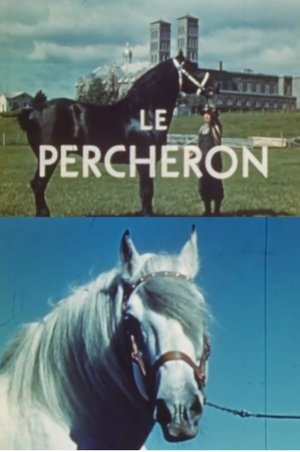
A vintage nature film exploring the migratory pattern of a herd of wild creatures.
Odds & Ends is a sly comment on the collage film and Beat culture. To discarded travel and advertising footage found at a local film laboratory, Belson Shimane added a mélange of animation—assemblages, cutouts, color fields, and line drawings—and faux hipster narration by Jacobs (credited via the anagram Rheny Bojacs) punctuated by a bongo backing. Strung together with doublespeak and non sequiturs, the monologue skirts the edge of nonsense as Jacobs waxes on about poetry, jazz, “reaching the public,” “having a good time,” and—although “money doesn’t count”—the “possibility of subsidy” through grants. Footage of champagne, tropical beaches, and exotic peoples intermingle with rhythmic drawings and stop-motion flights of fancy. The visuals race on through dazzling transformations, both amplifying and undercutting the patter. —National Film Preservation Foundation. Preserved by the Academy Film Archive in partnership with Iota Center Collection in 2006.
An animation work that expresses people who support their lives as Kuroko, otherwise known as stagehands.
One night, Reine, a young loner, sees among the urban chaos a moving oneness that seems alive, like some sort of guide.
They set off, looking for work in far-off places, but disappeared along the way. Inspired by Shiv Kumar Batalvi’s “birha” poetry, the film traces the longing on both sides: on the part of those who are missing, and those that wait for them to return.
Every weekday, inmates are released from Huntsville State Penitentiary, taking in their first moments of freedom with phone calls, cigarettes, and quiet reflection at the Greyhound station up the block.
Stanley Kubrick’s debut documentary, following Irish-American middleweight boxer Walter Cartier on April 17, 1950—the day of his bout with Bobby James. The film traces Cartier’s quiet morning rituals, training, and anxious hours before the match, culminating in his swift victory that night in Newark. Opening with a brief history of boxing, Kubrick’s tightly crafted short captures the discipline, isolation, and tension behind a fighter’s daily routine.
Stanley Kubrick’s short documentary about Father Fred Stadtmueller, a Catholic priest serving a vast 4,000-square-mile parish in rural New Mexico. To reach his scattered congregation, he pilots his own Piper Cub aircraft, the Spirit of St. Joseph. Over two days, Kubrick follows the “flying padre” as he conducts Mass, mediates between quarreling children, attends a funeral, and airlifts a sick child to medical care—capturing both the challenges and quiet heroism of his daily mission.
The protagonists of this surreal drama are seated at the kitchen table arguing over a broken biscuit. Evan Rude (voiced by Bruce Currie) resembles a medieval knight with a propeller head, Ropeshair (voiced by John E Hughes AKA Hobart Hughes) has a head that is a cross between a football and an African sculpture. Each figure sees a fish – supposedly the protagonists’ dinner – circling in space. Inside the biscuit, a hardworking ant works for a 'crust’ to feed his family.
A parody version of the famous book by Charles Darwin. For adults.
A boy and his ghost friend go to see a movie.
The Aletsch Glacier is the longest and largest glacier of the Alps. According to glaciologists, most glaciers will have disappeared by the end of this century, and only bits of the Aletsch will remain. Through a journey into the body of the glacier the film offers a compelling and unsettling visual experience in which our perception of the nature of the images we see, scale and temporality are questioned.
A monster film with no monsters. Inspired by the existence of taxonomies of monsters at the heart of Early Modern European science, the film explores and reinterprets a way of seeing the natural world that is almost impossible to imagine from today’s vantage point.
SIX GUYS is an exploration of horror, grief and the mind and is inspired by works from Junji Ito as well as Charlie Kaufman's "I'm Thinking of Ending Things".
Espaço de Transição
ASMR: A feeling that disappears because it’s too subtle to notice, leaving a trace of a soft tingling sensation behind.
As the day grinds to a halt, agricultural workers gather to street race in the quiet, contemplative night.
Coded tells the story of illustrator J.C. Leyendecker, whose legacy laid the foundation for today's out-and-proud LGBTQ advertisements.
In the vestibule of a hospital room, a young boy waits to see his dying mother. The clamor and spiralling movements of bodies around him intensify, forming a grotesque circus—a cacophonous circle that pushes the child back, depriving him of one final touch of his mother's hand. Using rotoscoped drawings suggestive of charcoal sketches, as well as 3D and object animation techniques, The Circus compels viewing with its unsettling realism. Colour is employed metaphorically to subtly express the promise and the memory of maternal affection. Nicolas Brault's highly personal film, suffused with poetic modesty, casts a poignantly sincere gaze on the heartbreak of a child facing the fearful, mysterious experience of his mother's death.
A documentary expose on the first Gulf War.