Anton Spielmann (18) and his two younger friends Basti Muxfeldt and Jonas Hinnerkort are living in their family homes with their parents in an idyllic village close to Hamburg. The three of them founded the band 1000 Robota. The band has an ambitious aim: „We want to cause creation not to remind of it”, and they want to live up to their ideals. In a society affected by economic pressure 1000 Robota are questioning themselves and others and they don‘t want to meet other people‘s expectations. In a world of excessive supply they are looking for significance and want to unite with others to create a new way of youth culture. But soon they have to face some serious difficulties.
WAR OF WORDS is an energizing, controversial and inspiring feature documentary that lifts the lid on the fast growing UK Battle Rap scene. The documentary is an examination of an exciting subculture of youth in the UK today; their creativity and work ethic, their passion for language and ability to control their own destiny. It investigates freedom of expression and respect for other cultures and lifestyles. While the language is often harsh and unflinching, the 'anything goes' philosophy of the battle arena results in one of the most harmonious and creative scenes in youth culture. The film is a truly entertaining expose on how the UK has embraced this American art form, creating one of the most exciting youth subcultures happening right now.
With a pair of scissors and some paper, he turned his art into a weapon the Nazis feared. A look back at the eventful career of satirist John Heartfield (1891-1968), pioneer of photomontage and modern graphic design.
When asked a question on politics, late Palestinian poet Mahmoud Darwish once answered: “I write about love to expose the conditions that don’t allow me to write about love.” In TWO TRAVELERS TO A RIVER Palestinian actress Manal Khader recites such a poem by Mahmoud Darwish: a concise reflection on how things could have been.
Poet John Betjeman is shown visiting locations including Vauxhall Park, Aldersgate Street station, Camden Town and Hatfield, where he recites a handful of his poems.
Narrated by Sir Derek Jacobi - star of the landmark television series "I, Claudius" - this documentary explores art and culture around the Bay of Naples before Mount Vesuvius erupted in AD 79. The bay was then the most fashionable destination for vacationing Romans. Julius Caesar, emperors, and senators were among those who owned sumptuous villas along its shores. Artists flocked to the region to create frescoes, sculpture, and luxurious objects in gold, silver, and glass for villa owners as well as residents of Pompeii and other towns in the shadow of Vesuvius. The film concludes with the story of the discovery of Pompeii and Herculaneum from the 18th century onward.
Brenda Way, founder and artistic director of ODC, is a recipient of the San Francisco Foundation Community Awards "for creating a community hub through dance. She built the largest, most comprehensive contemporary dance center in the nation, and through it she inspires dancers and audiences, cultivates artists, and engages the community. Brenda is a choreographer, writer, and community activist who strengthens our region's cultural connections." - San Francisco Foundation
Iggy Pop reads and recites Michel Houellebecq’s manifesto. The documentary features real people from Houellebecq’s life with the text based on their life stories.
Moving Together is a celebratory love letter to music and dance that brims with kinetic life and energy. This documentary explores the intricate collaboration between dancers and musicians, moving seamlessly between Flamenco, Modern, and New Orleans Second Line.
From award-winning director Phil Grabsky comes this fresh new look at arguably the world’s favourite artist – through his own words. Using letters and other private writings I, Claude Monet reveals new insight into the man who not only painted the picture that gave birth to impressionism but who was perhaps the most influential and successful painter of the 19th and early 20th centuries. Despite this, and perhaps because of it, Monet’s life is a gripping tale about a man who, behind his sun-dazzled canvases, suffered from feelings of depression, loneliness, even suicide. Then, as his art developed and his love of gardening led to the glories of his garden at Giverney, his humour, insight and love of life is revealed. Shot on location in Paris, London, Normandy and Venice I, Claude Monet is a cinematic immersion into some of the most loved and iconic scenes in Western Art.
In 1971, graduate student Gloria Orenstein received a call from Surrealist artist Leonora Carrington that sparked a lifelong journey into art, ecofeminism and shamanism. This short film uses art, animation and storytelling to celebrate this wild adventure. Now more than 40 years later, award-winning Dr. Gloria Feman Orenstein is a feminist art critic and pioneer scholar of women in Surrealism and ecofeminism in the arts. Her delightful tale brings alive an often unseen history of women in the arts.
After World War II a group of young writers, outsiders and friends who were disillusioned by the pursuit of the American dream met in New York City. Associated through mutual friendships, these cultural dissidents looked for new ways and means to express themselves. Soon their writings found an audience and the American media took notice, dubbing them the Beat Generation. Members of this group included writers Jack Kerouac, William Burroughs, Allen Ginsberg. a trinity that would ultimately influence the works of others during that era, including the "hippie" movement of the '60s. In this 55-minute video narrated by Allen Ginsberg, members of the Beat Generation (including the aforementioned Burroughs, Anne Waldman, Peter Orlovsky, Amiri Baraka, Diane Di Prima, and Timothy Leary) are reunited at Naropa University in Boulder, CO during the late 1970's to share their works and influence a new generation of young American bohemians.
Light is a fascinating phenomenon. Without light, there would be no cinema, no film – and no life. So light is at the origin of everything, and yet it remains invisible to the eye until it hits matter. This moment is – quite literally – the starting point of Thomas Riedelsheimer’s latest work, for the springtime spectacle of rainbow shreds in the cinematographer and documentary filmmaker’s flat became the starting point of a search for the origin of the images we form of this world. For this quest he dived deep into two spheres that seem to follow different laws but always strive to fathom the magical: physics and art.
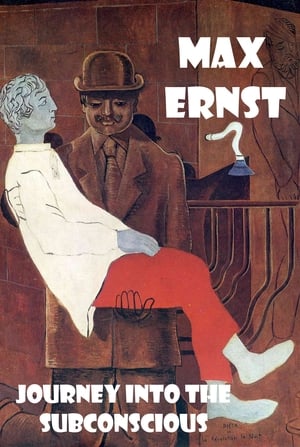
The inner world of the great painter Max Ernst is the subject of this film. One of the principal founders of Surrealism, Max Ernst explores the nature of materials and the emotional significance of shapes to combine with his collages and netherworld canvases. The director and Ernst together use the film creatively as a medium to explain the artist's own development.
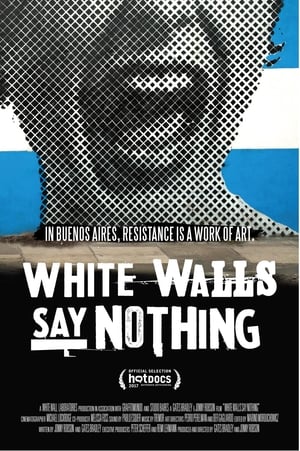
A documentary following JR's artwork giving a global voice to everyday people.
Encouraging visitors to engage and connect with on site artist's, Artpark provides a unique environment for those craving culture away from the whirring city. Located in Lewiston, New York the outdoor venue opens itself to artists, musicians and performers seeking a spot to reflect and create. During the summer seasons Artpark serves as an immersive experience, inviting the public to observe the artists as they work. Artpark People observes the vibrant scene and captures candid interactions between artist and onlookers. With a heavy emphasis on outdoor space and environmental influence, Artpark asserts itself as a cultural and communal haven for creatives.
Celebrated as one of the masters of the short story, Frank O'Connor was also an important translator of classical Irish poetry. Cork poet and writer Liam O'Muirthile tells O'Connor's forgotten story. He argues you cannot understand O'Connor's voice in English without understanding his natural writing voice, which is rooted in Irish.
New York based artist, Cindy Sherman, is famous for her photographs of women in which she is not only the photographer, but also the subject. She has contributed her own footage to the programme by recording her studio and herself at work with her Hi-8 video camera. It reveals a range of unexpected sources from visceral horror to medical catalogues and exploitation movies, and explores her real interests and enthusiasms. She shows an intuitive and often humorous approach to her work, and reflects on the themes of her work since the late 1970s. She talks about her pivotal series known as the `Sex Pictures' in which she addresses the theme of sexuality in the light of AIDS and the arts censorship debate in the United States.
Taking its lead from French artists like Renoir and Monet, the American impressionist movement followed its own path which over a forty-year period reveals as much about America as a nation as it does about its art as a creative power-house. It’s a story closely tied to a love of gardens and a desire to preserve nature in a rapidly urbanizing nation. Travelling to studios, gardens and iconic locations throughout the United States, UK and France, this mesmerising film is a feast for the eyes. The Artist’s Garden: American Impressionism features the sell-out exhibition The Artist’s Garden: American Impressionism and the Garden Movement, 1887–1920 that began at the Pennsylvania Academy of the Fine Arts and ended at the Florence Griswold Museum, Old Lyme, Connecticut.
"Meat Joy is an erotic rite — excessive, indulgent, a celebration of flesh as material: raw fish, chicken, sausages, wet paint, transparent plastic, ropes, brushes, paper scrap. Its propulsion is towards the ecstatic — shifting and turning among tenderness, wildness, precision, abandon; qualities that could at any moment be sensual, comic, joyous, repellent. Physical equivalences are enacted as a psychic imagistic stream, in which the layered elements mesh and gain intensity by the energy complement of the audience. The original performances became notorious and introduced a vision of the 'sacred erotic.' This video was converted from original film footage of three 1964 performances of Meat Joy at its first staged performance at the Festival de la Libre Expression, Paris, Dennison Hall, London, and Judson Church, New York City."