This documentary-drama hybrid explores the dangerous human impact of social networking, with tech experts sounding the alarm on their own creations.
A day in the city of Berlin, which experienced an industrial boom in the 1920s, and still provides an insight into the living and working conditions at that time. Germany had just recovered a little from the worst consequences of the First World War, the great economic crisis was still a few years away and Hitler was not yet an issue at the time.
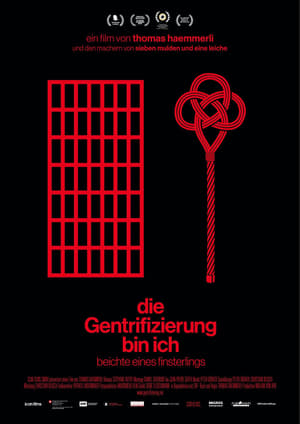
Is the city of Zurich suffering from ‘density stress’? What is it like to live in mega cities such as São Paulo, Mexico City and Tiflis? Filmmaker Thomas Haemmerli broaches the topics of city development, architecture, density, housing market, xenophobia and gentrification from an autobiographical perspective. The path of his life has led him from a childhood in the villa district of Zürichberg, through his teenage years as squatter to flat shares, yuppie apartments and finally second homes in various cities. Only recently having become a dad, he plans to further enhance Zurich’s price appreciation by purchasing a huge, extended city apartment… This multifaceted essay not only humorously questions the filmmaker’s decisions, but also those of the right-wing conservatives, who are afraid of losing their space to immigrants, and the political left, who fail to embrace modern-age architecture.
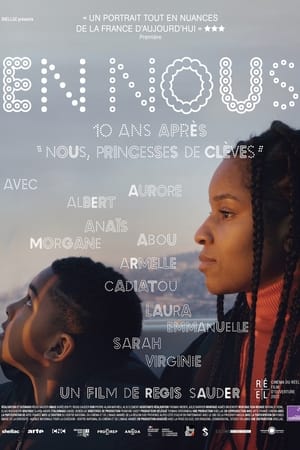
Ten years ago, the paths of Abou, Laura, Cadiatou and Jacques have crossed Emmanuelle’s. She was their French teacher at a high school in Marseille. Together they took part in a film, Children of the Princess of Cleves, in which, while analyzing the classic text, they expressed their hopes, dreams, and fears. In En Nous, the director re-connects with the protagonists : memories blend with stories of their lives and the daily obstacles they must overcome whilst trying not to lose hope. Now, the sentence of the Princess of Cleves rings poignantly true: “I know nothing can be more difficult than what I undertake”.
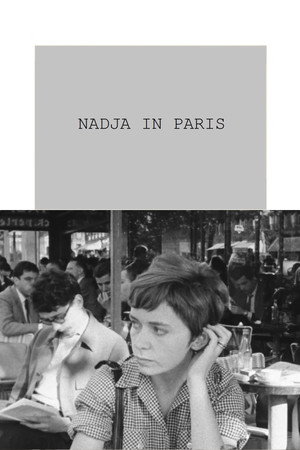
Nadja is a guest student, who stays at Cité Universitaire and visits the Sorbonne, while preparing a thesis on Proust; she also likes to stroll about Paris.
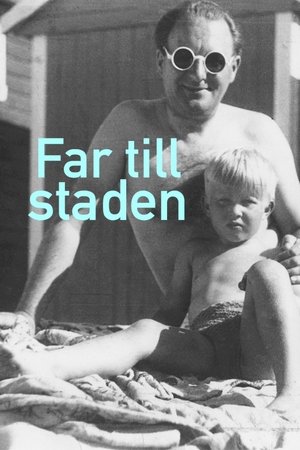
A film about "the father" of Malmö Eric Svenning and how the city has developed during his time.
Soulless City
A boat trip in the Helsinki archipelago: images of water, light and people on the cruise. The same people are met in the city in different situations: at work, with their family, in conversations with a circle of friends, meditating and figuring out their duties. Work and aspirations are important and encouraging to them. They all seem to have something personal to say about their time, their views and their imaginations.
A compilation of excerpts from old Helsinki-themed documentaries and new material.
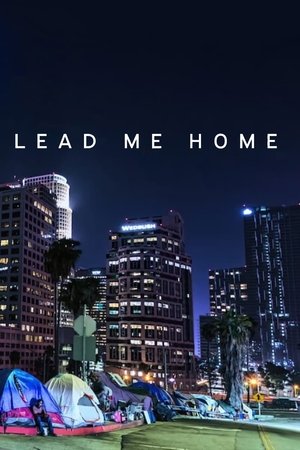
Poignant stories of homelessness on the West Coast of the US frame this cinematic portrait of a surging humanitarian crisis.
In an invisible territory at the margins of society, at the border between anarchy and illegality, lives a wounded community that is trying to respond to a threat: of being forgotten by political institutions and having their rights as citizens trampled. Disarmed veterans, taciturn adolescents, drug addicts trying to escape addiction through love, ex-special forces soldiers still at war with the world, floundering young women and future mothers, and old people who have not lost their desire to live. Through this hidden pocket of humanity, the door opens to the abyss of today's America.
"The theme of the film HIDDEN CITIES is personal urban perceptions, which we call 'the city'. The city, as a living organism, reflecting social processes and interactions, economic relations, political conditions and private matters. In the city, human memories, desires and tragedies find expression in the form of designations and marks engraved in house walls and paving slabs. But what the city really is under this thick layer of signs, what it contains or conceals, is what we are researching in the HIDDEN CITIES project. The source material for the film are 9 sequential photo works created by Gusztáv Hámos between 1975 and 2010. Each of these 'city perceptions' depicts essential situations of urban experiences containing human and inhuman acts in a compact form. The cities in which the photo sequences have been made are Berlin, Budapest and New York – places with a traumatised past: Wars, dictatorships, terrorist catastrophes."
Today in France, one in five young people suffers from severe depressive symptoms, and the number of minors visiting psychiatric emergency rooms has tripled in the last five years. Despite the political will that has been demonstrated, child psychiatry is nevertheless faced with a severe lack of resources. The interminable waiting times for treatment are causing a surge in prescriptions for psychotropic drugs.
Um Vírus em mim
A collaboration between Jem Cohen with writer Luc Sante made in Tangier, Morocco, a city where neither of us had ever been. En route from the airport to the city center, we found ourselves amazed by the landscape outside of the car windows; a massive construction project under way in all directions. While not in itself unusual, we were by struck dumb by the epic scale and seemingly incomprehensible plan of the development and were drawn to return together to this puzzling zone. This project was commissioned by TAMAAS, a small foundation based in Paris, as part of their Tangier project, The 8.
A resident of a ghetto’s neighborhood of São Paulo amid the Covid-19 pandemic, Gustavo has severe anxiety attacks. When he receives a call from a friend who lives in the same street, he reflects different stories of neighborhood residents in parallel with his family's daily life during social isolation.
Lebanon today. The traces of the civil war are all too tangible as government corruption becomes unbearable. In a country where conflict and peace are caught in an endless cycle, musicians from different backgrounds pool their talents to create an underground music scene. Each evokes his or her representation of Lebanon: its shifting geographical, political, historical and social borders, its painful passage through conflict and instability. A touching portrait of a young generation trying to build an oasis in a hostile environment where the forces of destruction continue to wreak havoc.
At the end of the 80's, the city of Itacuruba, in the backlands of Pernambuco, was transferred to another locality due to the construction of a hydroelectric plant. In the new region, the city began to register many suicides, reaching a rate ten times greater than the national average. Through memories of the lost city, villagers reveal that the root of a people is like the root of a tree: essential to life.
Stuttgart in the mid-1930s: What did it look like in the past, what does it look like now and what will await the city in the future?
This time, in “Atlantida”, Puertas wanders through stories based on memories he keeps from his hometown, Póvoa de Varzim, wondering what happened to the aura of this city he remembers so nostalgically.