A tragicomic documentary that portrays the very last acts of a long marriage. A film about the tentative search for a beginning of what - finally, and unfortunately - is over.
“One, Two, Three, Viva l’Algérie!” is the main theme of our film. But it is first a slogan, a link that acts in space and time: a few words scanded, inseparable from the history of Algerian football and therefore the relationship between France and Algeria. These encouragements born with the FLN team during the Revolutionary War and later repeated in the Algerian epic at the 2010 World Cup were taken out of the stadiums in 2019 to call for change.
Thomas Haemmerli is about to celebrate his fortieth birthday when he learns of his mother's death. A further shock follows when he and his brother Erik discover her apartment, which is filthy and full to bursting with junk. It takes the brothers an entire month to clean out the place. Among the chaos, they find films going back to the 1930s, photos and other memorabilia.
The life and career of the hailed Hollywood movie star and underappreciated genius inventor, Hedy Lamarr.
La Langue de Zahra
When Sarah accidentally proposes to her girlfriend in Provincetown, the mixup turns their loving relationship into a minefield of marital exploration.
Follow the offstage, unlikely romance of the king of country, Blake Shelton, and pop princess, Gwen Stefani. Both stars braved their share of challenges on the way to writing their own love song.
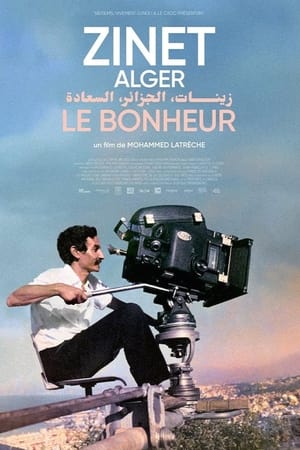
These are the first images shot in the ALN maquis, camera in hand, at the end of 1956 and in 1957. These war images taken in the Aurès-Nementchas are intended to be the basis of a dialogue between French and Algerians for peace in Algeria, by demonstrating the existence of an armed organization close to the people. Three versions of Algeria in Flames are produced: French, German and Arabic. From the end of the editing, the film circulates without any cuts throughout the world, except in France where the first screening takes place in the occupied Sorbonne in 1968. Certain images of the film have circulated and are found in films, in particular Algerian films. Because of the excitement caused by this film, he was forced to go into hiding for 25 months. After the declaration of independence, he founded the first Algerian Audiovisual Center.
As the peaceful and determined Hirak movement gathers momentum and hopes for profound political change sweep across Algeria, women are combining femininity and feminism in the past, present, and future.
Structured as a labyrinth-like game and inspired by Jorge Luis Borges, Aleph is a travelogue of experience, a dreamer's journey through the lives, experiences, stories and musings of protagonists spanning ten countries and five continents.
An emblematic figure in the defense of Berber culture, Mouloud Mammeri (1917-1989) experienced numerous confrontations with the authorities in Algeria, including the suspension in 1973 of the teaching of Berber at university and the ban of the conference he was to deliver on March 10, 1980 at the University of Tizi Ouzou on ancient Kabyle poetry... which will be the detonator of the powerful and harshly repressed cultural demands movement of April 1980, also called the Berber Spring. Mouloud Mammeri is one of the "historians" of French-speaking Algerian literature from the middle of the last century who, through his pen, gave back the soul to a country by giving it back its voice.
Docufiction about Mouloud Feraoun, an author who upholds the great values of the Universal Man. It is in the name of man that Feraoun stands up against injustice. It is in the name of man that he is tormented by war. Feraoun is a solitary creator who suffers to the point of wishing for liberating madness. It is through his work that the portrait of a humble and discreet author, a talented writer and convictions emerges. Most of the time, I let him talk about himself in simple and fair words. I compile his moments of hope, worry, dreams and fears. During all my research, a generous and good Mouloud Feraoun stood out to me who did not hesitate to expose an inhuman and shameful colonial system. His clear and straightforward voice echoes the cry of a people from whom he has never separated.
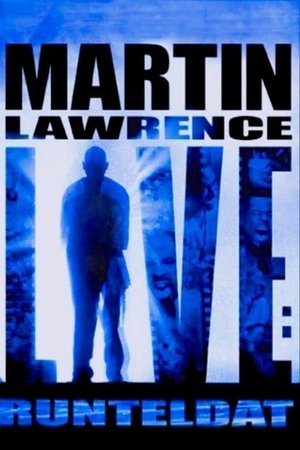
The controversial bad-boy of comedy delivers a piercing look at his life, lifting the metaphorical smokescreen that he feels has clouded the public view, commenting on everything from the dangers of smoking to the trials of relationships, and unleashing a nonstop litany of raucous anecdotes, stinging social commentary and very personal reflections about life.
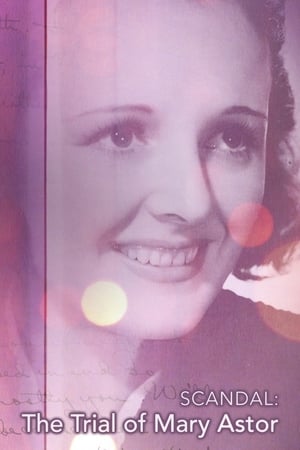
This documentary recounts the difficult choice actress Mary Astor had to make after learning her personal, very intimate, diaries had been stolen. The film tells the story of Astor's 1936 child custody case.
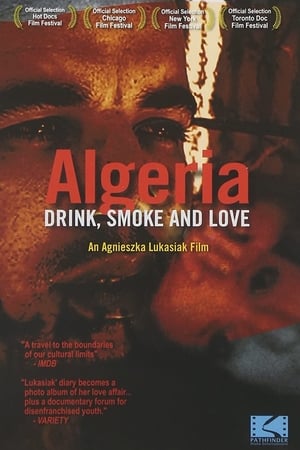
Agnieszka Lukasiak travels to Algeria to capture it's conflict on camera. When she arrives, she's immediately sidetracked by romance with her host, Habib. She turns the camera on herself as she falls in love with him. the atmosphere quickly diminishes when Habib's family steps in and kicks her out. Not to be deterred, on her second visite to Algeria to seek Habib's love, she begins her real journey to expose the underside of the country.
Mohamed Iguerbouchène was born on February 7, 1907 in Aït-Ouchen in Algeria. He left for England in 1923 where he studied music and harmony. Subsequently, he went to Vienna, Austria, to learn piano techniques where he won 1st prize in harmony and piano. Mohamed Iguerbouchen became a composer, he composed four symphonies and several film scores including the famous “Pépé le Moko” (1937) with Jean Gabin. Mohamed Iguerbouchène bowed out on August 21, 1966 following a long illness.
The film, shot in 1938, is part of a series entitled “The true face of Algeria”. The film highlights the proximity of Algiers to Paris and promotes air travel. The commentary supporting the images highlights the urban dynamism (“Every day, a new skyscraper replaces a wasteland”) and the comparison with Paris (“Algiers is often nicknamed the Paris of North Africa because of its elegance become proverbial). Contemporary architectural achievements are described as the sign of “grandiose modernism”: “we love the new, the bold”. But the point does not forget the buildings illustrating “the Moorish, classic and attractive style”. The description of the Casbah also attempts to understand the architectural organization but also the diversity and even the atmosphere.
Orientalism is a literary and artistic movement born in Western Europe in the 18th century. Through its scale and popularity, throughout the 19th century, it marked the interest and curiosity of artists and writers for the countries of the West (the Maghreb) or the Levant (the Middle East). Orientalism was born from the fascination of the Ottoman Empire and followed its slow disintegration and the progression of European colonizations. This exotic trend is associated with all the artistic movements of the 19th century, academic, romantic, realistic or even impressionist. It is present in architecture, music, painting, literature, poetry... Picturesque aesthetics, confusing styles, civilizations and eras, orientalism has created numerous clichés and clichés that we still find today in literature or cinema.
Born on March 25, 1840, Gustave Guillaumet discovered Algeria by chance when he was about to embark for Italy. Over the course of his ten or eleven trips and extended stays, he established a familiarity with this space. Traveling through the different regions from north to south, he never ceases to note the differences. He is also the first artist, apart from Delacroix's Women of Algiers, to penetrate into female interiors and reveal the reality, far removed from the harem fantasies that reigned in his time. Fascinated by the country, its deserts and its inhabitants , going so far as to live like the Algerians, Gustave Guillaumet devoted his life and his painting to this country, breaking with the colorful and exotic representations of the time. The painting The Famine in Algeria, restored thanks to exceptional fundraising, was dictated by the events of the years 1865-1868, and well illustrates his knowledge of the country, in a manner that is at once demanding, sensitive and serious.
Documentary on the beginnings of Algerian independence filmed during the summer of 1962 in Algiers. The film was banned in France and Algeria but won the Grand Prize at the Leipzig International Film Festival in 1965. Out of friendship, the production company Images de France sent an operator, Bruno Muel, who later declared: "For those who were called to Algeria (for me, 1956-58), participating in a film on independence was a victory over horror, lies and absurdity. It was also the beginning of my commitment to the cinema."