Shot during an NLP (neuro-linguistic programming) seminar in Berlin, a group fluxuates between guided meditation and discussion on consciousness and self-acceptance. Neuro-linguistic programming is a set of techniques and beliefs that are used primarily towards personal development. NLP is based on the idea that mind, body, and language create an individual's perception of the world, and an individuals behaviors can be changed by "perceiving and feeling yourself". Rapport focuses on the staging of the self that takes place during this kind of group therapy.
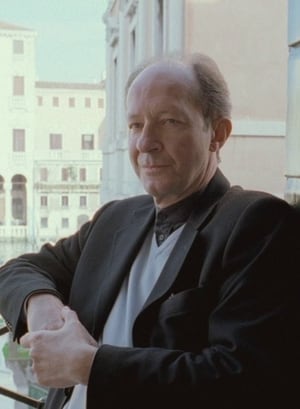
Sancho Panza enters a movie theatre in a provincial city. He is looking for Don Quixote and he finds him sitting off to the side and staring at the screen. The theatre is almost full; the balcony is entirely occupied by noisy children… La proiezione è cominciata (The Projection Has Begun) is an adaptation of The Six Most Beautiful Minutes in the History of Cinema by Giorgio Agamben. It is a portrait in 24 daguerreotypes per second.
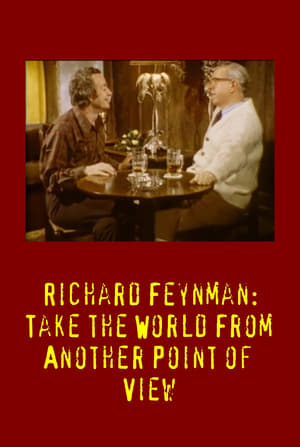
In 1973 Yorkshire public television made a short film of the Nobel laureate while he was there. The resulting film, Take the World from Another Point of View, was broadcast in America as part of the PBS Nova series. The documentary features a fascinating interview, but what sets it apart from other films on Feynman is the inclusion of a lively conversation he had with the eminent British astrophysicist Fred Hoyle.
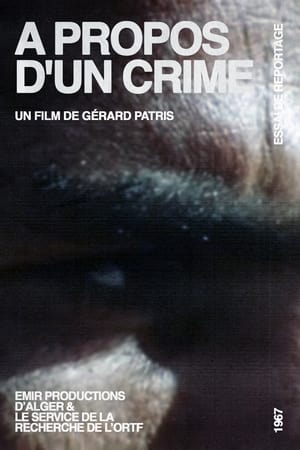
In 1967, Visconti came to Algiers for the filming of The Stranger with Mastroianni and Anna Karina. Camus, during his lifetime, had always refused to allow one of his novels to be brought to the screen. His family made another decision. The filming of the film was experienced in Algiers, like a posthumous return of the writer to Algiers. During filming, a young filmmaker specializing in documentaries Gérard Patris attempts a report on the impact of the filming of The Stranger on the Algerians. Interspersed with sequences from the shooting of Visconti's film, he films Poncet, Maisonseul, Bénisti and Sénac, friends of Camus, in full discussions to situate Camus and his work in a sociological and historical context. “The idea is for us to show people, others, ourselves as if they could all be Meursault, or at least the witnesses concerned to his drama.”
In a world that spins faster and faster, bibliomaniacs take refuge from the rush and the noise inside the library. Amid whispers, they confess the meaning of life. A celebration of thought and obsession, where libraries reveal their inhabitants
A poetic exploration of three subterranean telescopes in remote regions of Canada, Japan, and Antarctica that reveal a new way of perceiving the universe from within. Underground, we are dreaming into the earth.
Herbert Fingarette once argued that there was no reason to fear death. At 97, his own mortality began to haunt him, and he had to rethink everything.
A documented introspection written, directed, composed, illustrated, and experienced by Riadh Bakache, serving as a transition into a new era for his YouTube channel. Rich in emotion, this piece reflects on his personal experiences and inner journey, supported by his readings. Riadh explores several philosophical and psychological questions about himself, in an effort to better understand and ultimately accept who he is. Taking a step back from his situation became necessary, leading to the telling of his entire journey in this video.
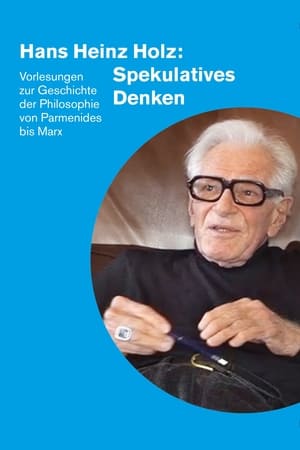
These last major lectures by Hans Heinz Holz (1927–2011) follow his philosophical reflection from Parmenides to Karl Marx. They were recorded in October 2009 at his home in Sant’Abbondio, Switzerland.
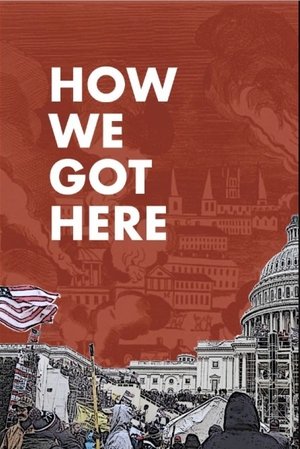
Diverse voices trace the history of postmodernism from its roots in art and philosophy all the way to Fox News, Q-Anon, and election denial.
Seventeen hundred eager attendees braved a snowstorm to hear this extraordinary debate. Held at the University of Toronto in 1984 - when academics still believed that socialism was the wave of the future - this event kept the audience captivated for over 2 1/2 hours. The debate centered on moral fundamentals eliciting profoundly opposing views on issues from the nature of man to the justification of government. Don't miss this electrically charged confrontation.
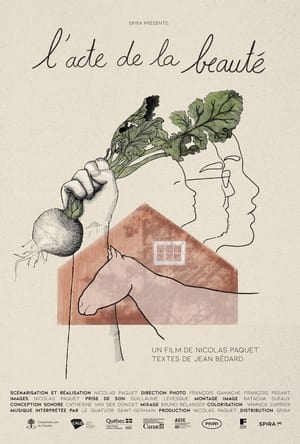
L'acte de la beauté
Philosophie et psychologie
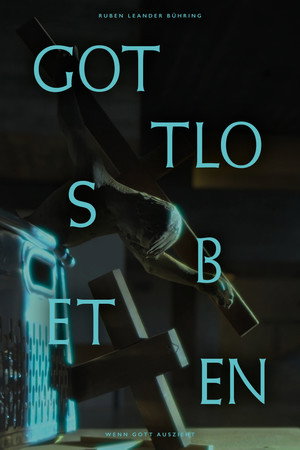
In a small chapel in Zug, Switzerland, a legend tells of a hidden treasure. There is only one rule: remain silent, and in time, the treasure will be yours. But the moment the silence is broken, it is lost forever. What if the treasure was never gold or jewels, but the chapel itself—a place where silence is still possible? Perhaps we have forgotten how to remain silent, and with that, we risk losing one of the last places that still allows it. Gottlos Beten follows the decline of a sacred place.
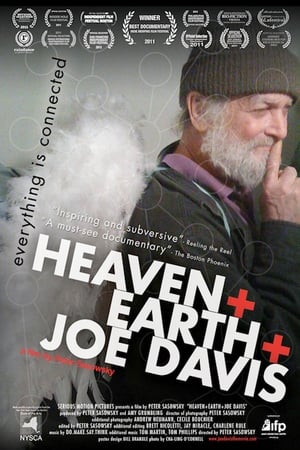
Filmmaker Peter Sasowsky examines the life and work of artist Joe Davis
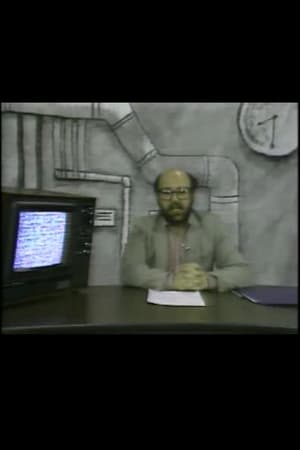
This live show features the energetic analysis of television network news by Brian Winston. Winston looks at the news as a unique institution, governed by its own conventions and constraints.
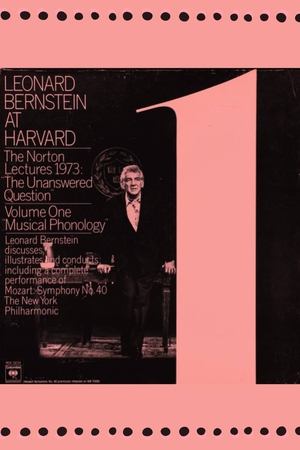
This series comprised six lectures on music, which cumulatively took the title of a work by Charles Ives, The Unanswered Question. Bernstein drew analogies to other disciplines, such as poetry, aesthetics, and especially linguistics, hoping to make these lectures accessible to an audience with limited or no musical experience, while maintaining an intelligent level of discourse: Phonology is the linguistic study of sounds, or phonemes. Bernstein's application of this term to music results in what he calls "musical phonology".
A documentary film about the renowned football coach of our times Mircea Lucescu. The film examines the football philosophy of the world-class sports coach, tracks the influences on its formation (football player career, coaching in different teams and on different football tournaments). The film follows the process of formation of Lucescu's personality, his ability to defend his point of view, to learn from mistakes, and the dramatic and difficult way towards worldwide recognition. The portrait of the great coach is shaped by his family and the people with whom he worked at various times.
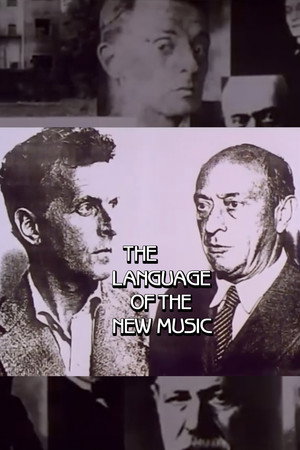
This is a film about Ludwig Wittgenstein and Arnold Schoenberg; two men whose lives and ideas run parallel in the development of Viennese radicalism. Both men emerged from the turmoil of the Habsburg Empire in its closing days with the idea of analyzing language and purging it with critical intent, believing that in the analysis and purification of language lies the greatest hope that we have. They never met and might never have fully understood one another, because while the nature of their genius they found themselves alone breaking new ground of the very frontiers of their respective disciplines. But their work springs from the same soil and shares a common ethical purpose, so that their ideas and methods echo and illuminate those of each other to a remarkable degree.
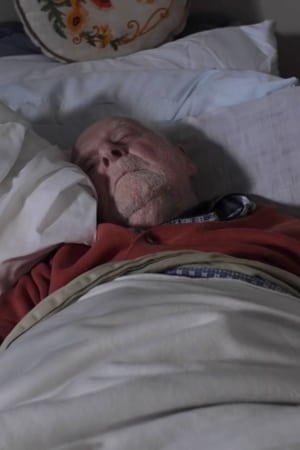
Somewhere, a man tinkers, cooks, and smokes in silence, caught between the tranquility of an afternoon nap and the strangeness of time stretching out.