A journey into the intricacies of mixed-race Japanese and their multicultural experiences in modern day Japan. For some hafus, Japan is the only home they know, for some living in Japan is an entirely new experience, and the others are caught somewhere between two different worlds.
"Heart of the Country" is the story of Shinichi Yasutomo, the extraordinary principal of a rural elementary school in Kanayama, central Hokkaido, Northern Japan. Yasutomo is a man driven by his vision for learning and his passion for educating the heart as well as the mind. The film follows Yasutomo, his teachers and staff, students and their families over the course of one entire school year. The film is also the story of the families of Kanayama. Parents and elders of this once impoverished town embrace Yasutomo's vision, but not without wary glances back to the past. This small community, bound together by love for its children, is also defined by its journey through the cultural upheavals of postwar Japan.
Le Baron et l'Empereur : Japon, la voie de la guerre
The short history of a room and the fiction born in it.
How the Japanese process American pop culture and make it their own -- a mind-bending odyssey through cultural mixing.
Using never-before-seen footage, Japan's War In Colour tells a previously untold story. It recounts the history of the Second World War from a Japanese perspective, combining original colour film with letters and diaries written by Japanese people. It tells the story of a nation at war from the diverse perspectives of those who lived through it: the leaders and the ordinary people, the oppressors and the victims, the guilty and the innocent. Until recently, it was believed that no colour film of Japan existed prior to 1945. But specialist research has now unearthed a remarkable colour record from as early as the 1930s. For eight years the Japanese fought what they believed was a Holy War that became a fight to the death. Japan's War In Colour shows how militarism took hold of the Japanese people; describes why Japan felt compelled to attack the West; explains what drove the Japanese to resist the Allies for so long; and, finally, reveals how they dealt with the shame of defeat.
In Japan, more than four million young people survive by taking on precarious jobs. They are called “freeters”. The film gives voice to these “discard-after-use” workers, who regard their situation with both lucidity and desperation, as well as to ex-freeters who have become activists in the fight against exclusions.
The Real Story of Fake Democracy. Filmed over three years in five countries, FREEDOM FOR THE WOLF is an epic investigation into the new regime of illiberal democracy. From the young students of Hong Kong, to a rapper in post-Arab Spring Tunisia and the viral comedians of Bollywood, we discover how people from every corner of the globe are fighting the same struggle. They are fighting against elected leaders who trample on human rights, minorities, and their political opponents.
A documentary film telling the story of true friendship and commitment to Japan’s recovery by the international community following the Great East Japan Earthquake. Many of these people dropped what they were doing and dedicated themselves to Japan’s recovery. Many of these them even took it upon themselves to establish non-profit organizations aimed at connecting with and rebuilding Tohoku and its communities.
By mid-1945, Hitler is dead and the war has ended in Europe. Halfway around the world, however, the fighting is still going strong on a small island in the Pacific. Okinawa was the site of the last battle of the last great war of the 20th century, with a casualty rate in the tens of thousands. Through it all, military cameramen risked their lives to film the conflict, from brutal land combat to fierce kamikaze attacks at sea. See the footage they captured and experience this intense battle the way the soldiers saw it -- in color.
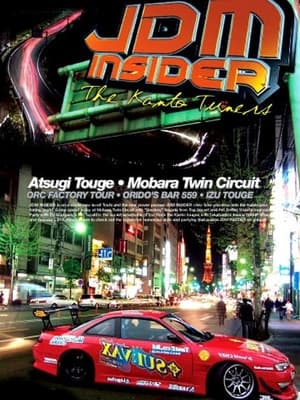
An in-depth look at the world of Japanese street racing.
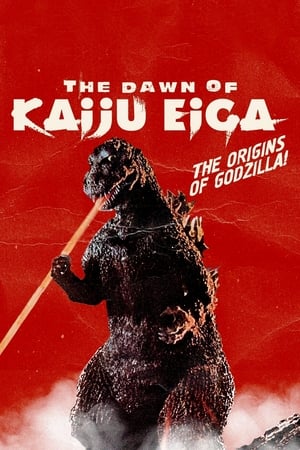
For years, characters such as Godzilla, Gamera & Ultraman have captivated audiences worldwide. But what exactly are the origins of these beloved icons and where did their unique "kaiju genre" begin? Spanning from the genre's inception in the early years of cinema to the present day global renaissance, "Slimer" Joel takes you on a near century-long tour into the brilliant and captivating world of the kaiju genre in the monstrous KAIJUOLOGY: THE HISTORY OF A GENRE.
The culture of Japan is incredible, from bloom festivals to ultra-modern cities. But there are also more than 130 mammals and 600 bird species dwelling in Japan’s 6852 islands. This island chain is long enough to span climate zones, providing a huge range of habitat.
It's considered the discovery of the century in Japan -- the unearthing of a complete fossilized skeleton of an 8-meter long dinosaur. It was dubbed Mukawaryu based on the name of the town in Hokkaido where it was uncovered. The find opened up a new world of dinosaur research in Japan. But it also created another mystery because this land dinosaur was discovered in a location that, eons ago, would have been in the ocean. How did the fossil get there? The amazing answer is revealed in this documentary, using CGI to re-create how dinosaurs lived 72 million years ago.
Actual footage by the United States Signal Corps of the landing and attack on Arawe Beach, Cape Glouster, New Britain island in 1943 in the South Pacific theatre of World War Two, and the handicaps of the wild jungle in addition to the Japanese snipers and pill-box emplacements.
Revealing the flaws of Japanese society, the 1995 sarin gas attack in the Tokyo subway prompted Murakami to return to his homeland, whose conformism he rejected, to examine it closely. This led to the creation of two works: Underground and 1Q84.
Women have always sought ways to terminate unwanted pregnancies, despite powerful patriarchal structures and systems working against them. This film provides a historical overview of how church, state and the medical establishment have determined policies concerning abortion. From this cross-cultural survey--filmed in Ireland, Japan, Thailand, Peru, Colombia, and Canada--emerges one reality: only a small percentage of the world's women has access to safe, legal operations.
Welcome to The Great Happiness Space: Rakkyo Café. The club's owner, Issei (22), has a staff of twenty boys all under his training to become the top escorts of Osaka's underground love scene. During their training, they learn how to dress, how to talk, how to walk, and most importantly, how to fake relationships with the girls who become their source of income. Join us as Osaka's number one host boy takes us on a journey through the complex and heartrenching world of love for sale in the Japanese underground.
A 3 hour Japanese documentary & Live gig video of the Osaka Noise/Weirdo Rock scene in 1994. Includes Boredoms & side projects (UFO or DIE, Hanatarash, Concrete Octopus), Masonna, Incapacitants & lots more! Yamatsuka Eye gives an interview in his apartment and plays a toy guitar in his bath tub.
In the last fifty years the culture of Zen has spread far beyond Japan. Zen centers and zen retreats have sprung up throughout America and Europe. When Dogen, the founder of Soto Zen, brought Zen to Japan from China 800 years ago, it quickly took root and became an integral part of Japanese life. Yet what do we know about zen practice in Japan today? The Zen Mind is a fascinating journey across Japan to explore zen in its natural habitat.