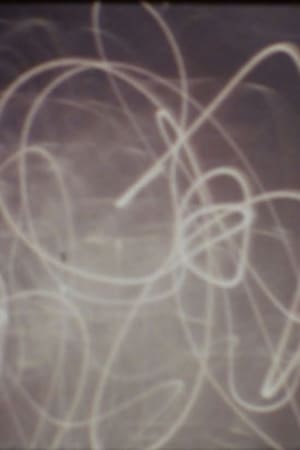
Charcoal animation, taken from from Point of View: An Anthology of the Moving Image (2003).
"This tape is an exploration of my latent heterosexuality with porn star / performance artist Annie Sprinkle as instructor and sage. After assuaging my fears that I can have sex with a woman & still maintain my gay identity, Annie warms me up with some playful, sensual wrestling. She then instructs in the use of a tampon while relating men's need to make war with their inability to menstruate. For the rest of the tape, she guides me through the specifics of sexual exploration, positions of coital congress as well as post- coital ritual."
Originality in a time of poorly made copies, a filmic inventory of a strange time, a kaleidoscope of images, in a constant game of ruptures and continuities. All this from 365 videos published on an Instagram page in 2018, added to an original soundtrack and a text adapted from Dürrenmatt's play Dialogue of a Vile Man, a text that synthesizes our time well.
A haunting commemoration of the Tiananmen Square uprisings.
The idea of suspension is evoked on shifting registers – as levitation, cessation, preservation, and suspense – and located in sites whose identities slip as we track through a space within a space.
An homage to Chicago’s East 95th Street Bridge, Calumet Fisheries and to a couple of the city’s infamous cinematic brothers.
A flicker film made with images taken in Malawi. FF was in response to an assignment given by artists Melissa Dubbin and Aaron Davidson who created the soundtrack to which they invited artists to make a “Future Film”.
Hand painted directly onto film stock by Margaret Tait, this film features animated dancing figures, accompanied by authentic calypso music.
Slow disintegration and aging of artists head, revealing underlying bone structure. Created using old picture-phone technology. New music added in 2013.
In 1967, experimental filmmaker Jorgen Leth created a striking short film, The Perfect Human, starring a man and women sitting in a box while a narrator poses questions about their relationship and humanity. Years later, Danish director Lars von Trier made a deal with Leth to remake his film five times, each under a different set of circumstances and with von Trier's strictly prescribed rules. As Leth completes each challenge, von Trier creates increasingly further elaborate stipulations.
This experimental nature documentary by Minna Rainio and Mark Roberts depicts climate change and the wave of extinction from the point of view of our near future. Actually, it depicts the age we live in now, or rather its fateful consequences.
The earliest surviving motion-picture film, and believed to be one of the very first moving images ever created, was shot by Louis Aimé Augustin Le Prince using the LPCCP Type-1 MkII single-lens camera. It was taken on paper-based photographic film in the garden of Oakwood Grange, the Whitley family house in Roundhay, Leeds, West Riding of Yorkshire (UK), on 14 October 1888. The film shows Adolphe Le Prince (Le Prince’s son), Mrs. Sarah Whitley (Le Prince’s mother-in-law), Joseph Whitley, and Miss Harriet Hartley walking around in circles, laughing to themselves, and staying within the area framed by the camera. Roundhay Garden Scene is often associated with a recording speed of around 12 frames per second and runs for about 2 to 3 seconds.
A short film advertising the newspaper Sztandar Młodych (The Banner of Youth), noteworthy for its abstract elements painted directly onto film stock. An attempt at showing the complexity of the world in a capsule, the film reflects the new policy of the openness to the West during the Thaw of the late 1950s in Poland.
A meditation on the human quest to transcend physicality, constructed from decaying archival footage and set to an original symphonic score.
An experimental film that lifts the veil on the world of African American drag racing.
A cameraman wanders around with a camera slung over his shoulder, documenting urban life with dazzling inventiveness.
An anthology of one-minute films created by 51 international filmmakers on the theme of the death of cinema. Intended as an ode to 35mm, the film was screened one time only on a purpose-built 20x12 meter public cinema screen in the Port of Tallinn, Estonia, on 22 December 2011. A special projector was constructed for the event which allowed the actual filmstrip to be burnt at the same time as the film was shown.
A poetic, semi-autobiographical short film of the sun setting over a village, shot from behind the curtains of a small, dimly lit room.
Two screens of film about - and sometimes shot by - Claes Oldenburg, detailing his inspiration, his methods and his relationship with his partner Hannah Wilke.
Anne Bean, John McKeon, Stuart Brisley, Rita Donagh, Jamie Reid and Jimmy Boyle are interviewed about their artistic practice and the legacy of Surrealism on their work.