Lia
Luka Banjanin is an unemployed young man living with his parents in Belgrade. He hangs out with few devoted friends who, like him, are yet to find place in a society that discarded young intellectuals. He plays saxophone and dreams about going to Oktoberfest, the annual beer festival in Munich, but he's being unable to get passport because of a smaller drug incident he had in the past. Totally careless about his long-term girlfriend, he suddenly falls for a mysterious woman who seems to appear in the same places as him, and then vanishes as quickly as possible. Believing that he's at the wrong place at the wrong time, Luka wanders from one misadventure to another, gradually losing the contact with reality and living out his own Oktoberfest in his mind.
A dramatisation of the workers' protests in June 1976 in Radom, seen from the perspective of the local Secretary of the Polish United Workers' Party.
During the events of May 1968 in France, different worldviews of conflicting relatives collide in their family estate.
A young man tunes his guitar while holding a telephone, having learned from his teacher that the beep sound of the phone is the same note as the “la” tone of the music scale. Having been discharged from the army following an accident that left him unfit for duty, he now picks up the phone for reasons other than social connection.
Guy Debord's analysis of a consumer society.
A young man confronts himself at 80.
Produced within the framework of the “Programmi Sperimentali” of Italian public television (structure of the RAI which allowed, in the 1970s, the production of films such as Lutte en Italie by the Dziga Vertov Group, Cancer by Glauber Rocha or Perché pagare per essere felici by Marco Ferreri), Cronaca di un gruppo tells the story of a group of young French revolutionaries who, between Paris and the Pyrenees region, are looking for ways to continue their political activities, through the theater experimental and counter-information, the day after May 68. Produced in collaboration with Gianni Toti, Didier Sandre and the Nanterre experimental theater group.
A montage film that begins in May 1, 68 and ends in mid-June. Everything is there: the students of Nanterre in revolt, the demonstrations, the cobbles, the barricades, the rioting nights, the busy Sorbonne, the happening of the Odeon, the factories on strike and Séguy who gets on the bandwagon , the general protest, 10 million French without work, de Gaulle and The reform, yes, the doglit, no, the Gaullist demonstration of May 30, Grenelle, the death of a high school student, the offensive Pompidou and the return in the factories.
A film considered almost lost even by Garrel, who recently found his negatives. Shot during the events of the May 68, it was made collectively; the film is a merge of Garrel’s and his partners’ points of view, all of them students and filmmakers that participated in the revolt.
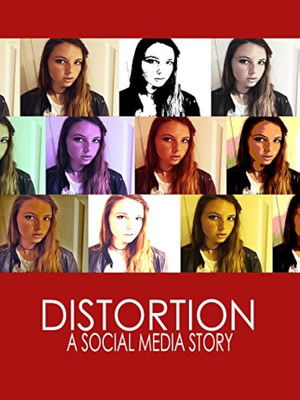
In this gripping tale about the way social media impacts youth culture, a group of students discover how social media affects their friendships, relationships, and almost every aspect of their lives.
On a dark, rainy night an old, white man is visited by a young, black stranger asking to use the telephone. After making his call, the young man insists on waiting in the warm, dry house. Initially, the old man's fear and prejudice keep them apart, but they soon discover a moment of fleeting friendship
Charles de Gaulle, the first president (1958-1969) of the Vth Republic, France’s current system of government, left his mark on the country . He was statesman of action and has been compared to a monarch. This film depicts the general’s personality through the great events of his presidential term, at a time when the world was undergoing considerable changes.
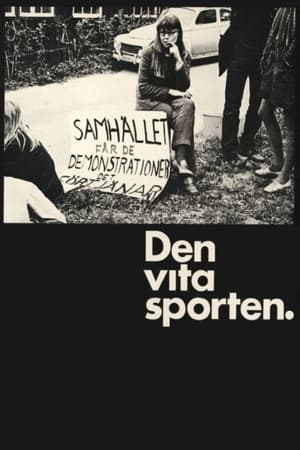
Documentary film about the protests against the 1968 Davis Cup tennis match between Sweden and Rhodesia, in Båstad, Sweden. In a series of interviews, demonstrators and members of the Swedish government give their views on sport, politics and civil disobedience.
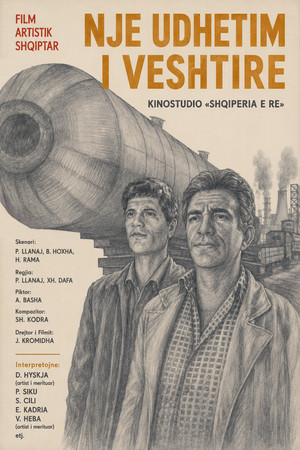
Miti, an old worker, and Sokol, a young driver, undertake a long journey to transport a huge metallic tower from the Durrës harbor to an important plant.
France, 1974. The erotic film Emmanuelle, directed by Just Jaeckin, breaks all records for cinema attendance: the story of the creation of a sensual epic that marked a turning point in the struggle for sexual emancipation.
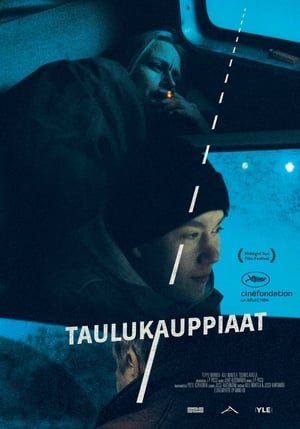
It's almost Christmas but these three people are still on the road. The products don't sell, the car is a wreck and the weather is freezing. Moreover there is a problem: how to cope with an emerging friendship?
During the summer of 1968, a young French woman staying in an isolated country house reflects upon her involvement in the events of that May.
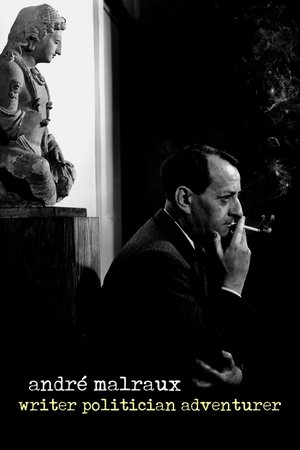
Writer, journalist, explorer, filmmaker, communist militant, freedom fighter. Truths and lies. A plot twist. Politician. General De Gaulle's shadow. Overwhelmed by the weight of power. The numerous exploits of André Malraux (1901-1976).
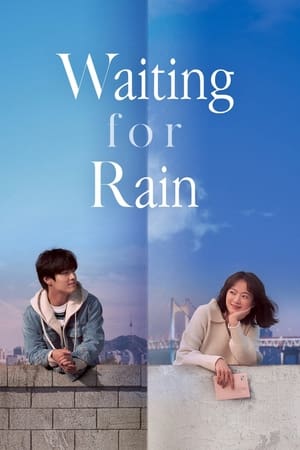
About a man and a woman who miss each other but cannot meet. Young-ho, a young man who took several tries to get into college, doesn't have any special goals in life, and starts exchanging letters with someone.