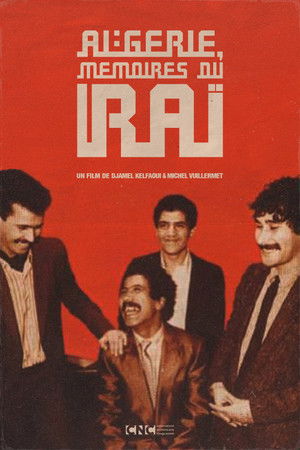
In the 1980s, Algeria experienced a tumultuous social context which reached its peak during the riots of October 88. This wave of protest, with youth as its figurehead, echoed the texts of raï singers. Thirst for freedom, misery of life and the aspirations of youth are among the main themes of their works which will inspire an entire generation. More than music, raï celebrates the Arabic language and becomes a vector of Algerian culture, thus providing the cultural weapons of emerging Algerian nationalism With Cheb Khaled, Cheb Mami and Chaba Fadela as leaders of the movement, raï is also a way of telling and reflecting the essence of Algeria in these difficult times. While the threat weighs on artists in Algeria, their exile allows raï to be exported internationally and thus, to bring the colors of Algeria to life throughout the world.
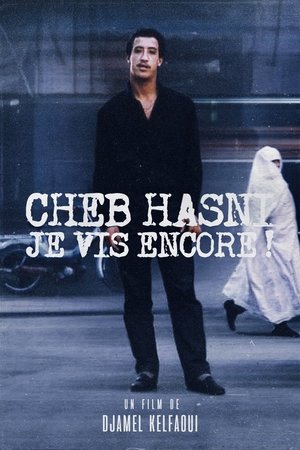
Director Djamel Kelfaoui pays tribute to the great singer Cheb Hasni, king of sentimental raï, who became cult in Algeria and beyond its borders, and who was murdered in the street in September 1994 in Oran, at the age of 26. Unique and last interview filmed a few months before the assassination of the singer considered the king of “raï love” or “sentimental song”. Cheb Hasni had recorded more than 150 cassettes during his career. His memory remains very alive in the Maghreb and Arab world and its diaspora throughout the world. A transgenerational icon, he will be posthumously decorated with the National Merit medal at the rank of Achir.
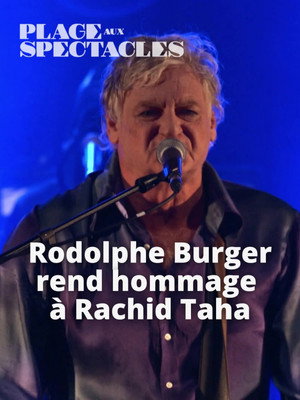
Rodolphe Burger rend hommage à Rachid Taha
Over the course of a fifty-year career, the British band The Cure has released fourteen highly successful studio albums; but it was their 1989 album Disintegration, released during a pivotal year for Europe and the world, that would capture the imagination of so many fans.
From pyongyang to Pluto and Black
This film explores how Canada wavers between rejection and acceptance of closer ties with the United States, tracing the historical precedents of current issues between the two nations. Canada continues to question her identity despite the influence of a powerful neighbour.
Hussain Shariff's first film, a documentary centred on a traditional fertility rite of the Ingessana people in the southern Blue Nile State, celebrating ashes, the sun and good harvests.
X-hale
Not the Waters of the Moon is an educational documentary developed for UNICEF. The film is to encourage vaccination of children in rural areas. The title of the film was carefully selected by the Director, to explain simply to the villagers that it is not a difficult task to perform vaccination.
Eva Giolo’s latest work takes us to Val Gardena, where people still speak Ladin, a Rhaeto-Romance language. Giolo subverts the usual representation of mountain communities to deliver a portrait of a precious cultural heritage in constant evolution. Here, the inhabitants preserve and nurture their culture for future generations with awareness of the world and creativity. Shot on 16mm film sensitive to the grandeur and fragility of nature, Memory Is an Animal, It Barks with Many Mouths is an exquisite essay on the vital importance of linguistic diversity. Made in Ladin language.
Exceptional documentary devoted to Félix Leclerc. The images are taken from five films produced by the NFB during the 1950s (Un Canadien à Paris from the Coup d'oeil series, Chantons maintenant, Félix Leclerc, troubadour, La Drave and Les Brûlés). A commentary by writer Marcel Dubé, with narration by Monique Leyrac, enriches this previously unpublished documentary portrait.
Adrian Paci’s sensitive gaze enters an aluminum transformation plant to explore the relationship between the workers’ bodies and the factory environment, celebrating the enduring value of labour. Through meticulous observation and perfectly composed framing, Merging Bodies delves into gestures and materials that blur the boundaries between the workers and the machinery. Paci’s hypnotic camera captures details that transcend the immediate context, liberating the visible from a singular interpretation.
A look at The Hays Code and the methods used by film artists, actors, directors to work with, work around and even subvert the intent of The Hays Code, during a period of very socially repressive regimes in political and civil power
Mrs. Reynolds Needs a Nurse is a popular and award-winning training film for nurses. The film documents a case study of an elderly lady who has been transferred to the university hospital in multisystem failure, accompanied by her husband and multiple suitcases of her belongings. Mrs Reynolds is a needy and demanding patient whose fears and anxieties are expressed by her annoying attempts to get attention, treating the nurses like servants and complaining about much of the care given to her. Mrs Reynolds' 8-month-long hospitalization showcases the importance of individualizing care, being aware of both emotional and physical needs, collaborating with other disciplines, and it demonstrates the nurse's role as a patient advocate with clinical competencies that were an early version of today's case managers.
Short interviews describing Hitchcock's efforts to produce the movie over many years, and his efforts to sign Cary Grant and Grace Kelly. Also discussed are script censorship issues with the Hays Office
Raccontare Venezia
Temo is an unemployed actor who drives around 100km a day on a scooter, performing the duty of a delivery man. Based on the novel Courier’s Tales by Temo Rekhviashvili, who plays himself in the film, Anka Gujabidze crafts a poignant but humorous black and white photo adventure, in which a daily ride through the opulently dilapidated Georgian capital Tbilisi morphs into a nightmarish vision of poverty, corruption and estrangement.
This short film tells of two rugged journeys: that, autobiographical, of a young woman who learns she is harboring the AIDS virus; and that of the ancient Minoan civilization, wiped out by the greatest cataclysm in history. Today, the world is held hostage by a killer disease that is stealthier than a volcano, but it exacts the same price. Now, as then, some profound questions exist: How does humanity define itself? How do we measure our passage on this planet?
The Democratic Republic of Congo (DRC) is the world’s largest producer of cobalt, a rare earth mineral that is essential in the production of technologies. In this hybrid documentary, South African artists Francois Knoetze and Amy Louise Wilson, together with Congolese historian Joe-Yves Salankang Sa-Ngol, trace the trans-continental journey of this precious metal: from its violent extraction in the mines of DRC to its sale on global stock markets. The Rock Speaks weaves a complex contemplation on an urgent ecological crisis that is fuelled by obscene labour practices that our technological systems demand.
1000 Miles Adventure 2024