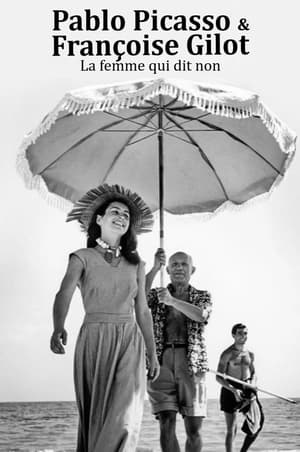
Painter Françoise Gilot shared Pablo Picasso's life from 1943 to 1953. This union nourished their respective artistic creations.
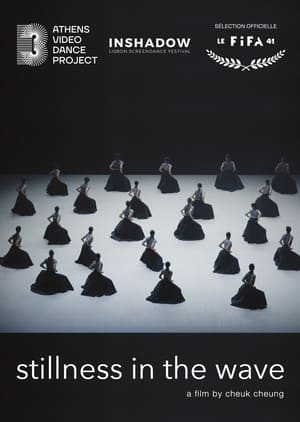
The documentary portrayed one of the most established dance companies in Hong Kong which has a history of over four decades. With a tradition of blending Chinese dance and ballet together in the training, the dance company has set sail to re-evaluate its artistic essence by adapting new physical disciplines and philosophy, picking up different cultural traces, meditation and Chinese martial arts. Through monologues of the company members, the film unveiled their fears, self-doubts, and findings in their quest to refine their dance forms and express their cultural roots. It's an uncertain journey towards the cultivation of inner peace and the essence of movement and stillness.
A manufactured memory.
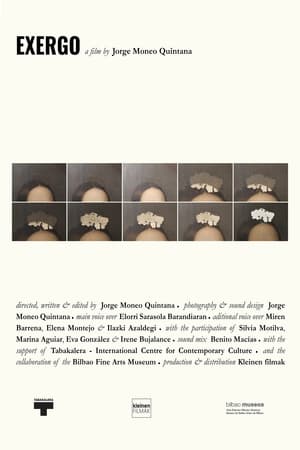
Departing from peripheral details of some paintings of the Bilbao Fine Arts Museum, a female narrator unravels several stories related to the economic, social and psychological conditions of past and current artists.
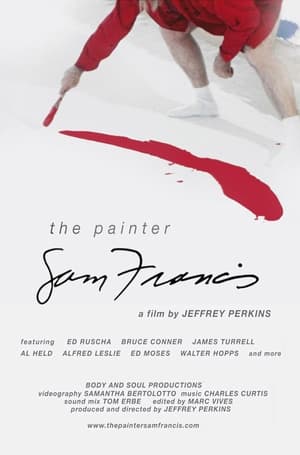
Forty years in the making, 'The Painter Sam Francis' is artist Jeffrey Perkins' intimate portrait of abstract expressionist painter Sam Francis. The film retraces Francis' life and career from his childhood in California to his artistic maturation in post-war Paris, his time spent in Japan, and his prominence in the United States. It reveals a man in constant struggle with physical maladies and his own demons, but for whom creativity was a powerful life-sustaining force.
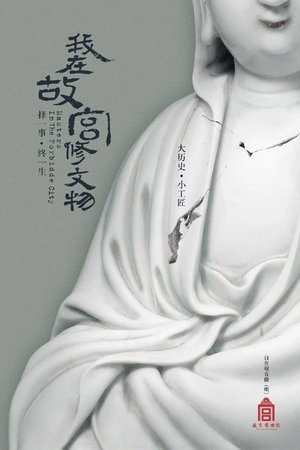
This documentary shines a light on the unsung life stories of restorers of cultural relics working inside the Forbidden City, together with the history of the antiques and the palace, the procedures of restoration and the development of cultural protection.
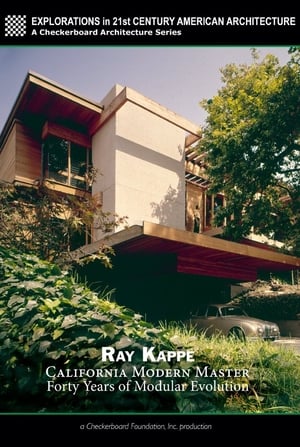
Explorations in 21st Century American Architecture Series: Ray Kappe has long been a cult figure in the architectural scene in and around Los Angeles. In 1972, he founded the influential, avant garde Southern California Institute of Architecture (SCI-ARC), where many of the younger-generation architects have studied or taught.
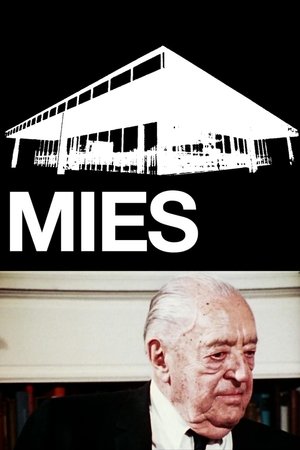
No understanding of the modern movement in architecture is possible without knowledge of its master builder, Mies van der Rohe. Together with documentation of his life, this film shows all his major buildings, as well as rare film footage of Mies explaining his philosophy. Phyllis Lambert relates her choice of Mies as the architect for the Seagram building. Mies's achievements and continuing influence are debated by architects Robert A.M. Stern, Robert Venturi, and Philip Johnson, by former students and by architectural historians. Mies is seen in rare documentary footage.
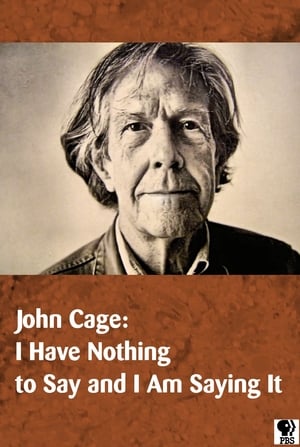
This 56-minute documentary on America's most controversial and unique composer manages to cover a great many aspects of Cage's work and thought. His love for mushrooms, his Zen beliefs and use of the I Ching, and basic bio details are all explained intelligently and dynamically. Black Mountain, Buckminster Fuller, Rauschenberg, Duchamp are mentioned. Yoko Ono, John Rockwell, Laurie Anderson, Richard Kostelanetz make appearances. Fascinating performance sequences include Margaret Leng-Tan performing on prepared piano, Merce Cunningham and company, and performances of Credo In Us, Water Music, and Third Construction. Demystifies the man who made music from silence, from all sounds, from life.
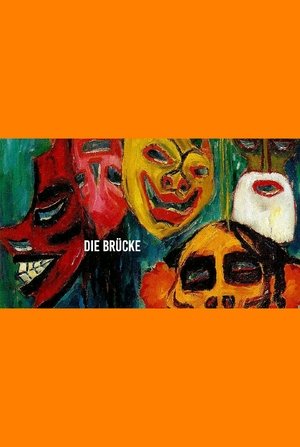
This movement marks the beginning of modern art in Germany. It is the German equivalent of French Fauvism, from which it draws its main inspiration, but it carries an Expressionist and social emphasis that is characteristic of Nordic 'angst.' The artists of Die Brucke were restless creatures, over-sensitive, haunted by religious, sexual, political or moral obsessions. Dramatic landscapes and nudes, mystical and visionary compositions, scenes of the countryside, the streets, the circus, the cafe-dansants and the demi-monde were their principal subjects. Their pure colours blaze in acid stridency, encompassed by rough, dry contours which show the influence of African art and primitive woodcuts. The work of the following is shown: Kirchner, Fritz Bleyl, Erich Heckel, Schmidt-Rottluff, Otto Muller, Emil Nolde and Max Pechstein.
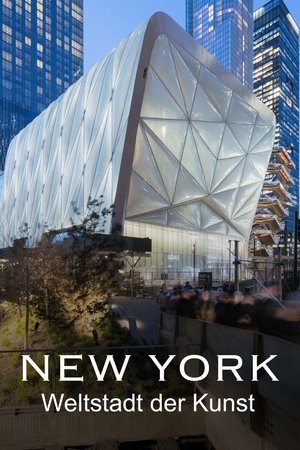
New York - Weltstadt der Kunst
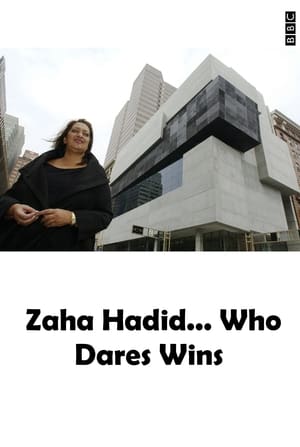
Alan Yentob profiles the most successful female architect there has ever been, the late Zaha Hadid, who designed buildings around the globe from Austria to Azerbaijan.
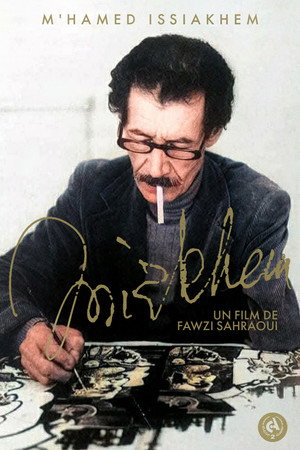
M'hamed Issiakhem (Kabyle: Mḥemmed Isyaxem; Arabic: محمد إسياخم)—born on June 17, 1928, in Taboudoucht (Aghribs), then part of the Tizi Ouzou Department in Algeria, and who died on December 1, 1985, in Algiers—was an Algerian painter and a leading figure of modern painting in Algeria. In 1943, he handled a grenade stolen from a US military camp, and it exploded; two of his sisters and a nephew were killed. Hospitalized for two years, he underwent the amputation of his left arm. From 1947 to 1951, he studied in Algiers, first at the Société des Beaux-Arts and later at the École des Beaux-Arts. "A country without artists is a dead country... I hope we are alive..." These words were spoken in a film by Fawzi Sahraoui—produced by the RTA in 1985 and shot just months before the painter M'hamed Issiakhem passed away. It is a fascinating docudrama in which Issiakhem opens up with subtlety, passion, and generosity.
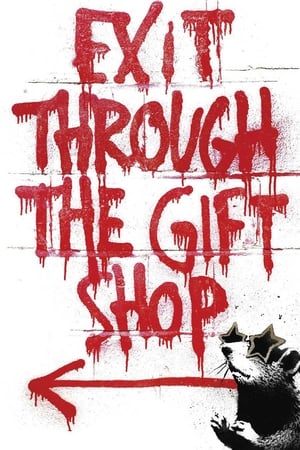
Banksy is a graffiti artist with a global reputation whose work can be seen on walls from post-hurricane New Orleans to the separation barrier on the Palestinian West Bank. Fiercely guarding his anonymity to avoid prosecution, Banksy has so far resisted all attempts to be captured on film. Exit Through the Gift Shop tells the incredible true story of how an eccentric French shop keeper turned documentary maker attempted to locate and befriend Banksy, only to have the artist turn the camera back on its owner.
Manet is one of the main candidates for the title of the most important artist there has been. As the reluctant father of Impressionism, and the painter of Dejeuner sur l'herbe, he can probably be accused of inventing modern art. But his story is fascinating on many other levels. As a piece of compelling biography, Manet's is the unlikely tale of the stubborn son of the most highly placed judge in France who decides to become an artist and embarrass his father. The resulting family tensions are the stuff of legend. Then there was Manet's dramatic private life, including exotic romantic affairs and a particularly horrible death. Always cited as the father of the Impressionists, Manet stubbornly refused to show with them, and was careful to maintain an aesthetic distance from Monet, Renoir and the others. While they worshipped him, he looked down on them.
Narrated by David McCullough, this program examines the infamous Entartete Kunst (degenerate art) exhibition mounted by the Nazis in Munich in 1937 and their far-reaching attacks on avant-garde art in Germany. Witness compelling footage of Nazi book burnings, and of the exhibition itself. Includes interviews with historians, art critics, and eyewitnesses to the events that dramatize this powerful story of the Nazis' assault on modern culture.
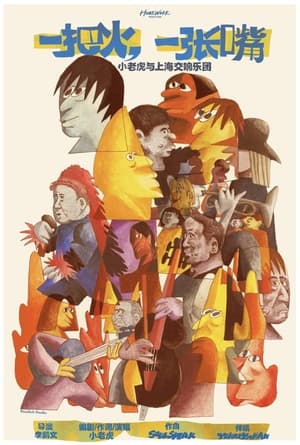
J Fever, China’s greatest “rap poet”, reinvents the origin myth of fire, in an exquisite performance with Shanghai Philharmonic in Shanghai Concert Hall, featuring composer Soulspeak and Yehaiyahan.
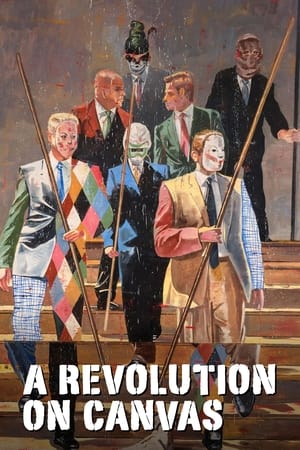
In the late 1980s, an era of great hopes and great disasters for Russia, art proved to be a social barometer, predicting the imminent political upheavals. This film's screenplay was written overnight in February 1991, soon after the World Economic Forum, where Olga Sviblova was asked the question, "What will happen to Russia?", and answered: "A putsch."
In this hybrid political thriller and verité portrait documentary, Sara Nodjoumi, working with co-director and husband, Till Schauder, makes her directorial debut with this personal film, diving into the mystery surrounding the disappearance of more than 100 “treasonous” paintings by her father, seminal Iranian modern artist Nickzad Nodjoumi.
Der verborgene Schatz - Die legendäre Kunstsammlung des Iran