Kazuo Hara follows Ayumi Yasutomi, a transgender candidate, who is also a Tokyo University professor, as she embarks on a national campaign for a seat in Japan's Upper House.
The director meets Amir and Ramzi in a café in a small Tunisian town. They don't want to be seen there. They have to find a discreet place to talk. Like many other gay couples in Tunisia, Amir and Ramzi are living a nightmare since the Tunisian Revolution. With them, the director will discover the daily life of the Tunisian homosexual couples, even in the discrete parties organized in hotels of the country.
Why must a woman change her surname after marriage or divorce? This autoethnographic film explores the issue of women’s changing surnames in Turkey. Some women have taken their cases to the European Court of Human Rights to defend their legal and personal identities. What do men think about this? How do women feel? And what unfolds between the lines of these everyday experiences? The film seeks to make these struggles and emotions visible.
More than 50% of transgender boys have attempted suicide. Through two life stories, directors Lexie and Logan unravel why their community is particularly vulnerable to living and dying quietly.
Six professionals in the audiovisual field share their experiences through a visual and sound sensory journey
Based on a poem by a Zimbabwean LGBT activist written in response to the gay hate speech that is being perpetuated president Robert Mugabe. The film was shot in South East London UK with a cast of six women from several African countries playing multiple roles in this portrayal of being a lesbian in homophobic Zimbabwe. Five of the actors and the producer are refugees who fled their countries in fear of persecution for their sexuality.
The original documentary on the Wigstock festival, back in the day when it was a much smaller affair in Thompkins Square Park. A full day of peace, love, and wigs…
In a tide oblivious to diversity, pearl oysters live under attack for not fitting into the standards and sizes. This is the story of how their pearls are born.
Breaking the circle
I Always Said Yes is a portrait of pioneering filmmaker Wakefield Poole, whose careers as dancer, choreographer, and director spanned the golden years of Broadway, television, porno chic, and gay liberation.
A feature film that chronicles a complete season of the International Gay Rodeo Association. Roping and riding across north America for the past 30 years, the IGRA's courageous cowboys and cowgirls brave challenges both in and out of the arena on their quest to qualify for the World Finals at the end of the season. And along the way, they'll bust every stereotype in the book.
The film tells the story of the Rote Zora, a militant women’s group in the FRG, which in the 1970s and 1980s carried out actions against various facets of patriarchal power relations. Narrations by various contemporary witnesses, interviews with a historian and former Zoras bring the history of the Rote Zora and the women’s movement of the time back to life. The film shows that many of the Rote Zora’s themes are highly topical and offers exciting material for discussion on how to deal with this history today.
In the 1970s, Agustín Gómez Arcos rose to the top of French literature, while in his own country, Spain, his name remained hidden. A Free Man reflects on the recent history of Spain through silences, lost stories and the role of culture and memory.
Documentary about four Chinese lesbian women who seek contract marriages with gay men, and form of their lesbian and gay community and fulfill their desires.
In 2016, after the hate-fuelled murder of a woman in Gangnam, young feminists gathered to talk about their experiences, which led to the ‘tsunami’ of the feminist movement reawakening in Korean society. This tsunami included street protests against misogynistic hate crimes, political campaigning in the upcoming presidential elections, protests against sexism and sexual violence in everyday life, and the ‘black’ protests calling for the abolition of the anti-abortion law. The Fearless And Vulnerable focuses on the activities and members of the Feminist Party (known in Korean as “Femidangdang”), a feminist group that was part of this tsunami wave. The pleasure and sincerity with which they conduct their activities are compounded with their courage in the face of conflict, and the sense of fear that permeates the community. The film shows Femidangdang meetings as well as the daily lives and thoughts of members during their activities post-2016.
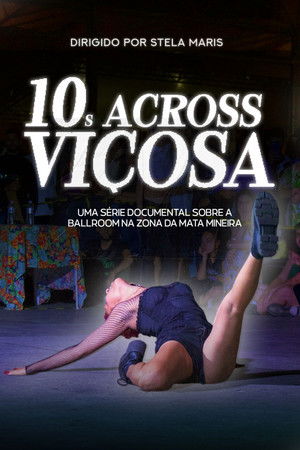
In Rio de Janeiro City and its outskirts, LGBTQ+ youth of color recreates Ballroom culture on their own terms. A portrait of the dramas, the voguing performances, and the art of shade, 50 years after its inception in New York. Rio is burning!
The ten anthologies and eight long poems of the Sangam age are the oldest and most distinguished body of secular poetry extant in India, of which women poets were a very strong presence.
I'll just have cats documentary follows 21-year-old Kay Proctor as she delves into Britain’s evolving views on queer parenthood and questions whether she even wants children herself. Through conversations with queer parents and professionals, Kay confronts complex questions about her future. This award-winning documentary, recognised with multiple Royal Television Society Student Awards, offers a candid exploration of family, identity, and choice in modern Britain.
Two men undertake a thought-provoking journey to parenthood. Not by adoption or surrogacy, but by Frankie, a trans man, carrying their baby. Made with support from NZ on Air.
This is Love tells the romance stories of 3 Nigerian LGBTQ+ couples and how they navigate romantic relationships in a conservative and hostile Nigerian environment. It is an attempt to humanize LGBTQ+ people in Nigeria by telling a story of how they find love amidst the risks and struggles. The cast includes a lesbian couple, a gay couple and a couple made up of a transman and a ciswoman. It covered conversations around acceptance, religion, health, the Same-Sex Marriage Prohibition Act (SSMPA), and finding love. 2 out of the 3 couples wore masks and had their voices distorted. Aside from helping to conceal the identity of the cast, the mask and distorted voices are also symbolic of the double life LGBTQ+ Nigerians have to live for their safety and security.