A roll and a half made to delight in color and the presence of friends. Steps toward learning to read in the dark.
"My first 16mm, Sightreading, was shot in August 2022 in Minneapolis and Chicago. It uses images from three sources: black mattes held in front of the sky near my parents’ house which were filmed and edited in-camera to a metronome; my friends drinking wine and discussing The Bachelor in their Chicago apartment; and details of a Breughel painting filmed from a television." -NC
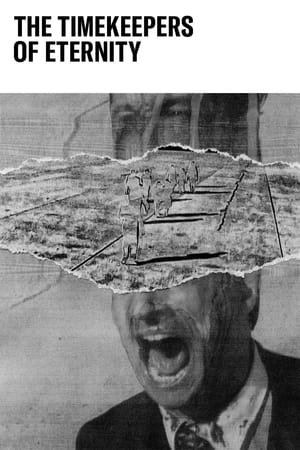
A comic study of 20th-century history, reconstructing the life of writer, creator and professional prisoner Tulse Luper. Born in 1911 Newport and last heard of in 1989, Luper’s life is pieced together from the evidence found in 92 suitcases scattered across the globe. In the first of three parts, we follow Luper through three distinct episodes: as a child during the First World War; as an explorer in Mormon Utah; and as a writer in Belgium during the rise of fascism.
An intimate stream of memories reaching out across time and space, taking on a uniquely experimental form that cuts the viewer adrift in a weave of old footage rising to the surface of consciousness like a dream.
A bleak, cryptic vision of life in contemporary Iran that eschews overt social commentary in favour of a very personal vision of stifled lives. Directed remotely by Rashidi from Ireland over Skype, the making of this unique film reflects the alienation it so compellingly portrays.
“Persistencies of Sadness & Still Days”, is a four hour feature film by Maximilian Le Cain and Rouzbeh Rashidi. Structured in two sections or ‘takes’ of two hours each, this dream-like, experimental project offers two complementary explorations of cinematic form that skirt around possible narratives, ducking through a series of fluctuating audio-visual categories and intensities.
Little is known of Jean Speck (1860-1933) beyond the fact that he opened Zurich’s first cinema. Rouzbeh Rashidi and Jann Clavadetscher consider the flittering black and white ghosts and shadows that he left in his wake in their phantasmagorical experimental feature film. This journey through a cinematic night probes the very essence of the cinematic image.
A short experimental film about the human race taking over nature.
The Garden is an experimental work that describes the inner worlds of two sisters manifested through their connection with the garden outside their home. While mourning the passing of their close relative, the sisters encounter a man in the garden, evoking a sense of mortality in one and awakening the sensuality in another. The film was directed by Ong Ann Meng (better known as Meng Ong), who went on to win numerous awards for his short films at the Singapore International Film Festival between 1991 and 1993. His first feature, Miss Wonton (2001), won the FIPRESCI Prize at the Locarno International Film Festival.
Obinagụ is not human. They are a spirit who walks among us, taking the form of a worker each day, only to return each evening to the forest they call home, a place where they feel whole and free, where they don’t have to perform or hide.
Ocean was a girl and now just a paper head. Her brother reminisces the times they shared during their childhood, a sorry experience that birthed emotional scars.
Holding Space explores the lived experiences of Burmese immigrants in Singapore under the gaze of neighbours in public flats. With a focus on spatial arrangements and housing exteriors, the experimental film challenges the ways architects visualise and instrumentalise their ways of seeing, seeking to hold space for subjective experiences and the subtle yet persistent influences on our domestic interiors.
TAMAN HUTAN Chapter Four: The Wound Response focuses on the rubber craze of the 20th century through both archival documentation of wages and an interview with Cek Anuan on his grandfather Rasimin who worked with English naturalist Henry Nicholas Ridley. Focusing on the Singapore Botanic Gardens as the site of interaction between colonists and labourers, the film reveals the wounds of those erased from colonial records but who remain inscribed within nature itself.
Proximities focuses on the trope of the Malay Boy found in the works of Singaporean artist Cheong Soo Pieng (b. 1917-1983). It attempts to locate the Malay male in art history while unpacking underlying systems of power that have shaped and naturalised the understanding of difference.
Set over three generations and beginning with a sexually frustrated orderly during WWII who relieves his tensions in the most outlandish, gross ways. The result of his liaison is a glutton who grows up to be a champion speed eater. He produces a child who becomes obsessed with taxidermy.
Shot in black and white, Invisible merges performance art and personal documentary to reflect personal and shared experiences during the military coup. Set in an abandoned building where many young revolutionists sought refuge, the seemingly invisible experiences of displacement, loss, suffering and anger are made visible through words and subtle movements.
Gudrun has modeled her amateur German terrorist group after the 1970s Red Army Faction (Baader-Meinhof Gang). She attempts to imitate her heroes by kidnapping the son of a wealthy industrialist and hopes to negotiate leftist demands from the father. When Gudrun’s not spouting leftist verses (including during a hilariously brilliant fuck session), she’s trying to convince her all-male gang to abandon their heterosexuality, which she believes is the result of mass delusion.
Cissie Colpitts drowns her cheating husband and, in the ensuing cover-up, enlists the help of lonely coroner Henry Madgett, an old friend with a longstanding weakness for her charms. But when Cissie's daughter and granddaughter—both also named Cissie Colpitts—decide to resort to the same methods for solving conflicts with their own frustrating husbands, the women and their repeated appeals for help begin to wear on Madgett's conscience.
Misha, Dalton, Jaxon, Hamlet, and David are young aspiring actors who move to Hollywood to follow their dream, but wind up testing their fate with consequences beyond their wildest imagination. Each of the actors have been hand picked by 'The Master'. A dark, mysterious teacher who promises to teach them the ultimate secret to success. Without knowing it, the young faithful dreamers are set to the test of their lives. They are hypnotized, mentally and physically abused and brainwashed as The Master slowly steals away any human instinct and empathy from them and applies a strange animal behavior instead. He calls it his unique acting technique. But in spite of all their hopes, dreams and aspirations The Master is never planning on giving them the secret to success. He has his own dark agenda. He is the hungry wolf in the jungle waiting for the right moment to prey on little girls. Just like the fairy tale of 'Little Red Riding Hood'.
After concluding the now-legendary public access TV series, The Pain Factory, Michael Nine embarked on a new and more subversive public access endeavor: a collaboration with Scott Arford called Fuck TV. Whereas The Pain Factory predominantly revolved around experimental music performances, Fuck TV was a comprehensive and experiential audio-visual presentation. Aired to a passive and unsuspecting audience on San Francisco’s public access channel from 1997 to 1998, each episode of Fuck TV was dedicated to a specific topic, combining video collage and cut-up techniques set to a harsh electronic soundtrack. The resultant overload of processed imagery and visceral sound was unlike anything presented on television before or since. EPISODES: Yule Bible, Cults, Riots, Animals, Executions, Static, Media, Haterella (edited version), Self Annihilation Live, Electricity.