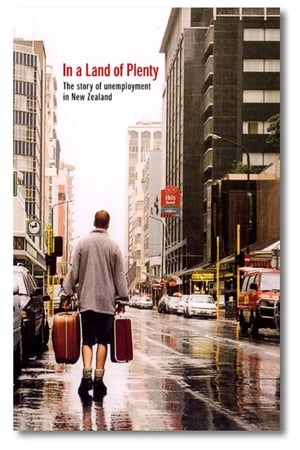
The story of unemployment in New Zealand and In A Land of Plenty is an exploration of just that; it takes as its starting point the consensus from The Depression onwards that Godzone economic policy should focus on achieving full employment, and explores how this was radically shifted by the 1984 Labour government. Director Alister Barry's perspective is clear, as he trains a humanist lens on ‘Rogernomics' to argue for the policy's negative effects on society, as a new poverty-stricken underclass developed.
The story of Shaista, a young man who—newly married to Benazir and living in a camp for displaced persons in Kabul—struggles to balance his dreams of being the first from his tribe to join the Afghan National Army with the responsibilities of starting a family. Even as Shaista’s love for Benazir is palpable, the choices he must make to build a life with her have profound consequences.
Iin Marlina
This short documentary features poet N Rengarajan, a migrant worker from Pudukkottai, India who sustains a practice of poetry as a way of life while working in the construction sector in Singapore. The film, structured around three of his poems, seeks to visually mirror the rhythm and tone of his writing. Together, verse and visuals strive to draw attention to the poet's acute illuminations of the realities of migrant life.
Riles is a documentary about the life of a riles resident, Eddie, in a squatter area along the railroad tracks within the downtrodden section of Balic-balik, Manila.
Peter Watkins' global look at the impact of military use of nuclear technology and people's perception of it, as well as a meditation on the inherent bias of the media, and documentaries themselves.
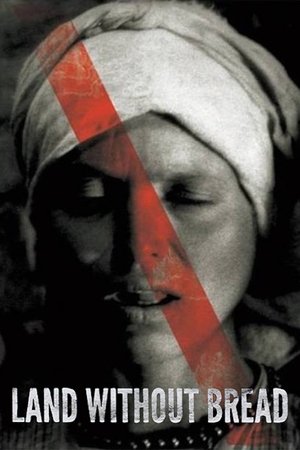
An exploration —manipulated and staged— of life in Las Hurdes, in the province of Cáceres, in Extremadura, Spain, as it was in 1932. Insalubrity, misery and lack of opportunities provoke the emigration of young people and the solitude of those who remain in the desolation of one of the poorest and least developed Spanish regions at that time.
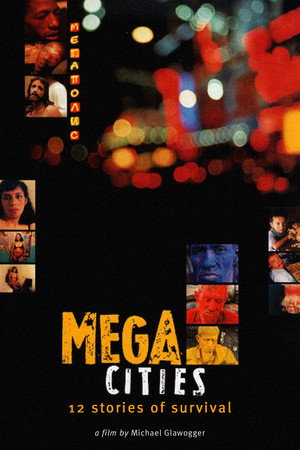
Megacities is a documentary about the slums of four different metropolitan cities.
Found footage: California in the 1950's and 60's. A young Indian couple enjoys their personal American dream come true in their home somewhere in the suburbs of San Francisco. In great detail they pose with their newly achieved wealth in front of their Super-8 camera. Just like postcards, they would send these film rolls to their joint families back in India. Around the same time, an American missionary couple visits the city of Calcutta to shoot a Christian propaganda film. The drastic reality with poverty and famine in the streets of the Indian metropolis fits perfectly into their wicked plan: To promote the faith in Jesus by showing the misery that pagan believers are doomed to suffer from.
Life on the breadline in the 1930s was hard enough, but times were desperate when you fell beneath it. Hunger marches organised by the National Unemployed Workers' Movement drew attention to the cause, but this left-wing collective picked up a cine-camera. The fictional story at the heart of the film is somewhat melodramatic, but the authentic surroundings give its message realism and weight.
Explores the lives of Sara, Gigi and Giovanna, three Latino transvestites who for years have lived on the streets of Manhattan supporting their drug addictions through prostitution. They made their temporary home inside broken garbage trucks that the Sanitation Department keeps next to the salt deposits used in the winter to melt the snow. The three friends share the place known as "The Salt Mines".
A tomato is planted, harvested and sold at a supermarket, but it rots and ends up in the trash. But it doesn’t end there: Isle of Flowers follows it up until its real end, among animals, trash, women and children. And then the difference between tomatoes, pigs and human beings becomes clear.
Djibi and Ange, two teenagers living on the streets, arrive at the Archipel, an emergency shelter in the heart of Paris. This documentary is a look at the Archipel, a shelter offering an innovative way to welcome families living on the streets.
Nacht Grenze Morgen
Psychoanalysis in El Barrio shows the experience of Latino psychoanalysts in the United States bringing psychoanalysis to Latino communities. It features interviews with ten Latino analysts (whose heritage is from a variety of Latino cultures) as well as students. It uniquely shows some of those communities in Philadelphia, New York City, and Texas and Interviews Latinos in the street on their thoughts about therapy. And it discusses issues of culture, bias, language and transference that occur for Latino analysts and their patients. The video challenges psychoanalysts to understand the culture and economic circumstances of Latinos in the United States and to bring psychoanalytically informed therapy to them. It Is a consequence of conferences held by the Institute for Psychoanalytic Training and Research (IPTAR) and the Clinical Psychology Department of The New School.
Every year, a Kurdish family leaves Gaziantep (Anatolia) to work on the land near Ankara. This thankless life of seasonal labor turns upside down when the eldest son falls in love.
From the Sahara to Mellila, witnesses talk about how they narrowly escaped death, unlike their companions - all migrants who were literally and symbolically swallowed up by the frontier.
A former lawyer leaves everything behind to embark on the quest for a dinosaur-like animal supposedly living in Africa's unexplored forests.
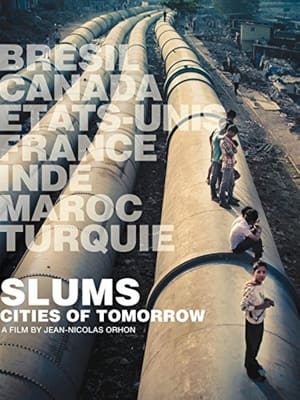
One billion people on our planet—one in six—live in shantytowns, slums or squats. Slums: Cities of Tomorrow challenges conventional thinking to propose that slums are in fact the solution, not the problem, to urban overcrowding caused by the massive migration of people to cities. (Lynne Fernie, HotDocs)
Plano B