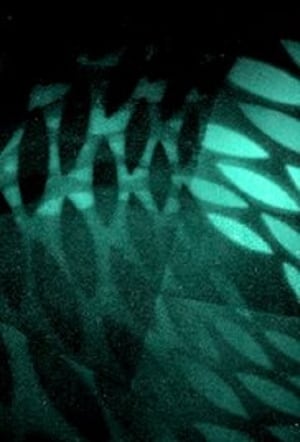
Seemingly at random, the wings and other bits of moths and insects move rapidly across the screen. Most are brown or sepia; up close, we can see patterns within wings, similar to the veins in a leaf. Sometimes the images look like paper cutouts, like Matisse. Green objects occasionally appear. Most wings are translucent. The technique makes them appear to be stuck directly to the film.
After the title, a white screen gives way to a series of frames suggestive of abstract art, usually with one or two colors dominating and rapid change in the images. Two figures emerge from this jungle of color: the first, a shirtless man, appears twice, coming into focus, then disappearing behind the bursts and patterns of color, then reappearing; the second figure appears later, in the right foreground. This figure suggests someone older, someone of substance. The myth? Preserved by the Academy Film Archive in 2012.
Synchronize is a tribute to the powerful effect movies can have on our imagination. This short film takes the viewer through the dream of a video store clerk whose vision is formed by the movies he sees and hears.
A boy lives a fast-paced, free-roaming life with his friends on the streets of Dublin, which doesn’t always lead to good choices.
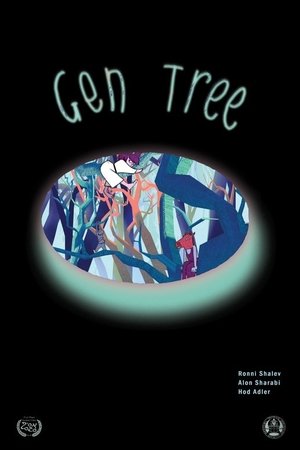
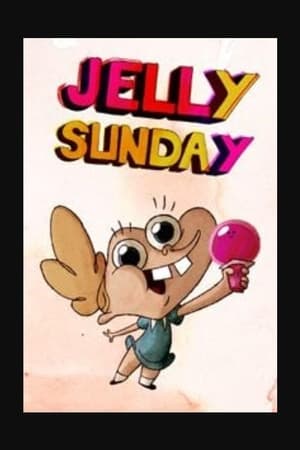
The sad and happy times of a young girl and her bear doll, a young mouse and his family, a sycamore tree, an old lamp post, a hoodlum moth and an alleyway full of posters coming to life.
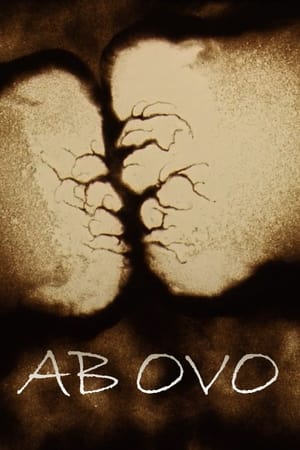
The creation of Earth and Mankind. And how God changed his mind.
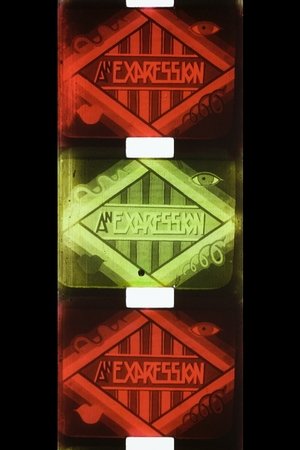
A tilted figure, consisting largely of right angles at the beginning, grows by accretion, with the addition of short straight lines and curves which sprout from the existing design. The figure vanishes and the process begins again with a new pattern, each cycle lasting one or two seconds. The complete figures are drawn in a vaguely Art Deco style and could be said to resemble any number of things, an ear, a harp, panpipes, a grand piano with trombones, and so on, only highly stylized. The tone is playful and hypnotic.
memoria e imaginación
In this extraordinary short animation, Evelyn Lambart and Norman McLaren painted colours, shapes, and transformations directly onto their filmstrip. The result is a vivid interpretation, in fluid lines and colour, of jazz music played by the Oscar Peterson Trio.
Daiki just wants to fit in at school, but his magical girl mother might ruin everything for him by bursting in on Career Day. Will the power of love hold strong amidst family tensions???
Jankovics's adaptation of the eponymous play is divided into multiple parts, and depicts the creation and fall of Man throughout history.
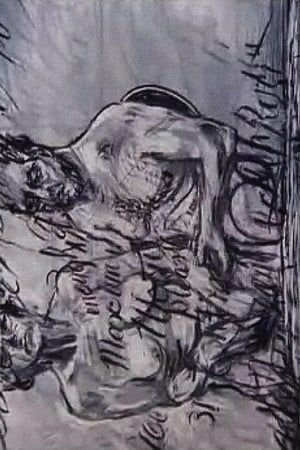
In the unearthly world of E, hand-made meets hi-tech as characters appear to consume one another with their own, trafficked likenesses. Constructing her work entirely from laser-printed film stills (approximately 770 in total) lifted from Niklaus Schilling’s 1972 horror film, Nachtschatten, Zemlianski rips, layers, and paints these images with pastels and charcoal, then scans them back together into a bracing animation set to the eponymous song (“E”) by the Berlin-based band, Comb.
Cuba programmed solid areas and volumes instead of the vector dots of the previous two films. It also in four "colors": black, white, light grey and dark grey. In five episodes, he alternates single events involving ribbon-like figures following intricate trajectories, with more complex episodes consisting of up to 40 individual events that appear and disappear at irregular intervals. Electronic sound scores accompany.
A visual representation, in four parts, of one man's internalization of "The Divine Comedy." Hell is a series of multicolored brush strokes against a white background; the speed of the changing images varies. "Hell Spit Flexion," or springing out of Hell, is on smaller film stock, taking the center of the frame. Montages of color move rapidly with a star and the edge of a lighted moon briefly visible. Purgation is back to full frame; blurs of color occasionally slow down then freeze. From time to time, an image, such as a window or a face, is distinguishable for a moment. In "existence is song," colors swirl then flash in and out of view. Behind the vivid colors are momentary glimpses of volcanic activity.
In the diary of a six-year-old girl, Marie, we learn what important things happened during one holiday month before she started first grade and how she perceived the changes in her family.
The first sequence of the Hearst Castle was rotoscoped from Steven Lisberger's film and animated in Cosmic Cartoon. Lisberger did much of the matte painting, figure rotoscoping and airbrush painting, and Eric Ladd did the Earth rotation animation.
During hibernation one sleeps and never leaves the warm bed. The little hedgehog initially wants to go on a very short expedition - to see the full moon and come right back - but he is surprised by the first snow. The search for the home where Dad and Mum stayed is not easy and gradually turns into an unexpected adventure.
In this short slice of transgressive punk cinema, a woman achieves accidental revenge on her boyfriend after he cruelly kills and eats the fish-stick that she had magically brought to life. Despite this tragic event, not all is lost for Lolita, as she soon meets an unexpected new friend.
Hans Richter, noted for his abstract shorts, has everyday objects rebelling against their daily routine.
Toroid is an experimental audio-reactive animation work that demonstrates the possibilities of harnessing digital waveforms of electronic origin into a continual source of power. By making the invisible visible, the work bears similarity and inspiration from the extensive quantum energy research at CERN which seeks to uncover and control the particles in and around us. In this era of over-production and over-algorithmic data illusion of choices, Toroid inserts itself in the digital narrative as a power source simulation showing a possibility for ensuring a positive flow of eternal (renewable) energy working in parallel with the natural order.