An examination of the hitherto unexplored relationships between Pan-African culture, science fiction, intergalactic travel, and rapidly progressing computer technology.
Chronicles the musical career of British post-punk art rockers Wire.
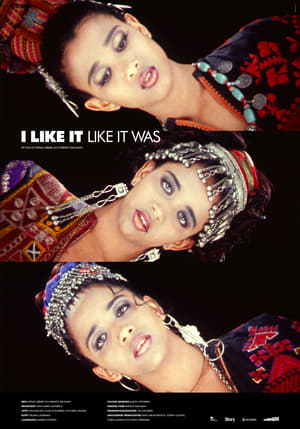
This film undertakes a journey into the amazing parallel universe of East Berlin’s fashion designers and experts in the art of survival. For, in the midst of the constraints of life in the GDR, there existed a fantasy world where it was possible to dance to another tune, be individual and even provocative. The most important characteristic of this bohemian scene was one’s per- sonal style. But this certainly wasn’t something that could be bought off the peg in the GDR. In this parallel universe it was up to you to create your own individual image – with your own hands. This film tells the story of the desires, the passion and the dreams that were tried and tested, lived and performed in the shadow of the Berlin Wall.
A documentary on the late American entertainer Dean Reed, who became a huge star in East Germany after settling there in 1973.
"I especially hope to inspire young women, because I often feel like so much emphasis is put on how beautiful you are, and how thin you are, and not a lot of emphasis is put on what you can do and how smart you are. I'd like to change the emphasis of what's important when looking at a woman." Filmed in San Francisco in 2000, Margaret Kilgallen (1967-2001) discusses the female figures she incorporated into many of her paintings and graffiti tags. Loosely based on women she discovered while listening to folk records, watching buck dance videos, or reading about the history of swimming, Kilgallen painted her heroines to inspire others and to change how society looks at women. Three of Kilgallen's heroines—Matokie Slaughter, Algia Mae Hinton, and Fanny Durack—are shown and heard through archival recordings. Kilgallen is shown tagging train cars with her husband, artist Barry McGee, in a Bay Area rail yard and painting in her studio at UC Berkeley (source: Art21).
A compilation of interviews, rehearsals and backstage footage of Michael Jackson as he prepared for his series of sold-out shows in London.
As a result of the Holocaust and later, AIDS, the male homosexual community has sustained bitter losses and, according to Praunheim, lesbian women have now placed themselves at the head of the so-called queer movement. The female protagonists in the film represent two different generations; they also incorporate the past and present status of homosexuals in society.
Martin Scorsese's documentary intertwines footage from The Band's incredible farewell tour with probing backstage interviews and featured performances by Eric Clapton, Bob Dylan, Joni Mitchell, Van Morrison, and other rock legends.
Personal stories taken from a survey on how women's lives are affected by a culture obsessed with body image and thinness.
Three months before the 2019 World Cup, the U.S. Women’s National Soccer Team filed a gender discrimination lawsuit against the United States Soccer Federation. At the center of this no-holds-barred account are the players themselves–Megan Rapinoe, Jessica McDonald, Becky Sauerbrunn, Kelley O'Hara and others–who share their stories of courage and resiliency as they take on the biggest fight for women's rights since Title IX.
An up-close look into the life of the often misunderstood movie director Grigori Kromanov through the lens of old friends and colleagues.
Shake ‘Em On Down is a one-hour documentary film which aims to tell the story of Fred McDowell, who was first recorded by Alan Lomax in 1959, traveled to Europe with the Rolling Stones in the mid-1960s, mentored Bonnie Raitt, and served as the cornerstone of the unique and enduring North Mississippi- style of blues music.
A documentary celebrating 25 years of flemish subsidised cinema.
Through exploring the body as a landscape, 'The Copper Kings' plays with visual metaphors that connect the patriarchal philosophy and process of extraction to the dissection of our own bodies.
This is a story that’s never been told. SHOW HER THE MONEY addresses how women are getting less than 2% of venture capital funding and demystifies what venture capital is. Featuring rock-star female investors who invest in diverse women entrepreneurs with innovations that will change the world, Show Her The Money reminds us that money is power and women need it to achieve true equality.
On 18th of December 2017, the Filarmonica Teatro Regio Torino, directed by Timothy Brock, presented "The Gold Rush" by Charles Chaplin, with live performance of the soundtrack. But let's go back a few days: this short film takes us in the backstage of the concert!
Big Giant Wave is an ode to music, the invisible abstract and fleeting sequence of sounds that creates in the brain the same reaction as chocolate, sex, or drugs.
Co-curated by Jenni Olson and the late Black gay activist Karl Knapper, this entertaining showcase of vintage movie trailers traces the evolution of African American cinema through its most crucial period, 1952-1976. Filled with insights on race and social dynamics, this fascinating compendium of coming attractions explores an extensive range of stylistic approaches—Blaxploitation, Comedy, Music Bio, Plantation Drama and more—offering an outrageous joyride through motion picture history. Beyond mere camp, these marvelously condensed gems crystallize a range of African American identities and personalities, tracking the meteoric careers of Sidney Poitier, James Earl Jones, Billy Dee Williams, Richard Pryor, Pam Grier and others through their bold performances in movies both hugely popular and practically forgotten. Afro Promo provides a compact glimpse at the representation of African Americans through twenty-five dynamic years of American cinema history.
The relations between Parma and cinema were so strong for almost the whole of the twentieth century that this city became an early laboratory of ideas and theories on cinema and a set chosen by some of the greatest Italian authors and beyond. Furthermore, a considerable number of directors, actors, screenwriters and set designers were born in Parma who have made their way internationally, testifying to the fact that in this small city in Northern Italy there was a decidedly cinematic air. Red armchairs takes up the thread of this story, wondering why, unique among the Italian provincial cities, Parma has given so much to the cinema, accompanying the viewer on a journey backwards that from the first projections of the Lumière cinema reaches the ultramodern experience of new multiplexes. During this journey we will meet the characters who created the conditions for this diffusion of cinematographic culture in Parma.
Handbook of Movie Theaters' History is a documentary about the history, the development in the present days and the future of movie theaters in the city of Turin, Italy. It mixes the documentary language with comedy and fiction, and is enriched by interviews to some of the most important voices of Turin cinematography. The film follows the evolution of movie theaters by enlightening its main milestones: the pre-cinema experiences in the late 19th Century, the colossals and the movie cathedrals of the silent era, the arthouse theaters, the National Museum of Cinema, the Torino Film Festival, the movie theaters system today and the main hypothesis about its future. The mission of Handbook of Movie Theaters' History is to explore and give back to the audience a deep reflection about the identity and the value of movie theater, in its social and anthropological role and as a mass media, and to analyze the experience of the viewer.