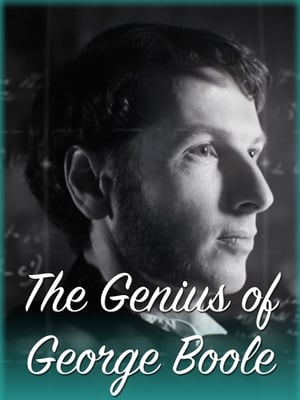
Narrated by Oscar-winning actor Jeremy Irons, The Genius of George Boole assembles academics and industry leaders from across the globe to explore the life and importance of one of the world’s greatest unsung heroes.
Made entirely on Roger Wagner's HyperStudio software, Chris Marker explores set theory, using Noah's Ark as an example.
What is Bitcoin? With the advent of Bitcoin, the world's first digital currency, for the first time in history money is no longer controlled by banks or governments, but by the people who use it. But where did this currency come from? How does it work? And is it truly the way forward, or just a flash in the pan? Magic Money answers these questions and more as it explores the mysterious origins of Bitcoin, its role in society, and how it could shape the future.
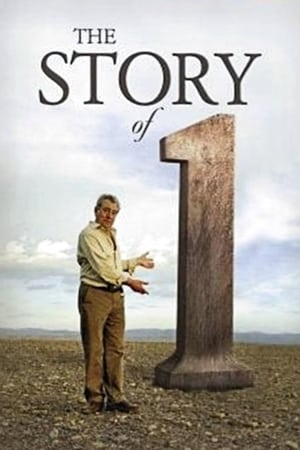
A humor-inflected history of the of the number one, covering military applications in ancient Rome, the measurement of distances in India, and the decimal system created by Leibnitz.
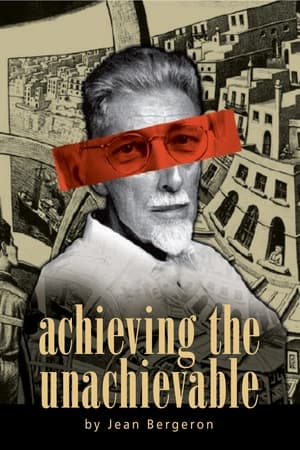
M.C. Escher is among the most intriguing of artists. In 1956 he challenged the laws of perspective with his graphic Print Gallery and his uncompleted master-piece quickly became the most puzzling enigma of modern art. Fifty years later, can mathematician Hendrik Lenstra complete it? Should he?
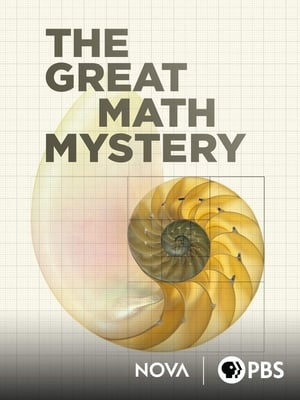
NOVA leads viewers on a mathematical mystery tour -- a provocative exploration of math's astonishing power across the centuries. We discover math's signature in the swirl of a nautilus shell, the whirlpool of a galaxy and the spiral in the center of a sunflower. Math was essential to everything from the first wireless radio transmissions to the prediction and discovery of the Higgs boson and the successful landing of rovers on Mars. But where does math get its power? Astrophysicist and writer Mario Livio, along with a colorful cast of mathematicians, physicists and engineers, follows math from Pythagoras to Einstein and beyond, all leading to the ultimate riddle: Is math an invention or a discovery? Humankind's clever trick or the language of the universe?
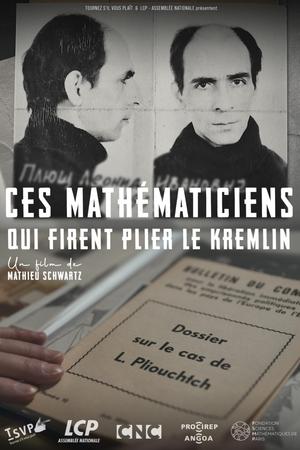
In April 1969 Ilya (Eliyahu) Rips, then a young student of mathematics, tried to burn himself in a public square in Riga, Latvia protesting against the Soviet invasion of Czechoslovakia. He was stopped and eventually sent to a psychiatric hospital for two years. Thanks to international pressure from the mathematical community in 1972 he was allowed to emigrate to Israel. Now he is considered one of the most brilliant mathematicians in the world. At the same time, for most people familiar with his name, Rips is first of all associated with the development of the so called Bible Code – a mathematical program allegedly helping to decipher hidden messages encoded in Torah – the Five Books of Moses. He is attacked by both the scientific and religious community, yet his research continues.
Nowadays we associate Johannes Kepler with his famous laws of planetary motion. But the history of his discoveries is a drama of Shakespearian proportions - full of intrigue, passion, depravity and corruption.
The computer animation Outside In explains the amazing discovery, made by Steve Smale in 1957, that a sphere can be turned inside out by means of smooth motions and self-intersections. Through a combination of dialogue and exposition accessible to anyone who has some interest in mathematics, Outside In builds up to the grand finale: Bill Thurston's "corrugations" method of turning the sphere inside out.
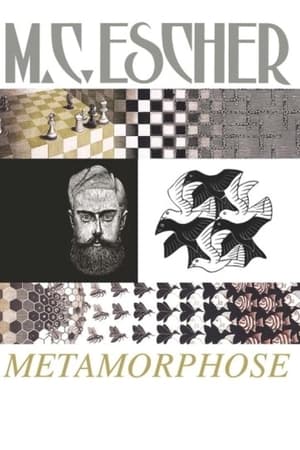
A portrait of the visionary Dutch artist M. C. Escher (1898-1972), according to his own words, taken from his diary, his correspondence and the texts of his lectures.
Exploring the murky and fast-paced world of the hackers out to steal money and identities and wreak havoc with people's online lives, and the scientists who are joining forces to help defeat them.
Without us noticing, modern life has been taken over. Algorithms run everything from search engines on the internet to satnavs and credit card data security - they even help us travel the world, find love and save lives. Mathematician Professor Marcus du Sautoy demystifies the hidden world of algorithms. By showing us some of the algorithms most essential to our lives, he reveals where these 2,000-year-old problem solvers came from, how they work, what they have achieved and how they are now so advanced they can even programme themselves.
A witty and mind-expanding exploration of data, with mathematician Dr Hannah Fry. This high-tech romp reveals what data is and how it is captured, stored, shared and made sense of. Fry tells the story of the engineers of the data age, people most of us have never heard of despite the fact they brought about a technological and philosophical revolution.
A video puzzle using mathematical principles and prime numbers, daring the audience to decode it's journey.
Symmetry is one of five shorts featured in the film "Mathematical Peep Shows." The collection was made by Charles and Ray Eames for the IBM Mathematica Exhibit which opened in 1961. The degree to which an object is symmetrical is illustrated by the number of different positions in which it can fit into a box of its shape.
Every year, millions of high school and college students walk into their first geometry class thinking: "Circles and squares. How tough can it be?" Then they encounter the postulates, statements and theorems! But have no fear, our simple, straightforward format will help students understand and make sense of geometry.
Part 2 starts off with a quick review of graphing as well as sine, cosine and tangent. From there, this video charts new territory as we dive into amplitude, curves, double-angle formulas, sum-to-product-formulas and identities. Using computer graphics and animation, the Standard Deviants illustrate these complicated concepts far better than any blackboard!
Does infinity exist? Can we experience the Infinite? In an animated film (created by artists from 10 countries) the world's most cutting-edge scientists and mathematicians go in search of the infinite and its mind-bending implications for the universe. Eminent mathematicians, particle physicists and cosmologists dive into infinity and its mind-bending implications for the universe.
Albert Einstein: l'homme et le génie
Pythéas, l'astronome voyageur