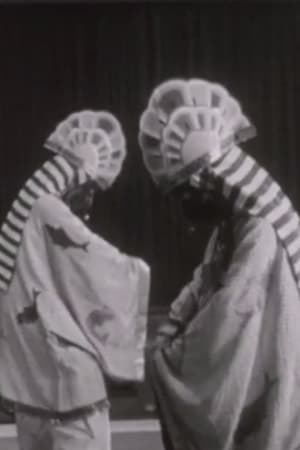
Created for the "Esso World Theater" series of films in 1964, it features excerpts from "Bugaku," "Gagaku," "Noh, " and "Kabuki" scenes performed by the well-known dancers, musicians and actors and actresses.
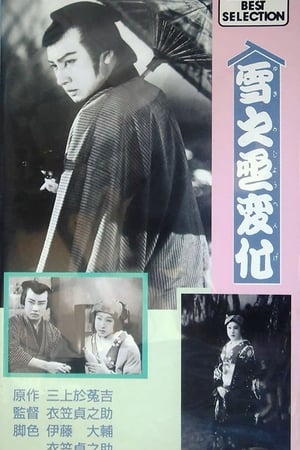
An onnagata (female impersonator) of a Kabuki troupe avenges his parents' deaths. Remade in 1963 as Yukinojô Henge.
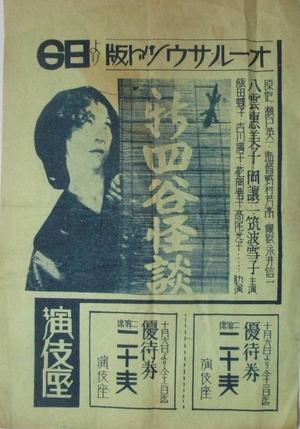
Yotsuya Kaidan (Jitsoroku Oiwa)
Yotsuya Kaidan
Irohagana Yotsuya Kaidan
Hanbei (Arata Furuta), the boss of the labor agency Fujitsuboya is known to the underworld as the leader of the 'Last Rite Givers' (Indouya), an organization that deals with disposing of criminals for the sake of the people and society. However, in reality, he is merely a timid and mild-mannered man, too gentle to even harm a fly, whose fearsome appearance is what earned him his position. In both his public and secret life, the true leader is his wife, Oise. One day, a wandering assassin known as the 'mad dog', Yoiyami Ginji (Taichi Saotome), appears—someone who will kill anyone, regardless of who they are, as long as the price is right. Under the orders of the 'Black Blade' gang, who aim to destroy the 'Last Rite Givers' and monopolize the underground business, Ginji awaits to ambush and kill Hanbei. However, at that moment, as if by the curse of the 'Tengosei' star, a violent lightning strike causing the bodies of Hanbei and Ginji to switch.
Follows the life of an illegitimate son of a kabuki actor.
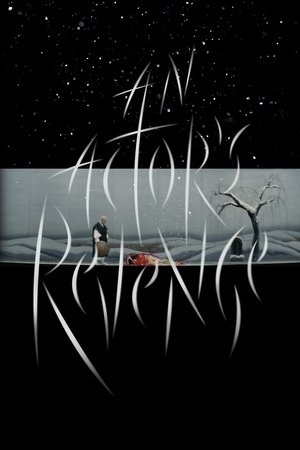
In Edo Japan, a kabuki actor seeks revenge against the three men who drove his parents to their deaths years ago.
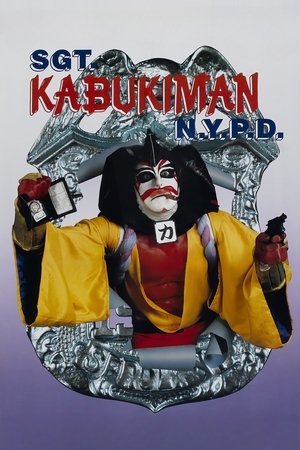
A streetwise New York police officer transforms into the world's most unusual superhuman hero.
Oiwa Nagaya
Shin Yotsuya Ghost Story
A reel of the Noh drama Momiji-gari, in which Danjuro Ichikawa played opposite Onoe Kikugoro V as an ogress who has disguised herself as the Princess Sarashina. Filmed by Shibata Tsunekichi in the open air on a windy day in November 1899, Danjuro would allow only the one take, so that when his fan blew away in mid-performance the scene had to stay. The film re-emerged at the Kikikan theatre in 1907 where it was a great success and inspired a wave of fiction filmmaking based on traditional Japanese narratives.
A look at the succession ceremony in which Ichikawa Danjūrō XIII formally inherited the storied Danjūrō name in Kabuki, Japan’s classical performing art. The film records the behind-the-scenes preparations for the actor’s name-inheritance debut performance.
In the treacherous frontier city of Samurai Town, a ruthless bank robber is sprung from jail by wealthy warlord The Governor, whose adopted granddaughter Bernice has gone missing. The Governor offers the prisoner his freedom in exchange for retrieving the runaway. Strapped into a leather suit that will self-destruct within five days, the bandit sets off on a journey to find the young woman—and his own path to redemption.
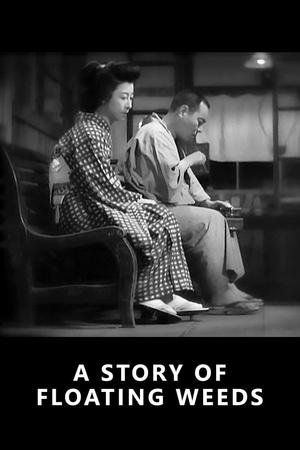
An aging actor returns to a small town with his troupe and reunites with his former lover and illegitimate son, a scenario that enrages his current mistress and results in heartbreak for all.
Shin Yotsuya Kaidan
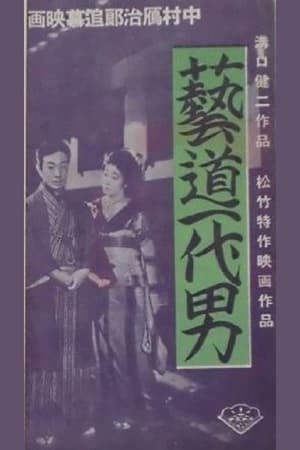
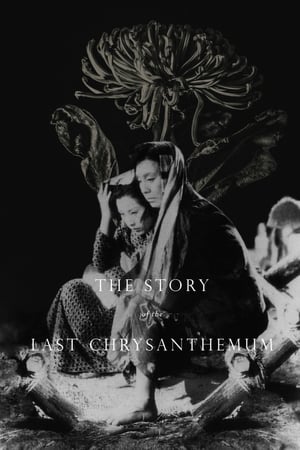
In late 19th-century Tokyo, Kikunosuke Onoue, the adopted son of a legendary actor, himself an actor specializing in female roles, discovers that the praise he receives is only due to his status as his father's heir. Devastated, he turns to Otoku, a servant of his family, for comfort, and they fall in love. Kikunosuke becomes determined to leave home and develop as an actor on his own merits, and Otoku faithfully joins him.