AFL legend Adam Goodes shares the story of his life and career to offer a deeper insight into race, identity, and belonging.
Australian documentary filmmaker Ian Darling re-examines the incidents that marked the final 3 years of Indigenous footballer Adam Goodes' playing career. Made entirely from archival footage, photos and interviews sourced from television, radio and newspapers, the film reviews the national conversation that took place over this period.
Julian Berniers returns from Illinois with his young bride Lily Prine to the family in New Orleans. His spinster sisters Carrie and Anna welcome the couple, who arrive with expensive gifts. The sisters hope Julian will help with their expenses, and he tells them that while his profitable factory went out of business, he did manage to save money. It turns out that Julian pulled off a real estate scam and took off with the money. Carrie is obsessed with her brother. Her jealousy of Lily pushes her to discover the shady land deal for herself and she does everything she can to wreck their marriage.
Trocando de Pele
By means of a chronological arrangement of historical video material from the Istituto Luce archives, it tells the story of Fascist Italy's ambitions in Africa and the role they played in shaping fascist ideology and the stance of the fascist regime in the Western world at the height of the age of colonialism and aggressive European expansionism.
Claude and Marie Verneuil face a new crisis. The four spouses of their daughters, David, Rachid, Chao and Charles decided to leave France for various reasons. Here they are imagining their lives elsewhere.
Two strangers meet at key turning points over the course of their lives. The initial conflict gives way to compassion and eventual friendship.
Black Is the Color highlights key moments in the history of Black visual art, from Edmonds Lewis’s 1867 sculpture Forever Free, to the work of contemporary artists such as Whitfield Lovell, Kerry James Marshall, Ellen Gallagher, and Jean-Michel Basquiat. Art historians and gallery owners place the works in context, setting them against the larger social contexts of Jim Crow, WWI, the civil rights movement and the racism of the Reagan era, while contemporary artists discuss individual works by their forerunners and their ongoing influence.
A surgeon and an ambulance driver fight racketeers who take over their hospital.
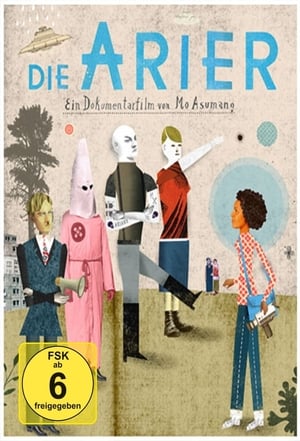
Aurélia is a young black woman who works at a factory and lives in a working-class neighborhood in São Paulo, whose boyfriend Fábio gets involved with a racist neo-nazi group.
Antonio, a taxi driver, his wife, and two chidren arrive one fine afternoon at a solitary beach, looking for sea-shells. However, they will find more than expected: namely, Ombasi and Yambo, two illegal African immigrants, apparently thrown back to the ocean from where they came, in search of a better life in Spain. The sun sets, and the evening, night and morning which follow see other bizarre characters entering the scene, before the Africans' and the other characters' fates are finally decided.
A Mondo documentary focused on the 1960's American lifestyle, consumerism, religion, adversity, and oddity. An outsider's look at a country afflicted by episodes of racism and neo -Nazism. Scenes of a Ghost Town, LSD in NYC, Sunset Strip Los Angeles California, Amish, Klu Klux Klan, African-American Fashion Show, etc.
After the closure of US Japanese Internment Camps at the end of World War II, a Japanese American family returns home and must find the strength to rebuild both their house and family amidst the emotional and physical destruction.
Germany, right after the re-unification. The people are out of control, blind hatred towards immigrants is common sense. In this time, a social-worker, with the mission to bring a Polish family to their destination (an immigration camp in a little provincial town called Rassau), gets kidnapped just as the family. Chief inspector Koern and his girl-friend start to investigate in this matter in Rassau, exploring a world of obsessive sex, mislead lust and an over-whelming irrational love to the German nation, infiltrating anyone's mind. Rascism doesn't start with shaved hair and boots but rather in the middle of society itself...
Steve, a 25-year-old Black man from the Paris suburbs, seeks to escape the violence of his immediate surroundings by training to become an actor at one of France’s most prestigious drama schools. But soon he discovers that the theater world is only interested in having him inhabit “Black” roles.
Elvis Mitchell uncovers why Chameleon Street (1989) by Wendell B. Harris Jr. failed to secure a proper distributor deal. Originally aired as a segment on "20/20".
The stooges are bumbling electricians who decide to go away for a rest after they are fired for their incompetence. The rest home they choose is run by Dr. Mallard, a quack who gyps the patients for everything they've got. When the boys discover the crooked goings on they escape, but not before Curly accidentally cures another patient who rewards him with a thousand dollars.
The inspiring true story of Seretse Khama, the King of Bechuanaland (modern Botswana), and Ruth Williams, the London office worker he married in 1948 in the face of fierce opposition from their families and the British and South African governments. Seretse and Ruth defied family, Apartheid and empire - their love triumphed over every obstacle flung in their path and in so doing they transformed their nation and inspired the world.
After being released from jail, "Tarzan" Lira seeks to rebuild his life as a bank employee. Unfortunately, it might not be as easy as he thinks.
New York City, October 10, 1965. A group of wooden giant figures from Pamplona, representing Basque culture and traditions, parade down the street; but the local authorities have not allowed the appearance of all of them: due to the racial prejudices that persist in many sectors of society, the participation of two black giants has been banned.