In 1961, history was on trial... in a trial that made history. Just 15 years after the end of WWII, the Holocaust had been largely forgotten. That changed with the capture of Adolf Eichmann, a former Nazi officer hiding in Argentina. Through rarely-seen archival footage, The Eichmann Trial documents one of the most shocking trials ever recorded, and the birth of Holocaust awareness and education.
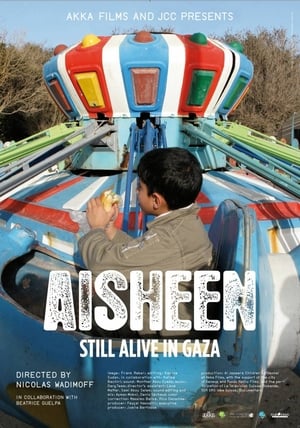
Going behind the usual images of war-torn Gaza, Swiss documentarian Nicolas Wadimoff offers this look at how people survive despite constant threat of danger. Children still play, rappers still create music and families still love one another. In addition to visiting the United Nations Food Distribution Center, Wadimoff films at a derelict amusement park and profiles the DARG TeaM rappers, whose politically charged music proclaims their defiance.
Bible expert Bill Gallatin explores biblical prophecies from the Book of Revelation that have transpired, with a discussion of whether these events signify that we are now living in the End Times preceding the return of Jesus Christ. Gallatin touches on events such as the increasingly acute difficulties in the Middle East, numerous environmental catastrophes, earthquakes and more, explaining how they connect to scriptural writings.
Shoshana
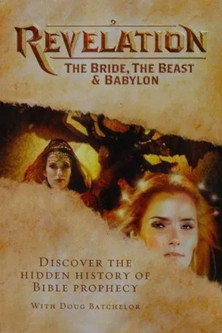
Going to the very heart of the Bible's most challenging Book, this one hour documentary decodes the visions of Revelation 12 and 17 for everyone to understand. Journeying from the birth of Christ through the Christian era, this amazing video pulls aside the veil of hidden history to reveal the rise of Babylon, the persecution of the bride of Christ, and the real-world identity of the beast. Educational and inspiring, Revelation delivers the keys to understanding the epic conflict between Christ and Satan and what it means for your life today.
A portrait of two Palestinian women whose individual struggles both define and transcend the politics that have torn apart their homes and their lives. Farah Hatoum, a widow living with her children and grandchildren, and Sahar Khalifeh, a novelist from the West Bank.
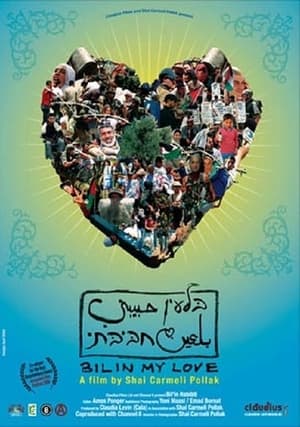
The Israeli filmmaker Shai Corneli Polak records the building of the 'security wall' through Palestinian territory at the village of Bil'in. The villagers protest mostly peacefully, while the Israeli army doesn't react peacefully. By now the Israeli High Court has ruled that the building of the wall was illegal.
We are taken behind the scenes of a play in-the-making: The play is Samuel Beckett’s WAITING FOR GODOT—starring a group of young 48-Palestinians. One by one, we are introduced to a variety of characters: the play’s director, actors, and other ordinary people. As we delve further into each of their lives, the film reveals the startling parallels between the themes of the play and their own. Everyone is waiting for something: a permit to build a house, better work conditions, a starring role in a film. Much like Waiting for Godot, our heroes are awaiting Faraj Allah… something that may or may not come.
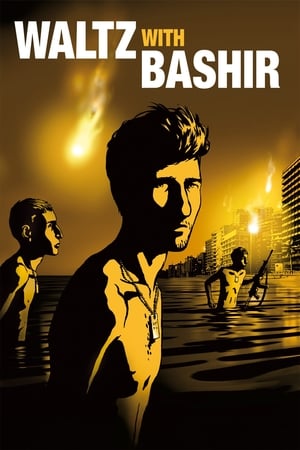
An Israeli film director interviews fellow veterans of the 1982 invasion of Lebanon to reconstruct his own memories of his term of service in that conflict.
Twelve Palestinian women sit before us and talk of their life before the Diaspora, of their memories, of their lives and of their identity. Their narratives are connected by the enduring thread of the ancient art of embroidery. Twelve resilient, determined and articulate women from disparate walks of life: lawyers, artists, housewives, activists, architects, and politicians stitch together the story of their homeland, of their dispossession, and of their unwavering determination that justice will prevail. Through their stories, the individual weaves into the collective, yet remaining distinctly personal. Twelve women, twelve life-spans, and stories from Palestine; a land whose position was fixed on the map of the world, but is now embroidered on its face.
A documentary on how British double-dealing during the First World War ignited the conflict between Arab and Jew in the Middle East. The bitter struggle between Arab and Jew for control of the Holy Land has caused untold suffering in the Middle East for generations. It is often claimed that the crisis originated with Jewish emigration to Palestine and the foundation of the state of Israel. Yet the roots of the conflict are to be found much earlier – in British double-dealing during the First World War. This is a story of intrigue among rival empires; of misguided strategies; and of how conflicting promises to Arab and Jew created a legacy of bloodshed which determined the fate of the Middle East.
We gain rare access inside the Jenin Battalion, a new Palestinian armed group that’s formed to fight back against Israeli military raids in the occupied West Bank. Fighter Abu Aseel, not his real name, takes us through Jenin and shows us how the brigade is training and preparing to defend the city for the next time the Israeli army enters. Like many young men in the impoverished refugee camp, Abu Aseel feels he was compelled to take up arms, driven by witnessing decades of violence and oppression against his community. Israel’s new far-right government has accompanied a surge in violence with near-daily military raids across the occupied West Bank.
2003 documentary film produced by Oliver Stone for the HBO series America Undercover about the conflict in occupied Palestine. He speaks with Ehud Barak and Benjamin Netanyahu, former prime ministers of Israel, Yasser Arafat, late president of the Palestinian National Authority, and various Palestinian activists resisting the oppression of the zionist regime.
Fearing for her life, Israeli transgender pioneer Efrat Tilma fled the country as a teenager. Now in her seventies, she must fight for her freedom once again, as the country spirals into political and social regression.
A documentary on the historic first-ever visit of a Palestinian National team to Europe, following the Palestinian women's team as they arrive in Ireland to a heroes' welcome and play a solidarity friendly against Bohemian FC on May 15th, 2024. The sold-out match marked the 76th anniversary of the Nakba and highlighted the ongoing genocide and human rights violations happening every day in occupied Palestine. It was one of the most emotional and important games ever held at Dalymount Park in its long and storied history since 1901, and the event raised over €100,000 for three Palestinian humanitarian organizations.
Where Olive Trees Weep offers a searing window into the struggles and resilience of the Palestinian people under Israeli occupation. It explores themes of loss, trauma, and the quest for justice.
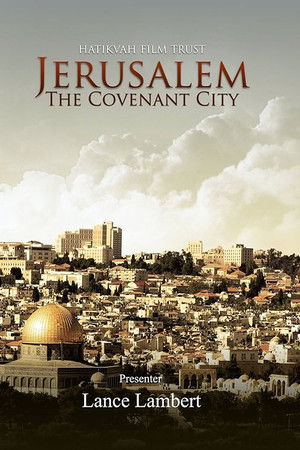
A short documentary about urban planning and the harmonisation of old and new building elements in Jerusalem of the 1970's, led by the architect Moshe Safdie.
Rule of Stone is a documentary film that exposes the power of architecture and the role it has played – aesthetically, ideologically and strategically – in the creation of modern Jerusalem after the 1967 war.
A horrible six year conflict befell Syria with a multitude of factions fighting for territories backed by a score of foreign players. The script for war as with Iraq in 2003 originated with Zionist partisans with Israeli interests in mind. From Oded Yinon to the Israeli "Clean Break" papers, the Zionist regime made it very clear what their intentions were in Iraq and Syria. American mass media had a uniform message that "Assad must go" for years until the Trump administration took power. In Iraq, after the US made it clear that they did not back Kurdish secession and would not give them air support, the Iraqi forces chased out the Peshmerga in a mere 36hrs. The world must know that the US was dragged into these conflicts via Israeli pressure and deceptions.
A fringe communist party struggles to entrench itself within a pro-Palestinian encampment at a British university. Meanwhile, in 1967, the New Left grapples with an unconvinced public.