Emma and Anaïs are best friends and yet everything in their life seems to set them apart, their social backgrounds but also their personalities. From the age of thirteen to eighteen, Adolescentes follows the two teenagers during these years where radical transformations and first times punctuate daily life. Through their personal stories, the film offers a rare portrait of France and its recent history.
In a small cockpit-like room, we see two young hip hop musicians from Tokyo giving birth to a beat: precision, patience and camaraderie hold sway, midway between an installation and sitcom.
The sinking of the RMS Titanic remains one of the most enduring and mysterious tragedies of the 20th century. For decades, investigators and amateurs alike have floated theories for why it occurred and who was to blame for the extraordinary loss of life, but no one answer could fully explain what happened. Until now. To mark the 100th anniversary of the infamous disaster, Smithsonian Channel will premiere Titanic's Final Mystery. The two-hour special investigates a century of theories and uncovers astonishing new forensic evidence that proves the most likely theory for the case.
In the summer of 1961, a group of young Italian anthropologists made a clandestine journey through Spain, in order to record popular songs that supported anti-Franco resistance. As a result of their work, they were prosecuted and their recordings were censored. Sixty years later, and guided by Emilio Jona, aged 92, the last living member of that group of travellers, we recover the unpublished recordings and reconstruct the journey, today, across an emotional and political landscape, regaining historical memories through these songs, as relevant today as they were then.
Bayesian : les mystères du naufrage du superyacht en sicile
Alaska, au pays des glaciers
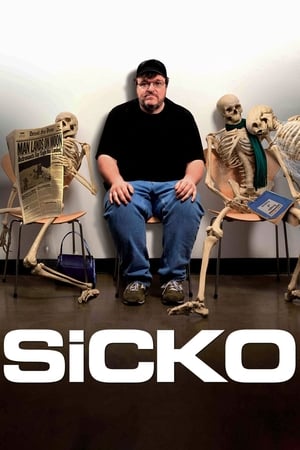
A documentary about the corrupt health care system in The United States whose main goal is to make profit even if it means losing people’s lives. "The more people you deny health insurance, the more money we make" is the business model for health care providers in America.
Bacteria, viruses, but also fungi, algae, pollen, and even insects: micro-organisms thrive and circulate constantly in our sky. How can so many living beings find their way into the air and circulate? How do they survive? And what influence do they have on our lives and the living world? Biodiversity, health, climate: it is only recently that scientists have begun to understand how this discreet aerial "plankton" affects our lives and our ecosystem. But despite their many virtues, some of these micro-organisms are now threatened by human activities. With the help of experts and 3D models, this scientific investigation plunges us into the heart of a still mysterious world, and reveals the diversity and fragility of the air we breathe.
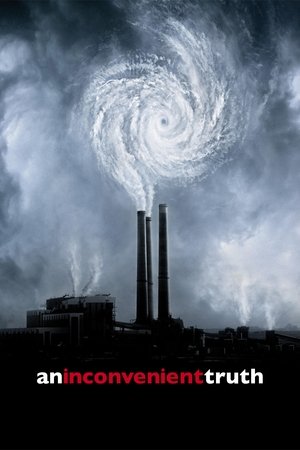
A documentary on Al Gore's campaign to make the issue of global warming a recognized problem worldwide.
Roger Boussinot directed this episode of the French television show Italiques, which features an overview of the art and career of Fantastic Planet illustrator Roland Topor. It aired on August 8, 1974.
For forty days, a group of fourteen volunteers led by explorer and researcher Christian Clot lived independently in a cave in Ariège. Immersed in the cave, this is the story of an incredible collective human and scientific experience.
In his new film, Erwin Wagenhofer is looking for the good and beautiful in this world.
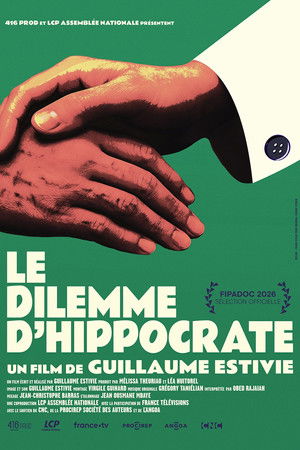
Today in France, one in five young people suffers from severe depressive symptoms, and the number of minors visiting psychiatric emergency rooms has tripled in the last five years. Despite the political will that has been demonstrated, child psychiatry is nevertheless faced with a severe lack of resources. The interminable waiting times for treatment are causing a surge in prescriptions for psychotropic drugs.
In their vehicle, Laurie, Kristy and Linda live alone on the American roads. Like thousands of modern American nomads who can no longer afford to pay for their housing. With no money to spare, these three sixty-year old women are fleeing, in their own way, a part of their history that has left a deep mark on them. Driving away, they try to regain some form of peace. But as the miles and seasons pass, despite their impressive temerity and resilience, their quest for a better future is challenged by unexpected events that hit a country in crisis. Will they nevertheless manage, at the end of the road, to find the serenity they are looking for, in order to become someone again?
Most of us think of death as something clear-cut, and that medical science has it neatly figured out. This feature documentary explodes such assumptions through its exploration of a phenomenon that blurs life and death to an unprecedented degree. In what Tibetan Buddhists call tukdam, advanced meditators die in a consciously controlled manner. Though dead according to our biomedical standards, they often stay sitting upright in meditation; remarkably, their bodies remain fresh and lifelike, without signs of decay for days, sometimes weeks after clinical death. Following ground-breaking scientific research into tukdam and taking us into intimate death stories of Tibetan meditators, the film juxtaposes scientific and Tibetan perspectives as it tries to unravel the mystery of tukdam.
The ideal of youth is at the centre of this eloquent film, mixing documentary and fiction, art and experimentation. Demonstrating both formal and narrative freedom, Bélanger weaves a deliberately loose weave in which the initiatory journey of two young people, wandering through Montreal in search of a job, unfolds. But not just any job. The two idealists want a job that will satisfy their desire for freedom, peace and respect. Of course, even though the breath of renewal from Expo 67 still floats here and there, the world they encounter does not correspond - by far - to their aspirations. Strangers in this country that tells them nothing, they come across brutally, materialism, violence, and egocentrism.
It was called the Black Death, a disease that started in the 14th century, and swept across Europe wiping out half the population, one of the most lethal killers in human history. But the cause of the Black Death has eluded scientists. Now, Evolutionary biologist Hendrik Poinar embarks on an epic journey to solve the 600-year old mystery and change the way we fight infectious diseases today.
How many imaginary deathly diseases can you have before you die from fear and anxiety? This short documentary answers this question by trying to show the surreal world its protagonists are living in.
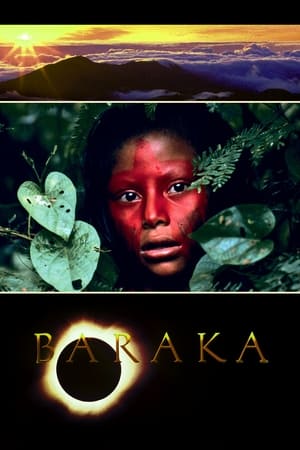
A paralysingly beautiful documentary with a global vision—an odyssey through landscape and time—that attempts to capture the essence of life.
During the last forty years, the photographer Sebastião Salgado has been travelling through the continents, in the footsteps of an ever-changing humanity. He has witnessed the major events of our recent history: international conflicts, starvations and exodus… He is now embarking on the discovery of pristine territories, of the wild fauna and flora, of grandiose landscapes: a huge photographic project which is a tribute to the planet's beauty. Salgado's life and work are revealed to us by his son, Juliano, who went with him during his last journeys, and by Wim Wenders, a photographer himself.