Balam Balam
The silent majority is the Costa Rican peasantry, which has been the object of traditional contempt and which has manifested itself in various forms: unfair salary compensation, bad prices for their agricultural products, financing difficulties, land grabs, precarious housing and educational conditions. health. Precariousness, peasant migrations and the depletion of the agricultural frontier are also analyzed in the film.
A rising star at agri-industry giant Archer Daniels Midland (ADM), Mark Whitacre suddenly turns whistleblower. Even as he exposes his company’s multi-national price-fixing conspiracy to the FBI, Whitacre envisions himself being hailed as a hero of the common man and handed a promotion.
Taro, who recently graduated from high school, doesn't know what he wants to do. He rents a house and plot of land in the country-side determined to make a living in agriculture. His expectation is great as the girl he likes, Yoko, will also go with him, but his father, recently laid off by his company's down-sizing, is also tagging along and so begins the the trio's strange life in the country. Set at a solitary house in the middle of the desolate, country-side, the relaxed tempo and off-hand humor are impressive despite the themes of parent-progeny conflict and reconciliation that unfold in the film.
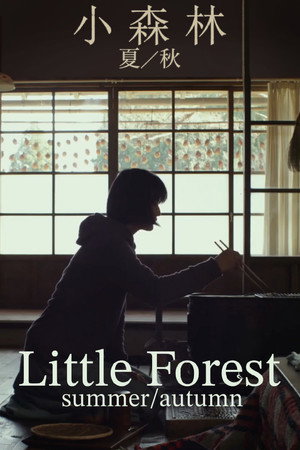
A young woman leaves the city to return to her hometown in the countryside. Seeking to escape the hustle and bustle of the city, she becomes self-sufficient in a bid to reconnect with nature.
Growing Humanity follows six resilient women farmers in the Western U.S., as they navigate gender discrimination, balancing life’s routines, and the challenges of small-scale farming, shedding light on their pivotal role in transforming agriculture and reconnecting communities to the source of their food.
Two city kids spend a summer on Uncle Jim's dairy farm. They tend to the animals, climb a rope, and learn all kinds of fun farm facts
Set in the South just after the US Civil War, Laurel Sommersby is just managing to work the farm without her husband, believed killed in battle. By all accounts, Jack Sommersby was not a pleasant man, thus when he suddenly returns, Laurel has mixed emotions. It appears that Jack has changed a great deal, leading some people to believe that this is not actually Jack but an imposter. Laurel herself is unsure, but willing to take the man into her home, and perhaps later into her heart.
When an injured wife-murderer takes refuge on a remote Lancashire farm, the farmer’s three children mistakenly believe him to be the Second Coming of Christ.
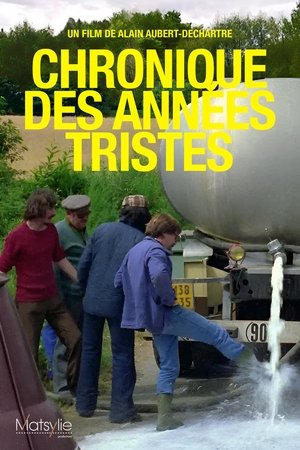
Here is a film that is, to say the least, singular. A fiction filmed under Giscard, in two farming families, one in Brittany and the other in Languedoc. One sees the Catholic mass and the mass of the television news, one hears the Benedicite and the Internationale, a rural class struggle is played out, daily peasants against the aristos in the middle of a hunt...Chronicle of the Sad Years tells the story of the new forms of subjection suffered by the workers of the land, discovering the perverse effects of the CAP and the growing influence of agribusiness. A film in which the director, Alain Aubert-Dechartre, stages a historical turning point, the forced conversion of peasants into technicians of farms of which they will be the first to be exploited
An eight-hour fiction shot for a total of twenty-seven weeks, over a period of fourteen months, in a village population forty-seven in the mountains of Kyoto Prefecture, Japan. It is a geographic description of the work and non-work of a farmer. A portrait, over five seasons, of a family, of a terrain, of a soundscape, and of duration itself. A film-as-adaptive-landscape. A georgic in five books.
Mashoto’s life in the city is a hustle. It’s a fast life in the fast city of Dar es Salaam. There’s no time to stop and Mashoto likes it this way. There’s no time to think about the people he left behind in the village. Until silence cuts through the city racket with three words: mother has died. With those words Mashoto’s life changes forever. He returns home, to the place he abandoned, to bury his only ally. Yet his mother has left behind a gift. Her voice, her unseen presence, a gentle whisper urging him to open his eyes and strain his ears- to learn the lessons of nature, of the earth and the roots that draw their nourishment from it. Cast out by his father after losing the little money his mother had left, Mashoto must learn to survive from the land. He must learn to face old enemies and forge new alliances, to fight and to love. Most of all, Mashoto must discover what it is he is fighting for.
The story of a humble farming couple, a sudden upheaval and an unlikely saviour.
Haunted by the sudden disappearance of his wife, JEET obsessively searches for signals from extraterrestrial beings, convinced that she was abducted by aliens—until a shocking revelation upends everything he believes.
Shindo Yuya quits his job and joins the agriculture and forestry division of Takasaki City in Gunma Prefecture which is tasked with the regional revitalization of the local agriculture industry.
Elephants disrupt the lives of a family deep in the jungles of Northern Siam, and an entire village.
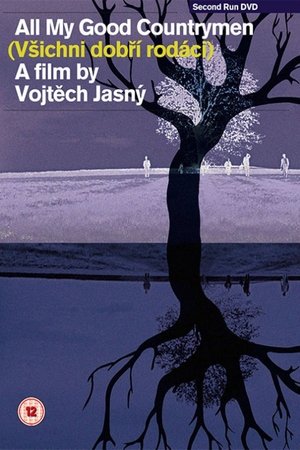
The lives of 7 friends in a small Czech town from 1945 to some time after 1958.
Can there be a bleaker portrait of a life half-lived? Cinematic treatment of poet R.S. Thomas's story of Twm, the "shy soul" who lives and dies alone in the "grim house nailed to the mountainside", oblivious to the interest shown in him by young girls in the village and to his own isolation as he scratches a living from the farm.
Tractor Ted, Midge and JB visit a farm with wild ideas
Fleeing heartbreak in the big city, Ichiko returns to Komori, her rural hometown. She battles summer's rain and humidity, bakes her own bread, grows hothouse tomatoes and tills the fields. During autumn, the time for pickling and preserving fish and sweet potatoes, Ichiko begins reaping rice and recalls her departure five years before.