Camila is a bored young woman. She begins to romanticize her life... until she realizes that there is something supernatural in this fantasy.
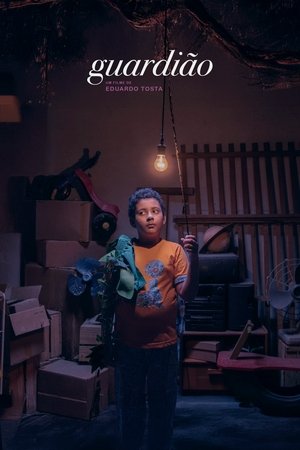
After hearing about a Brazilian folklore party at the neighborhood school, Fernando, an 8-year-old child, decides to go dressed as Curupira, with a skirt and everything, and suggests it to his grandfather, Mr. Lino, 70 years old. The dynamics between grandfather and grandson begin to be affected as Lino perceives Fernando to be a different child. Through subtleties in the dialogues and the silence, social conventions and the responsibility of being the guardian-protector of something precious, the film evokes conceptions of the masculine within a queer childhood.
Lendas Brasileiras
The musical “Se Essa Lua Fosse Minha” tells the story of a people who abandon their land in search of a place to build a new tomorrow. Upon reaching the island of Porto Leste, they discover that the place is already inhabited by another people with conflicting beliefs and cultures, making a division of the land indispensable in order to avoid a war. However, when residents of opposite sides begin a forbidden romance, not even a clash between peoples can separate two passionate hearts.
AGARRA
folklore: a fashion film.
In this one-hour special, Gordon investigates the history, culture and controversy surrounding the shark fishing industry. Each year, nearly 100 million sharks worldwide are killed for use of their fins in the traditional Chinese delicacy, driving a third of the world's shark species towards extinction. Gordon also goes diving in an attempt to gain a full understanding of the majestic animal.
In the small local school of Cheratte, a former mining town, 11-year old students with and immigrant background are coming to the end of their primary school education with Brigitte. She is a dynamic teacher whose particular pedagogical approach aims to give these pupils a firm foundation to build on in this constantly changing world.
This Traveltalk series short visits a few locations where the centuries-old traditions of ancient India are kept alive in contemporary times.
This Traveltalk series short gives a glimpse into South African history, albeit from a white person's viewpoint. South Africa is a union of four separate states: the Transvaal, the Orange Free State, Natal, and the Cape Provence.
The documentary depicts the birth of eugenics - a pseudo-science created in the 19th century that propounded the theory of perfecting the human race. According to the views of eugenicists, only healthy and creative individuals should reproduce. The film shows how these controversial ideas influenced the intellectual and political elite of the West in the 20th century, including the dictator of the Third Reich, Adolf Hitler. Eugenics is a pseudoscience created in the 19th century and treating the improvement of the human race. According to eugenicists, only healthy and creative individuals could procreate, and the procreation of the sick or disabled and racially unworthy (prostitutes, the poor, beggars) should be forbidden. The author of the film posits that modern genetics, the killing of unborn children and euthanasia have their roots in this infamous pseudoscience.
This travelogue emphasizes Copenhagen's harmonious residents and tone. We see well-known landmarks and get a quick history of some of them.
A Traveltalk style documentary look at Rome.
About the way of life in the East, in China, during the months before spring. An early spring.
For years, the Stardust has been a pub symbolizing romanity. From behind its counter, a young parisian girl has discovered Italy while living the final blows of a century coming to an end. With her Hi8 camrecorder she filmed her life as an expat and captured a glimpse of the Trastevere nightlife.
This investigation by Marie-Monique Robin makes the link between the proliferation of new viruses and the destruction of biodiversity and probes the scientists gathered around the issue of global health. To counter the multiplication of health crises, these specialists advocate the preservation of biodiversity as an antidote.
In March 2011, the world was stunned by the nuclear disaster in Fukushima. Today, the people of Iidate, a town outside the 30km radiation exclusion zone around the nuclear power plant, are still suffering. The direction of the wind, rain and snow caused radiation to reach dangerous levels and the entire town was forced to evacuate.
In March, 2011, the Fukushima Nuclear Power Plant exploded, causing a large amount of radioactive effluent to leak. Iitate Village, designated by some as "one of the most beautiful villages in Japan," was more than thirty kilometers away. But because of the direction of the wind, snow, and rain, it was heavily effected by radiation. For this reason, a month after the nuclear disaster, the Japanese government ordered the municipality to evacuate entirely. As a result, approximately 6,000 residents were forced to leave their homes.
Twenty-something virtuoso multi-instrumentalist, singer and arranger Jacob Collier has managed to outdo The Beatles by winning Grammy Awards for each of his first four albums. Alan Yentob meets Jacob and musicians he has collaborated with, including Stormzy, Chris Martin and film composer Hans Zimmer. He also talks to music legends Quincy Jones and Herbie Hancock, who believe Jacob Collier is one of the most talented musicians on the planet today.
Suzi Perry and expert analysts Eddie Jordan and David Coulthard reflect on the 2014 Formula 1 season and the thrilling battle between title rivals and Mercedes team-mates Lewis Hamilton and Nico Rosberg.