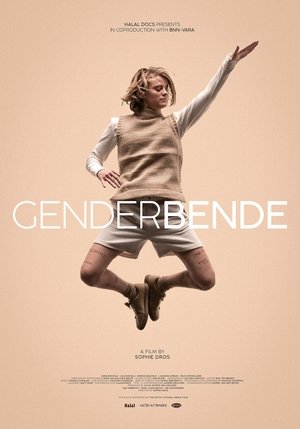
Two girls in their early 20s explore topics of femininity, girlhood, and normalized violence perpetrated on women.
In this modern, coming of age documentary, Naomi, Jojo and Arham grapple with economic divides, gender roles, and family dynamics while competing in the fastest growing high school sport in the country: girl’s wrestling.
The destiny of women is irrevocably linked to blood. Between tradition and modernity, the female body has been marketed, honored, and mutilated.
A documentary about trans woman rapper and producer htmljones (Ishaani Ponniah), framed through the visual language of early-2000s television, 2010s internet aesthetics, and contemporary British culture.
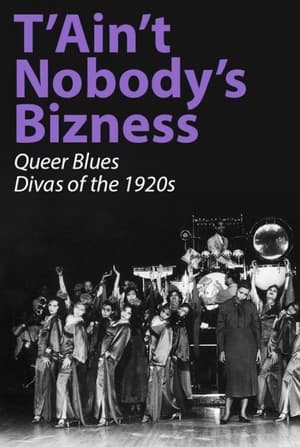
The 1920s saw a revolution in technology, the advent of the recording industry, that created the first class of African-American women to sing their way to fame and fortune. Blues divas such as Bessie Smith, Ma Rainey, and Alberta Hunter created and promoted a working-class vision of blues life that provided an alternative to the Victorian gentility of middle-class manners. In their lives and music, blues women presented themselves as strong, independent women who lived hard lives and were unapologetic about their unconventional choices in clothes, recreational activities, and bed partners. Blues singers disseminated a Black feminism that celebrated emotional resilience and sexual pleasure, no matter the source.
In the indigenous communities around the town of Juchitán, the world is not divided simply into males and females. The local Zapotec people have made room for a third category, which they call “muxes” - men who consider themselves women and live in a socially sanctioned limbo between the two genders.
Delphine Seyrig reads passages from a Valerie Solanas’s SCUM manifesto.
Are there trans people in the punk movement? How does punk resists in a brazilian state as conservative as Goiás? Is it open to different gender expressions?
Ré-inventer l'enfance
Documentary that follows the movement of the collage makers throughout France.
Despite the 1960s free-love and alternative culture, many women found that their lives and expectations had barely altered. But by the 1970s, the Women's Liberation Movement was causing seismic shifts in the march of the world's events, and women's creativity and political consciousness was soon to transform everything - including the face of publishing and literature. In 1973 a group of women got together and formed Virago Press; an imprint, they said, for 52 per cent of the population. These women were determined to make change - and they would start by giving women a voice, by giving them back their history and reclaiming women's literature.
Norman Mailer and a panel of feminists — Jacqueline Ceballos, Germaine Greer, Jill Johnston, and Diana Trilling — debate the issue of Women's Liberation.
Nantali Indongo, the rapper of the group Nomadic Massive, has long refrained from using the word Bitch in the lyrics of the songs she sings. As an Afro-descendant and mother, she considers that this word’s purpose has always been to dehumanize the Black woman. However, at the junction of the Black Lives Matter and #MeToo movements, she decided for the f irst time to use the b-word as a cry from the heart in her song Time . Aware of the complexity posed by the trivialization of this word, she embarked on a “word movie” across the Americas to understand the origins of the word and its many connotations over time. Her journey allowed her to give a voice larger- than-life to Black women, so that they could themselves express their opinions on the word bitch.
In the film “The Wall fell on our heads”, five women of color from East and West Germany talk about their memories of the fall of the Berlin Wall.
For decades, performance artist and writer Kate Bornstein has been exploding binaries and deconstructing gender. And, her own identity. Trans-dyke. Reluctant polyamorist. Sadomasochist. Recovering Scientologist. Pioneering Gender Outlaw. Kate Bornstein Is a Queer and Pleasant Danger, joins her on her latest tour capturing rollicking public performances and painful personal revelations as it bears witness to Kate as a trailblazing artist theorist activist who inhabits a space between male and female with wit, style, and astonishing candor. By turns meditative and playful, the film invites us on a thought provoking journey through Kate's world to seek answers to some of life's biggest questions.
Loosely based on Charles Dicken’s book “A Tale of Two Cities”, Working Class tells the tale of underground street artists Mike Giant and Mike Maxwell and their decade long friendship that started with a tattoo. The story is told through the cities they call home by, cutting back and forth between the neighborhoods of San Francisco and San Diego, as the artists talk about their life philosophies and the work they create.
A short animated documentary featuring archival recordings of the filmmaker's Volga-German Great-Great-Grandmother, Mary Frank Lind, in which she recalls key memories of childhood—her father's windmill, warm rains, wolf sightings, bone trading, and her passion for carpentry, which broke gender norms but was supported by her father.
Amie & Fannas Striptrip
Documentary about feminism in music and the challenges it has faced through the years from the '70s to present day.
Of Maine’s more than 5000 commercial lobstermen only 4% are female. The Captain celebrates that fearless minority through the lens of Sadie Samuels. At 27 years old, she is the youngest and only female lobster boat captain in the Rockport, Maine harbor. Despite the long hours and manual labor of hauling traps, Samuels is in love — obsessed even — with what she calls the most beautiful, magical place on the planet. Her love for lobster fishing was imparted early in her childhood by her dad Matt, who has been her mentor and inspiration since she was a little girl in yellow fishing boots.