Anatomia Audiovisual Feirense
A compilation that highlights works from the Three Stooges. It includes the shorts Brideless Groom, Sing a Song of Six Pants, and Malice in the Palace, also Ed Wynn's live TV Camel Comedy Caravan starring Shemp, Larry, and Moe.
A retrospective of the films of Britain's Hammer Studios, renowned for making stylish horror films in the 1950s, '60s and '70s. Included are clips from Hammer productions and interviews with actors, actresses, directors and producers who worked on these films.
Documentary film about the making of The Hunger Games: Mockingjay Part 1. An impressively in depth assortment of seven featurettes that look at a variety of subjects, from casting to visual effects. - Hope and Rebellion: Continuing the Saga - Designing Dystopia: Visual Aesthetic - Rebels and Warriors: The Cast - Fusing Form and Function: Costume, Make-Up and Hair - Fighting the System: Shooting on Location - D13: Rebellion Tactics: Stunts and Special Effects - Perfecting Panem: The Post-Production Process
A behind-the-scenes documentary of the making of Contour, an independent martial arts comedy made for only $6,000.
Matthew McConaughey narrates a fascinating look at Christopher Nolan's sci-fi film, 'Interstellar', including scientific foundations, the work of consulting Scientist Kip Thorne, basic film themes, the science behind the search for planets capable of hosting life, space-time and the theory of relativity, the science of wormholes and black holes, crafting the film's visuals based on real scientific observation, the birth of the universe, the Dust Bowl and the evolution of dust as a toxin, the likelihood of future dust storms, the prospects of escaping a dying or doomed planet and the possibilities of colonizing Mars.
As artificial intelligence becomes ever more sophisticated, the film industry is split between enthusiasm at what the technology can achieve and concern over the future for human workers in the industry. Will actors and actresses be replaced by machines? An overview on the coming wave of AI in cinema.
Documentary about the making of the Spierig Brothers' 2014 film PREDESTINATION that is based on Robert A. Heinlein's 1959 science-fiction short story '—All You Zombies—'. Through interviews with cast and crew, film clips and behind-the-scenes footage, this documentary thoroughly explores how the film came to be from casting to pre-production to principal photography to post-production. Interviewees include writers/directors Michael and Peter Spierig, producers Paddy McDonald and Tim McGahan, director of photography Ben Nott, special makeup effects designer Steve Boyle, production designer Matthew Putland, special makeup effects supervisor Samantha Lyttle, costume designer Wendy Cork, film editor Matt Villa, and actors Sarah Snook, Noah Taylor and Ethan Hawke.
This special explores the return of Obi-Wan Kenobi and Anakin Skywalker to the screen, as well as Ewan McGregor and Hayden Christensen to their classic roles. Director Deborah Chow leads the cast and crew as they create new heroes and villains that live alongside new incarnations of beloved Star Wars characters, and an epic story that dramatically bridges the saga films.
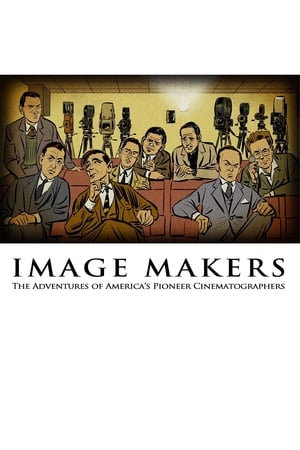
Documentary following the history of America's first cinematographers.
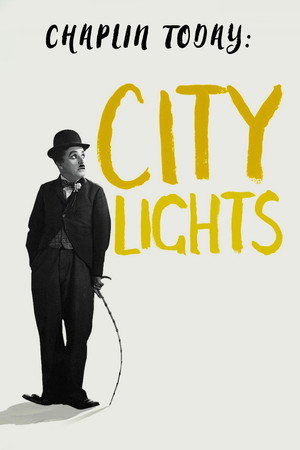
In 1928, as the talkies threw the film industry and film language into turmoil, Chaplin decided that his Tramp character would not be heard. City Lights would not be a talking picture, but it would have a soundtrack. Chaplin personally composed a musical score and sound effects for the picture. With Peter Lord, the famous co-creator of Chicken Run and Wallace & Gromit, we see how Chaplin became the king of slapstick comedy and the superstar of the movies.
With exclusive behind-the-scenes access into Herzog’s everyday life, rare archive material and in-depth interviews with celebrated collaborators – including Christian Bale, Nicole Kidman, and Robert Pattinson, we are given an exciting glimpse into the work and personal life of the iconic artist.
Proyecto muerto v6 (6).mp4
The amazing story of stunts, men and women who risk their lives every day on set to get the perfect action scene.
A documentary about Hong Kong cinema mythology via Julien Carbon and Laurent Courtiaud’s experience as screenwriters in the HK film industry, working for Wong Kar-wai, Tsui Hark, Daniel Lee and Johnnie To
The story of the making and subsequent success of The Day of the Beast, the Spanish cult film directed by Álex de la Iglesia and released in 1995.
As Australian cinema broke through to international audiences in the 1970s through respected art house films like Peter Weir's "Picnic At Hanging Rock," a new underground of low-budget exploitation filmmakers were turning out considerably less highbrow fare. Documentary filmmaker Mark Hartley explores this unbridled era of sex and violence, complete with clips from some of the scene's most outrageous flicks and interviews with the renegade filmmakers themselves.
A behind-the-scenes look at the 1939 Wizard of Oz film adaptation that tested the limits of its creators, which included director Victor Fleming and star Judy Garland, as well as its cultural impact and timeless legacy.
Ridley Scott's cult film Blade Runner, based on a novel by Philip K. Dick and released in 1982, is one of the most influential science fiction films ever made. Its depiction of Los Angeles in the year 2019 is oppressively prophetic: climate catastrophe, increasing public surveillance, powerful monopolistic corporations, highly evolved artificial intelligence; a fantastic vision of the future world that has become a frightening reality.
In one of those wonderful coincidences of history, lumière, the French word for “light,” was also the last name of brothers Auguste and Louis, whose brilliant invention, the cinematograph, helped to inaugurate the most beloved art form of the last 130 years. Institute Lumière director Thierry Frémaux uses Lumière, Le Cinema! to guide the viewer through over a hundred shorts—some famous, some forgotten, some never before seen—directed by Lumière and company. In the process, Frémaux illuminates how the brothers employed the camera as a creative instrument as they (and their operators) mastered framing, staging, and subject selection for quotidian and exotic microdocumentaries as well as the first ever fictional motion pictures. The result is not only a glorious re(telling) of the genesis of cinema but a profound meditation on the beautiful world captured—and the mysterious world imagined—by the Lumières.