A Biography documentary going behind the scenes of the hit show 'Glee,' featuring interviews with creators and a handful of cast members as well as never-before-told stories from its conceptual beginning through the casting process.
An exploration —manipulated and staged— of life in Las Hurdes, in the province of Cáceres, in Extremadura, Spain, as it was in 1932. Insalubrity, misery and lack of opportunities provoke the emigration of young people and the solitude of those who remain in the desolation of one of the poorest and least developed Spanish regions at that time.
A day in the city of Berlin, which experienced an industrial boom in the 1920s, and still provides an insight into the living and working conditions at that time. Germany had just recovered a little from the worst consequences of the First World War, the great economic crisis was still a few years away and Hitler was not yet an issue at the time.
Flubs and bloopers that occurred on the set of some of the major Warner Bros. pictures of 1938.
A short government funded industrial documentary showing the hard work and craftsmanship of labourers in the leather industry that otherwise goes unnoticed, (deserving as much attention as the exploits of a famous boxer).
A short documentary funded by the Belgian Ministry for foreign affairs showing the manufacturing and transportation of Belgian locomotives.
Filmmaker Alain Resnais documents the atrocities behind the walls of Hitler's concentration camps.
Narrated by Linda Hunt, this documentary examines the life of the late author and gay rights activist Paul Monette. Born in 1945 to a well-off Massachusetts family, Monette grows up unable to accept his homosexuality, for years hiding it from his loved ones while struggling to develop as a writer. In 1978, Monette publishes his first novel, which allows him to come out to his parents. After losing one lover to AIDS in 1986, he becomes a ferocious advocate for awareness of the disease.
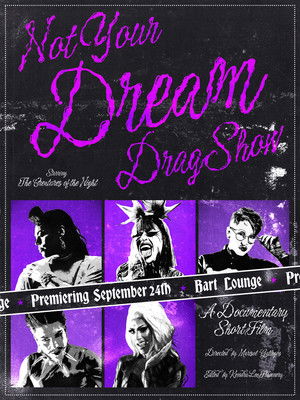
A short documentary immersing you in the intimacy and harsh reality of young LGBTQ+ artists, working in Los Angeles in the midst of the glamorous neighborhood of West Hollywood.
It often happens that at the moment of death, transgender individuals are shorn of their identity. Their families are ashamed, the funeral takes place in secret, and on the tomb appears the name the deceased had before their transition, in one stroke nullifying the entire life path they had chosen. The same thing happened to Antonia. Her girlfriends gather to honor her memory and give her back her identity denied. In telling her story, the film’s stars, all drawn from the variegated transgender world, interweave the narrative with tales of their own lives, experiences, and memories.
Identity is an experimental short film about gender fluidity, memory, and transformation.
Paparazzi explores the relationship between Brigitte Bardot and groups of invasive photographers attempting to photograph her while she works on the set of Jean-Luc Godard's film Le Mépris (Contempt). Through video footage of Bardot, interviews with the paparazzi, and still photos of Bardot from magazine covers and elsewhere, director Rozier investigates some of the ramifications of international movie stardom, specifically the loss of privacy to the paparazzi. The film explains the shooting of the film on the island of Capri, and the photographers' valiant, even foolishly dangerous, attempts to get a photograph of Bardot.
Fred Martinez was a Navajo youth slain at the age of 16 by a man who bragged to his friends that he 'bug-smashed a fag'. But Fred was part of an honored Navajo tradition - the 'nadleeh', or 'two-spirit', who possesses a balance of masculine and feminine traits.
A silent succession of black-and-white photographs of the city of Montreal.
Ninja is famous around the world for her fierce ballroom performances, but she is not as well-known in her native country of French Guyana. But a trip home to teach a workshop might change that.
Belgian art historian and filmmaker Paul Haesaerts (1901–1974) made a significant contribution to the promotion of modern Flemish art. In the late 1940s, he started experimenting with the medium of film to practice a new form of lens-based art criticism. The understudied documentary "Quatre peintres belges au travail" (1952) presents Belgian artists Edgar Tytgat, Albert Dasnoy, Jean Brusselmans and Paul Delvaux at work in their studio. On a large sheet of glass placed in front of the camera, they each paint one of the seasons that also represent a stage in a person’s life. A close reading of this Kodachrome color film sheds light on the context of mid-century art reproductions, mass media and post-war Flemish culture. It also examines in what way this film operates as Haesaerts’s concept of cinéma critique, while raising questions as to the way Haesaerts attempted to reconcile the spatial art of painting with the temporal medium of film.
In a nightclub setting, Jimmy Dorsey and His Orchestra, with two of his vocalists, perform four of the group's best known songs. For the complete list of songs, check the soundtrack listing.
A portrait of the Swedish director Roy Andersson, dealing with obsessions of the film maker considered as the origins of his last incredible project : Songs from the Second Floor. 20 years of reflection and creation, 4 years to shoot a masterpiece with a unique way of filming. A meeting with the Nordic Kubrick, rebel with a cause : responsibility and humanity.
Internet comedian Carl Déman from the humor group JLC lived a life that looked glorious. But beneath the surface was a terrible gambling addiction that almost cost him his life. In 2019, he and other gambling addicts struggle to stay afloat in a contemporary age marinated in gambling advertising. Carl wants to ask those who make the advertising how they think and wonders why the advertising profiles now also come from the world of culture and entertainment.
Jerry Wald has to write about radio, visiting Sid Gary gives him the tip it might be more easy for him to write this article at the radio station than at his newspaper office. At the studio they listen to the Boswell Sister's rehearsal, which is interupted by some not so friendly remarks by orchestra leader Abe Lyman, they listen at the door, where a Colonel Stoopnagel broadcast is prepared, as well as to the rehearsal of a new song for an broadcast by Kate Smith.